
Special Article
Undoubtedly, ingratitude defines our national character—or, to phrase it more politely, we dislike remaining grateful. We confuse state policies with individual goodwill. We forget those who extended their hands during the liberation war, fed us even for a single meal, and offered us shelter during our refugee days.
We disregard them casually. Burying our conscience, we believe that whatever India did for us was out of self-interest. Feeding, sheltering, and training millions of freedom fighters were all part of their mission to dismember beloved Pakistan. Shame on this nauseating mix of politics and ingratitude.
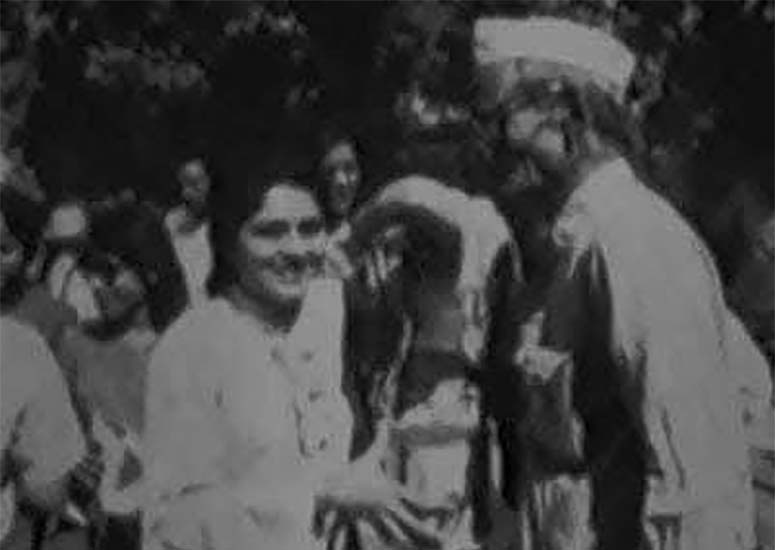
When a pro-liberation government comes to power, our glorious history resurfaces. The history of independence written in blood. Though late, we express our gratitude to our friends, our companions in crisis. Over forty years later, India’s former Prime Minister Indira Gandhi received an honor. The list includes hundreds of other friends, many of whom are no longer alive. Those enlisted are fortunate in a way—though belatedly, the Bangladeshi government remembers them and acknowledges their humanitarian and courageous roles.
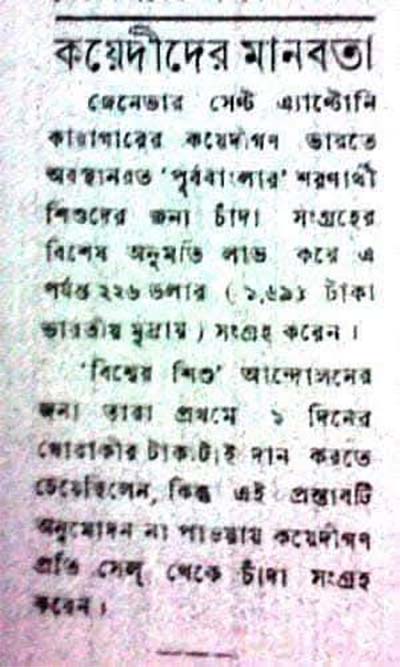
Their deeds certainly qualify them as great. Their contributions are unparalleled. Nevertheless, can’t we also express our gratitude to those Baltimore dockworkers who went hungry for two days chanting “Won’t touch blood money” and refusing to load American arms onto the Pakistani ship Padma? Can’t we pray for the inmates of St. Anthony Jail, who collected money for milk to feed our refugee children? Or salute those cobblers in Mumbai who donated a day’s wages, soaked in sweat, to Bangladesh’s war fund?
There were several funds for Bangladesh—war funds, refugee funds, and broadly, funds for the cause of Bangladesh. Contributions came from abroad and from private donors, and various organizations mobilized resources singing songs of humanity. The Mujibnagar government documented these efforts. I have in hand press releases from May 15, 17, and 18, 1971, listing donors from these three days, encompassing around 300 individuals, institutions, and organizations.

The lists are fascinating for many reasons. Donations range from ₹1 to ₹50,000. Among the donors were teenagers, the elderly, students, teachers, professors, homemakers, office workers, political organizations, schools, colleges, universities, factories, and private companies. Some donors from Kolkata even provided their ancestral Bangladeshi addresses.
Here are some notable examples: Kalandar Ali and Monowar Ali, expatriates from Sylhet living in London, donated ₹50,000—the highest individual contribution. Members of Tata Fission Employees’ Union in Konnagar, Hooghly, collectively contributed ₹8,201—the second-highest. Anwar of Kolkata’s Trot Shoe Company donated ₹5,000, ranking second among individual contributions. Many company directors also made significant contributions via checks.

Particularly intriguing is Ramratan Shroff of 18, New Road, Kolkata-22, who donated five gold coins. Narayan Debnath from Bikrampur, Dhaka, contributed ₹2. Charles L. Hale from the University of Arizona sent \$1 by mail. Regardless of the amount, it symbolizes solidarity.
Shailendra Nath Das, an inspector from the Narcotics Department of West Bengal, possibly emptied his pockets to donate ₹25.84. Multiple members from the same address also donated. For example, Satyasundar Mitra from 12-B Jamadar Lane contributed ₹10, and Swapna Mitra ₹2. They could be siblings or father and daughter, but they did not combine their donations. Bakul De, a student at South Eastern Railway Girls’ School in Adra, Purulia, contributed ₹10. Perhaps she joyfully broke open her piggy bank to support an unseen freedom fighter for another day of struggle!
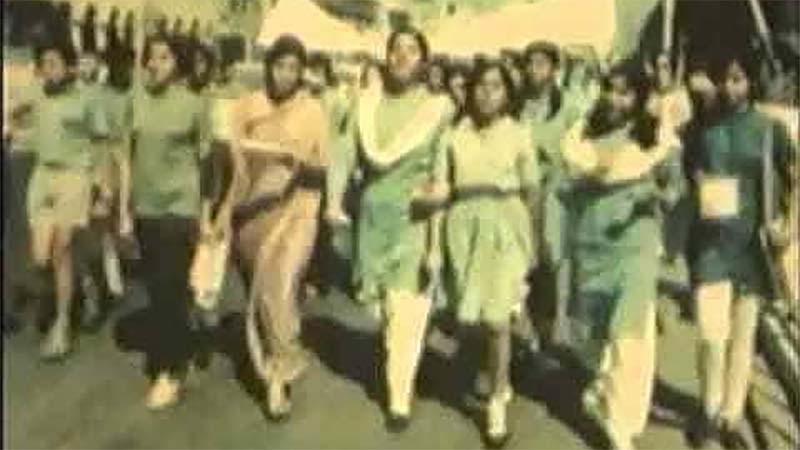
This is merely a glimpse of a vast list. Each donation has a story. Salute to all who contributed and all who mobilized those contributions. They acted with the spirit of humanity to strengthen a nation’s struggle for freedom and accelerate its independence. Our deepest gratitude to those individuals lost in the sands of time.
Source:
Press releases of the People’s Republic of Bangladesh Mission dated May 15, 17, and 18, 1971.
Images:
Saptahik Joy Bangla and snapshots.
-Omi Rahman Pial
Writer, Journalist, Blogger, Liberation War Researcher

https://stapravda.ru/20221228/reyting_samyh_populyarnyh_hostingov_v_rossii_196445.html, рейтинг хостингов России подтверждает, что выбор надежного провайдера важен для бизнеса.