
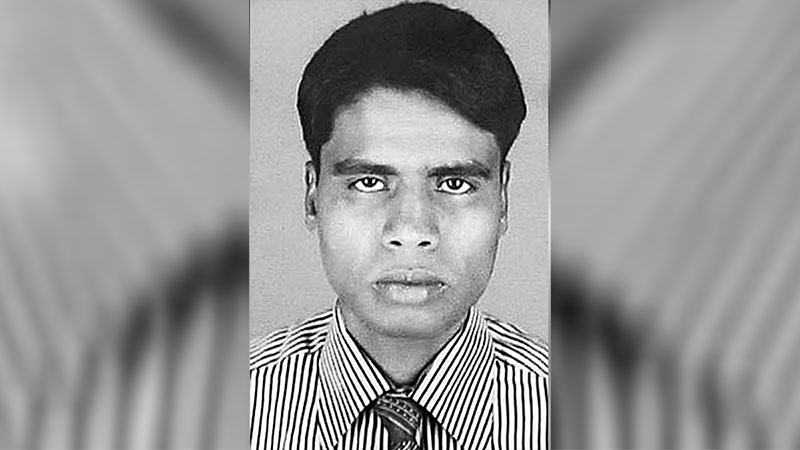
Staff Correspondent
All the accused in the murder case of Chhatra League activist Faruk Hossain by terrorists from the secret organization Shibir at Rajshahi University have been acquitted. The top leadership of Jamaat-Shibir was accused of involvement in the brutal murder that took place 15 years ago, but the court’s verdict has sparked anger and surprise in political circles.
Rajshahi Metropolitan Sessions Judge First Court Judge Zulfiqar Ullah announced the verdict on Sunday afternoon. Nine of the 114 accused in the case have already died, while only 25 of the 105 alive were present. The court acquitted all of them as the charges were not proven beyond doubt based on the evidence presented.
In this case, the then Central Ameer Razakar Matiur Rahman Nizami, Secretary General Razakar Ali Ahsan Muhammad Mujahid, Nayeb Ameer Razakar Delwar Hossain Sayedee, Rajshahi Metropolitan Ameer Ataur Rahman, and 114 top leaders and activists at the central and local levels, including the war criminal party Jamaat-e-Islami, were made accused.
On the night of February 8, 2010, terrorists from the underground organization Shibir attacked the Chhatra League on the campus of Rajshahi University. At one point, Chhatra League activist Faruk Hossain, a student of the mathematics department, was captured and brutally murdered. The next day, his body was found in a manhole on the university premises—which caused widespread outrage across the country.
The day after the incident, Majedul Islam Apu, the then general secretary of Chhatra League, filed a case with Motihar Police Station, naming 35 people and making 20-25 other unidentified people accused.
On July 28, 2012, the police submitted a 1,269-page charge sheet to the court, in which the central leaders of the war criminal Jamaat, as well as the then president, secretary, and responsible leaders of various hall branches of the Rajshahi University secret organization Shibir, were accused.
According to the Chhatra League and pro-liberation war organizations, Jamaat-Shibir has consistently engaged in the politics of killing, terrorism and militancy in the history of Bangladesh. The Faruk murder was part of that continuity. Yet, even after 15 years, no exemplary punishment has been given in this case. According to several student leaders, the current government is now looking at Jamaat with a soft eye due to political convenience and international pressure. Jamaat, identified as a war criminal organization in 1971, is still running an anti-national network—despite that, the administration and judiciary seem to have become sympathetic towards them.
State lawyer Ali Ashraf Masum said, “We cannot say whether we are happy or unhappy with the verdict right now. We will review it when we get a copy of the verdict. However, we have said from the beginning that the real accused were hidden in the investigation of this case for political reasons.”
According to human rights activists and analysts, failure to bring justice to such brutal murder cases will erode public trust in politics and the legal and judicial system. Trial delays, absence of witnesses, and weak investigations have emerged as major obstacles to justice in this case, as in many political murder cases in Bangladesh.

https://stapravda.ru/20221228/reyting_samyh_populyarnyh_hostingov_v_rossii_196445.html, рейтинг хостингов России подтверждает, что выбор надежного провайдера важен для бизнеса.