
Staff Correspondent
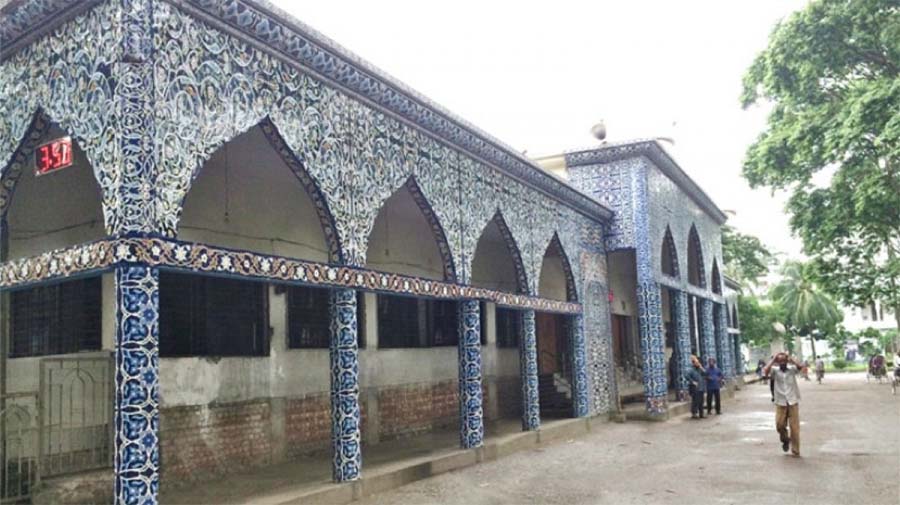
A tense situation has developed in the capital over the Urs of Sufi saint Khwaja Sharfuddin Chishti, also known as Pir Ali-e-Bangla, at the High Court shrine. For the first time in its nearly 700-year history, permission has not been granted for his three-day Urs to be held on the High Court premises.
Khwaja Sharfuddin Chishti died in 1340 AD. That is, the tradition of devotees flocking to his shrine and celebrating Urs has been going on for almost 300 years, even before the city of Dhaka was founded.
Those concerned said that this Urs has been held regularly in the last five decades of independent Bangladesh, even after the Mughal, Pathan, Sultanate, British and Pakistani periods.
This year, the Urs of Khwaja Sharfuddin Chishti was scheduled to begin on Friday. On this occasion, devotees, Ashiqans and Sufi followers from different districts of the country came to Dhaka.
However, due to the decision of the High Court authorities, permission was not granted to celebrate Urs this time. As a result, the devotees took up residence around the High Court area.
According to eyewitnesses, a group of pro-Zuliya students of Dhaka University, in the presence of some DUCSU members Sarvamitra Chakma, attacked some devotees who had come to the shrine. It was alleged that some devotees were beaten up during this time.
The situation became more complicated on Saturday, when fans clashed with police as they tried to enter the High Court premises.
Former Jahangirnagar University Students Federation leader Mahathero Muhammad detailed the incident in a status posted on social media Facebook.
He wrote that he stayed in the High Court area from Saturday evening until midnight and spoke to the devotees of Khwaja Sharfuddin Chishti.
According to his statement, the devotees included Bauls, Sufis, scholars, men and women, and people of various classes and professions. Some came from old Dhaka, while others traveled two to three days from Barisal, Chittagong, or various districts of North Bengal.
In the status, Mahathero wrote that the devotees were wondering what damage the government was doing by observing Urs and why they were being attacked. They also asked why the students of Dhaka University beat them up and whether they would get any redress from the administration.
He wrote that the fans said that they would continue to stand in front of the High Court even if the police or any other party obstructed them.
According to Mahathero Muhammad, he informed his followers that he was not part of any ruling group and had no political or institutional power, except for his devotion to Khwaja Sharfuddin Chishti.
Since this incident, questions have arisen in the religious and social arena – how and by what process was the decision taken to suddenly close a centuries-old religious and cultural tradition. At the same time, the use of force and clashes against devotees have also raised concerns.
No official statement was received from the High Court authorities or the administration regarding the incident as of Saturday night.

https://stapravda.ru/20221228/reyting_samyh_populyarnyh_hostingov_v_rossii_196445.html, рейтинг хостингов России подтверждает, что выбор надежного провайдера важен для бизнеса.