
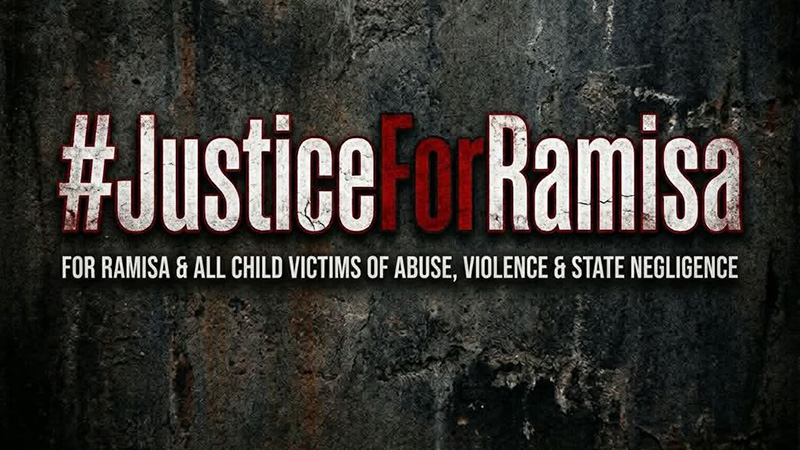
In memory of Ramisa
– Air Vice Marshal ( Retd) Sade Uddin Ahmed
( BSP, BUP, NDC, NSWC, PSC)
The morning began like any other morning. Just like thousands of ordinary mornings begin – the ones that no one remembers, because there is nothing to remember about them.
In the narrow streets of Pallavi, the rickshaw bells, the sound of tea shop stoves blowing, and the voices of children going to school combined to create a familiar noise. Amidst that noise, Ramisa’s mother stood in the kitchen, filling the tiffin box with rice and eggs – a little too much, because the girl shared half of the tiffin with her friends. The girl’s white school uniform was hanging on the back of a chair, ironed, and still tightly folded. There was a small stain on the corner of the collar – it had been applied while eating mango pickle, and her mother had rubbed it off.
“Ramisa! It’s getting late, Mom!”
There was no response from inside the room.
Where could an eight-year-old girl go in the morning? Even this thought did not cause panic in the mother’s mind. Maybe she had gone downstairs, maybe she was chatting with someone in the next flat. That’s how the girl was – chatting with everyone, jumping on everyone’s lap, calling everyone “uncle”, “auntie”, “aunt”. In the world she was growing up in, every door in that world seemed open to her. No one had taught her that there could be darkness behind any door. Who teaches an eight-year-old girl such things?
Mother came to the verandah on tiptoe. And that’s when her eyes were caught.
A pair of small sandals is lying in front of the door of the flat opposite. Pink, with a flower sticker hanging half-open on one side. Ramisa’s sandals. Last night, the girl had worn those sandals and climbed onto the roof, the two sisters were counting the stars together.
The two sandals were not lying haphazardly – side by side, a little tidy. As if someone had politely taken them off before entering. As if someone had said, “Take off your shoes, Mom.” And she took them off – trustingly, fearlessly, the way children trust everything.
At first, the mother thought, “He left it open while he was playing, that’s how he did it.” She laughed and knocked on the door.
“What do you think? Is Ramisa there? It’s getting late for school.”
There is no sound from inside.
Knock again. This time a little louder.
“What do you think? Just open the door.”
There was the sound of footsteps inside, a muffled voice, and then silence again. The door was closed from the inside. The silence on the other side of that closed door felt a cold hand caressing her mother’s heart for the first time. Mothers know this hand. They know it for a long time, long before they can explain it.
He didn’t know what had happened just beyond the door. He didn’t know that his daughter’s story in the new neighbor’s house, which had come two months ago, had ended forever. He only knew that a mother knows that her child is not with her, and that a terrible mistake has been made somewhere. His hands were still stained with the smell of rice and eggs.
He began to scream. The scream reached from one end of the alley to the other – but the door he needed to reach inside had already been closed forever.
I knew Ramisa through her father’s eyes.
Father-Abdul Hannan-would always talk about his daughter while sitting in the rickshaw. Not to anyone, but to himself, moving his lips. As if the girl were sitting next to him, as if he were telling her the story of the day as he pressed the pedal.
“You know, my eldest daughter will be a doctor one day,” he used to say to the neighboring tea shopkeeper. “The younger one is still naughty, but Ramisa-Ramisa is very calm. A bookworm. She falls asleep while reading at night, I go and remove the book and turn off the light.”
He had bought his daughter a small watch, with a pink ribbon. When he had no money at the end of the month, he would return home counting the change in his pocket, but he still couldn’t stop his daughter from demanding it. Ramisa would wear that watch and stand in front of the mirror, pretending to be a grown-up – “I have a lot of work to do today, you understand?” – and her younger sister would laugh hysterically. The hands of the watch wouldn’t turn properly, they would go a little behind every day. Dad thought he would fix it. Time was in his hands. Everyone thinks they have time.
The girl liked flowers. She would buy marigolds and marigolds worth one or two taka from the florist at the corner of the street and wear them in her hair. There was no need for any ceremony, because there was none. Every day was a festival for her. Her father would say, “Wherever my daughter goes, a little light shines.”
The younger sister was her shadow. Wherever Ramisa went, she went. Seeing her elder sister wearing a sari, she would also wrap herself in her mother’s veil. The two sisters would stand on the roof together in the evenings and count the stars in the sky, and when they lost, they would argue over who started counting first. That younger sister still sometimes sits up at night, pats her side and searches for her – where is Apu? No one can explain to her, she has gone to a place from which no one returns. How can anyone explain the word “death” to a six-year-old child?
This was Ramisa. A world of eight years – where the biggest sorrow was homework, and the biggest dream was growing up.
We recognized him when there was nothing left to recognize.
People had gathered in that narrow alley.
The door was broken. What was found inside is not part of this story. Some scenes are not worthy of being written. Some truths are so cruel that they can only be contained in silence. I will not write, because if I write, we will take away that silence from him – and that silence is now his only cover.
I can only write this – outside the door where a pair of small sandals were stacked, inside the door a child’s life ended at the hands of his neighbor. The man who had moved into the flat opposite two months ago. The one Ramisa might have called “uncle”. The one whose door he was not afraid to knock on, because there was no need to be afraid. Fear was supposed to teach us. We didn’t teach it. We thought the next door was safe.
We think danger comes from afar. From unfamiliar streets, from dark alleys, from unfamiliar faces. We teach our children – don’t go with strangers, don’t eat anything unfamiliar. But sometimes danger waits right behind the next door – the door we cross every day without fear, the door we greet with a smile, the person inside whom we know as a “good person”.
The mother was standing outside the door, still knocking. And inside, a grown man was waiting—cool-headed, taking enough time for someone else to escape. As a mother knocked on the door, calling her child’s name, calculations were being made on the other side of that door—how to hide, how to buy time.
I write this sentence, and my hands shake.
Ramisa was laid to rest in Munshiganj, next to her grandparents.
He returned to the soil where his roots were – but at an age when it is not even worth thinking about roots. At an age when the soil means a playground, not a grave. A small grave. So small that it breaks your heart to see it – because the size of the grave tells you that here lies not a whole life, but a life that has just begun. A life that has not yet finished school, has not yet seen the results of its first exam, has not yet become a doctor.
Thousands of people at the funeral. Tears. Slogans. Cameras. Microphones.
And in the middle of all of them, a father who could no longer cry. Even crying has an end. What remains after that is even more terrible than crying – a kind of emptiness where no words reach. In that emptiness, a person cannot see anything even with their eyes open.
The reporters approached him. He held out his microphone. They asked, “Do you want justice?”
Dad looked up. His eyes were dry, red, and eerily calm.
“I don’t want justice,” he said. “Because you can’t judge. My daughter won’t come back either. This will last for at least fifteen days. Then something else will happen. And it will be covered up.”
He didn’t say anything wrong.
What could be a more brutal truth than the one on the face of a grieving father—that he does not want justice, because he has lost faith in justice. He has lost something greater than the grief of losing his child: hope. His disbelief is not a personal disappointment. It is evidence of the failure of an entire society.
Because he saw it. We all saw it.
We saw one child’s face after another – in the newspapers, on TV screens, in Facebook newsfeeds. We were agitated for a few days. We wrote hashtags. We blacked out our profile pictures. We lit candles. Then-
Then another piece of news comes. Another face. The old one is buried under the new one. The trial files gather dust and are lost in the crowd of thousands of pending cases. The candles melt and end. And the grieving family is left – alone, after the cameras have gone, with a picture in their hearts.
That’s what the father wanted to say. Is that also the fate of his daughter?
I keep looking at a picture of Ramisa.
In the picture, she’s standing with flowers in her hand. Her face is turned slightly to the side—as if someone had just called her name, and she’s about to turn around and look. Maybe she’ll smile right away. Maybe someone behind the camera said, “Look this way, Mom.” And she didn’t look all the way. That’s how children are—half in the frame, half somewhere else, lost in some other thought. Maybe she thought, once the picture was taken, she’d go back to playing.
This photo wasn’t taken for strangers. It was supposed to be on a relative’s phone—in the crowd of photos that parents keep and look at later, on a lonely afternoon. This photo would one day appear in a wedding album. The grandchildren would one day look at this photo and say, “This is my childhood grandmother.” An ordinary girl on an ordinary day. A girl before anyone was called a “victim.”
Now we look at the picture after knowing a lot.
And every time I see it, and every time I think – it’s not just a statistic. It’s not the name of a report, it’s not a hashtag, it’s not the content of a political statement.
She’s a girl. Someone’s older sister. Someone’s daughter. A schoolgirl whose white dress she hadn’t worn that morning—a dress that might still be folded up in a closet because her mother couldn’t move it.
Statistics show that child abuse in this country is no longer an isolated incident – it is a national crisis.
According to the Ain O Salish Kendra, 306 girl children were raped in the first seven months of 2025 – about 75 percent more than the same period last year. And the age of these children is heartbreaking: 49 of them are under six years old, 94 are between seven and twelve years old. Six years. The age at which a child is just learning to recognize letters.
Statistics say that from January 2023 to January 2025, there were nearly ten thousand rape cases – that’s an average of thirteen women and children every day. Every day. And this is just the number of incidents that were reported. The incidents that never see the light of day due to shame, fear, or social pressure are outside this number – and human rights activists say the number is much higher.
The beginning of 2026 was no different. In January alone, there were 35 rapes – thirteen of which were of girls twelve years old or younger.
But statistics never tell, behind every number, there was a sandal lying outside the door. A tiffin box was filled with rice and eggs. A white dress was hanging on the back of a chair, ironed, folded tightly – and it was never worn again.
Statistics don’t tell, behind every number there is a father, who one day sat in a rickshaw and told stories about his daughter to himself. And today, he says, “I don’t want justice.”
Every number is a name. Every name is a world. And every world is equal to the entire sky for a family.
The real question is whether we can prove this father a liar or not.
After fifteen days, this country may move forward. A new piece of news will come. A new anger will overshadow the old. The headline will change. But that family will remain – with a picture in its heart. The younger sister will remain, who still looks for her sister at night. The pink-ribbon watch will remain, whose hands will never be adjusted again.
Don’t let that be Ramisa’s fate.
May the investigation be thorough. May the evidence be preserved. May the trial not drown in a sea of protracted proceedings. May the family not be left alone after the cameras have gone.
However, justice – no matter how swift it may be – comes too late for a child who was supposed to be at school that morning.
I look at the picture again.
A girl, holding a flower. Her face is turned slightly to the side. As if someone has called her name.
Ramisa.
We are calling your name. Can you hear me?
We want your name not to be erased in fifteen days. We want your father’s words not to come true. We want a child’s pair of sandals never to be left waiting outside another door in this country.
We want justice for you, Ramisa.
And this time, let’s keep our word.

https://stapravda.ru/20221228/reyting_samyh_populyarnyh_hostingov_v_rossii_196445.html, рейтинг хостингов России подтверждает, что выбор надежного провайдера важен для бизнеса.