

❐ BD Digest Desk
Based on data analysis, the international non-profit organization CIVICUS Monitor has observed that citizens of Bangladesh are currently facing extreme repression.
Concerns remain, in particular, over the targeting of journalists, the failure to repeal repressive laws, continued police impunity, restrictions on the opposition, the need to ensure an enabling environment for civil society, and establishing accountability for past crimes.
Amnesty International has observed that freedom of expression, association, and peaceful assembly were unnecessarily restricted during the interim government. Individuals, including human rights defenders, have been subjected to arbitrary arrest and harassment for exercising their right to expression.
In the February 2026 elections, the Bangladesh Nationalist Party (BNP) led by Tarique Rahman won 212 seats. The Jamaat-led alliance became the main opposition party with 77 seats. The National Citizens Party (NCP), which emerged from the movement and is an ally of Jamaat-e-Islami, came in third place, winning six of the 30 seats contested.
The Awami League, the largest political party in Bangladesh, was not allowed to participate in this election.

A national referendum on the “July Charter” aimed at reforming state institutions was also held. The election ended the 18-month rule of the interim government formed after Sheikh Hasina was ousted from power by anti-government protests in 2024.
According to Odhikar’s monitoring, at least 10 people were killed and 497 injured in post-election violence from February 13 to March 31, 2026.
In March 2026, nine non-governmental organizations wrote to the new government drawing attention to urgent human rights challenges in Bangladesh and providing recommendations to ensure human rights protection, institutional reform, and accountability.
On May 26, 2026, on the occasion of the International Week of Disappeared Persons, civil society organizations issued a joint statement calling on the government to provide truth, justice, compensation, and guarantees to prevent the recurrence of such incidents in the future for the victims of disappearances and their families.
Journalists have been subject to restrictions, detentions and prosecutions in recent months, while many have been arrested for expressing opinions online that are critical of the state. A female human rights defender has been charged with spreading false information, lawyers have been arrested for holding public gatherings, and a human rights defender has been harassed at the airport.
The new government has failed to establish effective human rights institutions and enact an ordinance on enforced disappearances. At the same time, the process of criminalizing Awami League members continues.
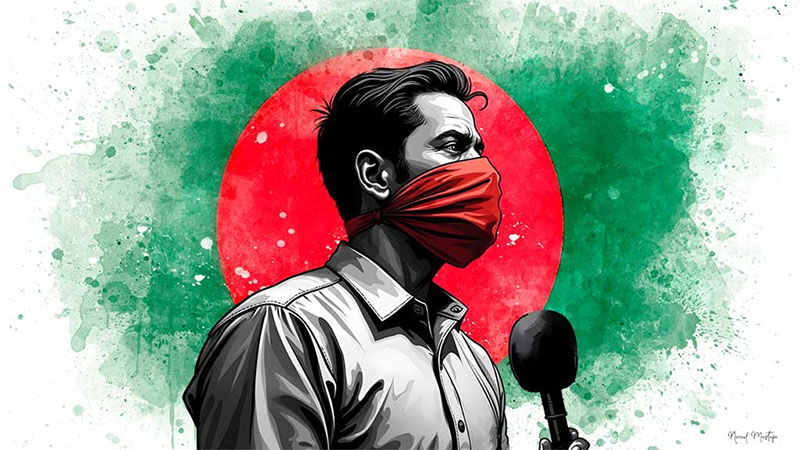
Freedom of expression
Concerns about media freedom
Press freedom in Bangladesh remains a concern. Bangladesh has slipped to 152nd place in the 2026 World Press Freedom Index published by Reporters Without Borders (RSF).
In March 2026, RSF reported that five journalists detained since August and September 2024 were still awaiting trial. More than 140 media workers face unfounded legal cases. Some of these cases are extremely serious, notably allegations of the killing of protesters and at least 25 people accused of “crimes against humanity.”
According to Odhikar, 25 journalists were injured, three were attacked, and seven were sued while performing their professional duties from February 18 to March 31, 2026.
Army detains online media workers in Dhaka for reporting on protests
According to EU SEE information, on February 8, 2026, members of the army entered the office of the online media outlet ‘Bangladesh Times’ located in the Nikunja area of Dhaka. 21 people, including journalists working on the night shift, security guards and office assistants, were detained there.
According to the organization’s executive editor, the incident occurred after a video of a man criticizing the army was released at a protest organized by the Inquilab Manch in Dhaka.
He said a person identifying himself as being associated with a local army camp called and warned him not to publish such videos.
The workers were later taken to an army camp for questioning and released after about two hours. A military official described the incident as a “minor matter” but did not elaborate.
New vague allegations against journalists
Ekattor Television’s chief correspondent Farzana Rupa and managing director Mozammel Haque have faced a new case at the International Crimes Tribunal (ICT). The allegation is that they are being subjected to repression due to a report they aired on a Hefazat-e-Islam rally at Shapla Square in May 2013.
Amnesty International said the complaint, filed on March 7, 2026, alleges that the television channel aired an investigative report during a crackdown on Hefazat-e-Islam supporters that stated that no casualties had occurred.
On May 5, 2013, nearly two hundred thousand extremist Hefazat supporters faced resistance from security forces when they attempted to take over Dhaka.
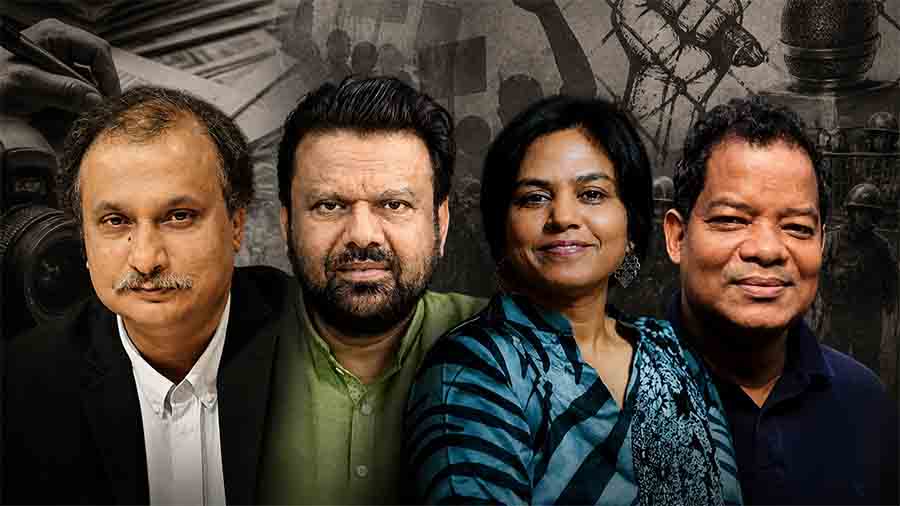
Farzana Rupa has been detained without trial since August 2024 and has nine murder cases against her. Journalist-editor Mozammel Haque Babu has been detained since September 2024 and has four murder and one extortion case against him.
“Farzana Rupa and Mozammel Haque, who were already in detention, now face new and vague charges stemming from a news report that is more than a decade old. Their arrest on charges of crimes against humanity violates the fundamental principle of press freedom and sets a dangerous precedent that threatens the right of journalists to work without fear of reprisal,” Amnesty International said.
On May 11, 2026, the Dhaka High Court granted Rupa interim bail in six cases, but she is still in prison due to other charges, including ICT-related cases.
Travel restrictions: Preventing journalists from traveling abroad
According to EU SEE, on May 3, 2026, Nazrul Islam Mithu, Dhaka correspondent of the German news agency Deutsche Presse-Agentur (DPA) and president of the Overseas Correspondents Association Bangladesh (OCAB), was prevented from boarding a plane by immigration authorities at Hazrat Shahjalal International Airport in Dhaka.
The incident occurred after he reached the immigration counter to collect his boarding pass to board a scheduled flight to China.
The report said he was called by name and later taken to the office of the Special Superintendent of Police for Immigration, where he was questioned about his identity, occupation, role in the OCA, purpose of travel and whether there were any cases against him.
An immigration official, speaking on condition of anonymity, told The Business Standard that he was detained due to objections from intelligence agencies.
The incident took place on World Press Freedom Day. A day earlier, OKAB had called for an end to the crackdown on journalists at an event organized in Dhaka. Later, Nazrul Islam Mithu shared his experience in a post on Facebook.
Online activists arrested for criticizing the government
Several people have been arrested in Bangladesh for social media posts deemed critical of the new BNP government.
According to Human Rights Watch, on March 31, 2026, Jamaat supporter Azizul Haque was arrested from Muktagachha in the northern region. Supporters of the ruling party alleged that a controversial image of the prime minister had been shared on his Facebook page.
The police arrested him under Section 54 of the Criminal Procedure Code. This section allows arrest without a warrant if the authorities have ‘credible information’ about the commission of a cognizable offence. There have been allegations of deliberate arrests using this section in the past. He was later charged under the Cyber Security Ordinance and the Anti-Terrorism Act.
On April 2, 2026, Jubo Dal members allegedly kidnapped Shaon Mahmud in Srinagar, near Dhaka, and handed him over to the police. He was accused of ‘insulting’ the Prime Minister on Facebook. He was later arrested under the Anti-Terrorism Act. Police said they were investigating whether his multiple posts were ‘anti-state’.
On April 5, Jamaat-e-Islami supporter Sawda Sumi was arrested under Section 54 of the Criminal Procedure Code in Bhola Municipality in the southern region. She was accused of making anti-government comments on Facebook. Two days later, the court granted her bail.
A. M. Hasan Nasim was arrested on April 17. According to media reports, he had posted a cartoon depicting a government MP as part of a joke made in parliament. He was detained from his home in the capital on the complaint of a ruling party worker.
Later, a case was filed against him under the section related to online blackmail of the Cyber Security Ordinance, 2025. He was granted bail on April 21.
According to Netra News, Shakil Ahmed was arrested on April 22. He was accused of using artificial intelligence (AI) to create a photo of himself and Jaima Rahman, the prime minister’s daughter and potential political successor, and posting it online.
The complainant, Mostafizur Rahman, leader of the BNP volunteer organization, said the post tarnished the image of the Prime Minister’s family and his own party.
Nishad Islam, a class 12 student, was arrested on April 25. He shared a video of the State Minister for Water Resources’ speech in Parliament on Facebook. He wrote along with the video:
“This is what happens when you go to parliament after smoking marijuana. And this marijuana user is the MP from our area.”
Police alleged that the video was distorted using artificial intelligence. The complaint was filed by Mohammad Abdus Salam, a ruling party leader in a local youth organization. He claimed that the post had tarnished his reputation as a political activist.

Mob violence is still going on at the same pace
Freedom of association
Women’s human rights defender accused of spreading false information
Front Line Defenders reported that on April 6, 2026, the District Magistrate of Rangamati, on the instructions of the Ministry of Home Affairs, issued a warning letter to women’s human rights defender Rani Yan Yan.
The letter accused him of spreading false and misleading information about the government and the army.
It said that he was campaigning against the government and the army at the international level and was trying to unite various indigenous organizations in the Chittagong Hill Tracts. It also said that his activities could worsen the situation in the Chittagong Hill Tracts and he was ordered to strictly abide by the law.
However, the letter did not mention any specific statements or actions on which these allegations were based.
Rani Yan Yan’s lawyer denied the allegations and demanded the letter be withdrawn. According to him, the widespread circulation of the letter has damaged Rani Yan Yan’s reputation and credibility and hindered her work as a human rights defender.
Rani Yan Yan is a women’s human rights and indigenous rights activist based in Rangamati, Chittagong Hill Tracts. She serves as the Chakma Rani and acts as an advisor to the Chakma Circle Chief.
For the past decade, her main focus has been on empowering indigenous women and youth in the Chittagong Hill Tracts, organizing movements, and campaigning for justice, equality, and inclusion at the local, national, and international levels.
The report mentions that he has been a victim of harassment before. In 2018, he was allegedly physically assaulted by security forces when he tried to protect two indigenous Marma sisters after they were accused of raping and sexually assaulting them in Bilaichhari, Rangamati.

Public attack on pro-Awami League lawyers in court premises
Lawyers arrested after peaceful Independence Day program
Lawyers Manish Kanti Dey and Mizanur Rahman were arrested in Sunamganj on the night of March 26, 2026.
A case has been filed against them under the Anti-Terrorism Act. Several other Bangladeshi lawyers have also been charged in the same case. It is alleged that they are leaders of a pro-Awami League lawyers’ organization.
According to the International Observatory of Lawyers at Risk, the arrests occurred after an event held on the same day to mark Independence Day.
Lawyers gathered at the Sunamganj court premises to pay tribute to the martyrs and participate in a peaceful procession.
Later, a police officer filed a case under the Anti-Terrorism Act, naming 27 people and naming many more unidentified individuals. Manish Kanti Dey and Mizanur Rahman were also among the accused in that case.
Human rights defender and former advisor accused of harassment at airport
Human rights defender and former Housing and Public Works Advisor Adilur Rahman Khan was allegedly harassed by immigration officials at Hazrat Shahjalal International Airport in Dhaka on March 2, 2026, while traveling to Nepal as an election observer.
Adilur Rahman Khan’s sister, Taskin Fahmna, said her brother was questioned and harassed for more than an hour at the airport.
On the other hand, the airport’s executive director and Bangladesh Air Force Group Captain Ragib Samad said it was due to a misunderstanding among lower-ranking immigration officials and the matter was later resolved.
Adilur Rahman Khan is the former editor of the human rights organization ‘Adhikar’. He also served as an advisor to the interim government led by Dr. Yunus, formed after the fall of the Awami League government.
He was previously convicted by the Dhaka Cyber Tribunal in a case filed in 2023 for alleged violations of the Information and Communication Technology Act, 2006. Human rights groups described the case as politically motivated. The charges against him were dropped in August 2024.
Failure to implement the Human Rights Commission and the Disappearances Ordinance
The new BNP government has failed to implement the National Human Rights Commission (NHRC) Ordinance, 2025 and the Prevention and Redress of Disappearances Ordinance, 2025. Both ordinances became ineffective after the elections were held, raising concerns about the government’s human rights commitments.
These two ordinances were adopted by the interim government.
Among the key changes proposed for the reconstituted National Human Rights Commission were:
• Increased powers to investigate allegations of human rights violations by security forces.
• Power to inspect and monitor detention facilities in accordance with the Optional Protocol to the Convention against Torture.
• Strengthening the institutional independence of the commission.
• Providing greater protection against removal of commissioners.
The Prevention and Redress of Disappearances Ordinance, 2025 was supposed to give the National Human Rights Commission the power to investigate allegations of disappearances.
Most importantly, these ordinances recognized ‘enforced disappearance’ as a distinct crime in Bangladeshi law for the first time and provided remedies and support for victims and their families.
In April 2026, all five members of Bangladesh’s National Human Rights Commission resigned in protest over the new government’s failure to implement the law.
As a result, the commission once again began operating under the 2009 law, which was enacted during the Sheikh Hasina government.
Critics say the law has not been effective in addressing serious allegations such as human rights violations, extrajudicial killings, and enforced disappearances.
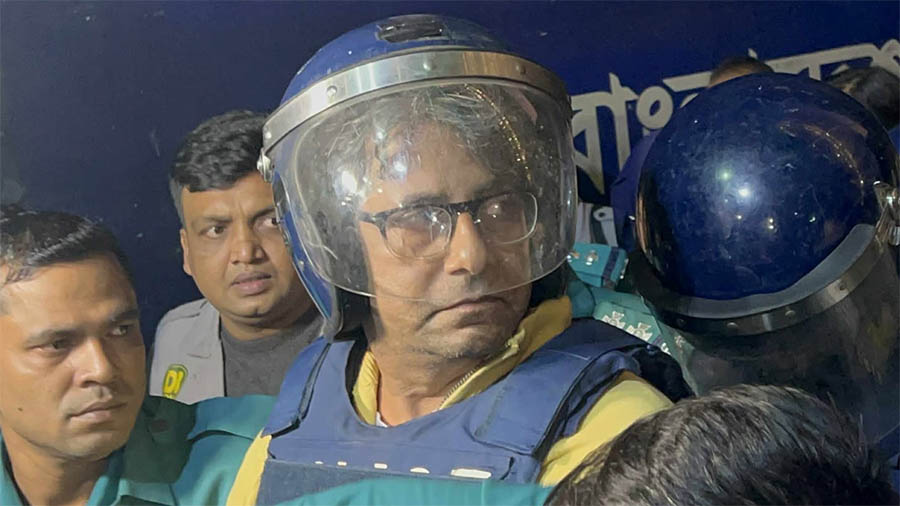
Journalist Anis Alamgir
Fears of impunity in new draft law
According to a Netra News report, the government presented a draft of a new law on the Human Rights Commission and enforced disappearances at a stakeholders’ meeting organized by the Ministry of Law on May 21, 2026.
The review found that the new draft laws could perpetuate the very culture of impunity that the previous ordinances sought to break.
According to Section 7 of the draft law, the appointment structure of the National Human Rights Commission has once again been entrusted to a politically influenced eight-member committee.
The committee will be chaired by the Speaker of the National Assembly. It will also include the Law Minister, the Home Minister, a member of parliament from the ruling party, and the Cabinet Secretary.
According to Section 20 of the draft National Human Rights Commission Act, 2026, the commission cannot directly investigate complaints against any ‘disciplined force’.
The term ‘disciplined forces’ includes the military, police, RAB, and all government intelligence agencies.
In the case of such complaints, the commission must seek a report from the head of the relevant force or the government.
Even if the report is not satisfactory, the commission can only send recommendations to the relevant accused organization. The organization will then be given six months to respond.
The report says that this will effectively allow institutions accused of human rights violations to conduct their own investigations.
Transparency International Bangladesh (TIB) has criticized the draft National Human Rights Commission Act, 2026, saying it could make the commission dependent on the government and law enforcement agencies.
According to TIB, there is a risk of the commission’s independence being undermined in investigating complaints against members of the law enforcement agencies.
Freedom of peaceful assembly
Awami League leaders and activists arrested on charges of preparing for a sudden procession
On May 22, 2026, police arrested 32 members of the ‘proscribed’ Awami League and its affiliate organizations.
It was alleged that they were preparing to hold a sudden or ‘sudden’ procession in the capital’s Dhanmondi-32 and Agargaon areas.
Of these, six people were arrested from the Fulbazar area near Agargaon Metrorail Station and another 26 people from various areas around Dhanmondi-32.
Confirming the matter, Dhaka Metropolitan Police’s Media and Public Relations Department Deputy Commissioner NM Nasiruddin said that a group of activists led by a leader of Bangladesh Chhatra League gathered in front of Agargaon Metrorail Station and were trying to organize a procession.
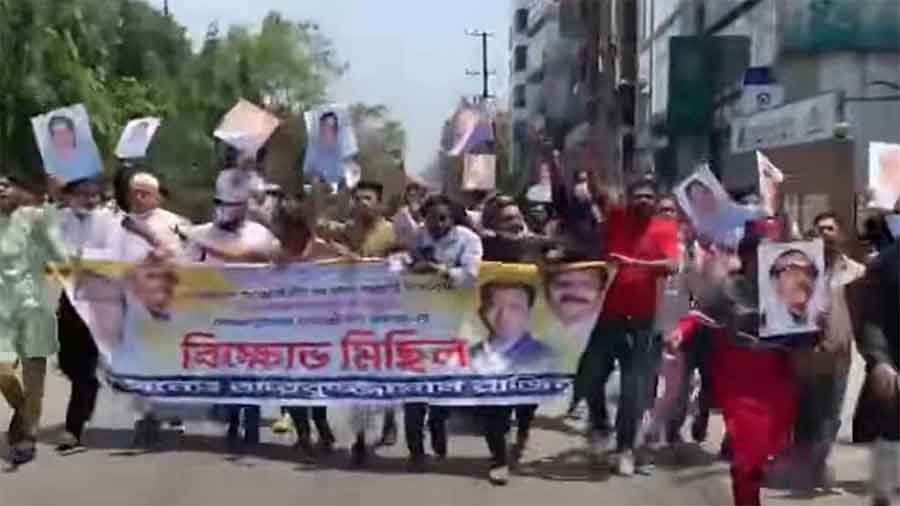
Leaders and activists of Awami League and its affiliated organizations are holding protest marches, ignoring arrests, cases and torture.
Finally
Civics assesses that Bangladesh’s civic space is still in a ‘repressive’ state.
The report said that even after the new government came to power, serious concerns remain regarding freedom of expression, freedom of the press, the right to form associations, and the right to peaceful assembly.
Cases against journalists, arrests of online activists, harassment of human rights defenders, application of anti-terrorism laws against lawyers, non-implementation of anti-disappearance and human rights reform laws, and ongoing crackdowns on political opponents have heightened international concerns about the human rights situation in Bangladesh, the report said.

https://stapravda.ru/20221228/reyting_samyh_populyarnyh_hostingov_v_rossii_196445.html, рейтинг хостингов России подтверждает, что выбор надежного провайдера важен для бизнеса.