
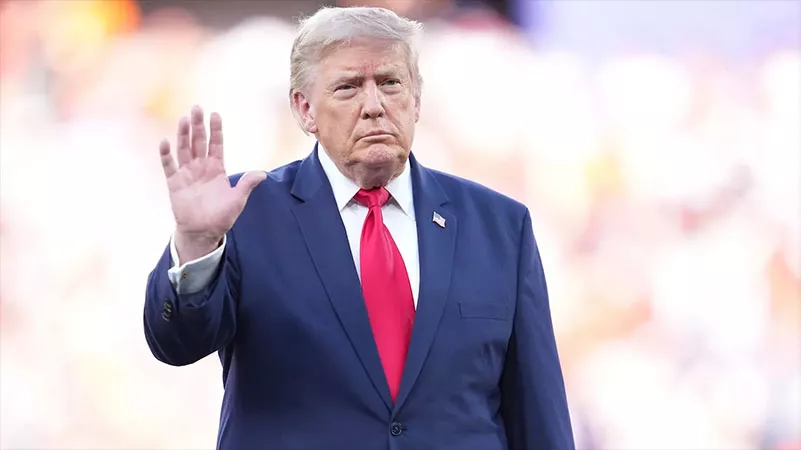
Staff Correspondent
The memorandum of understanding (MOU) that US President Donald Trump signed with Iran in mid-June promised to establish peace and security throughout the region. But since then, talks have stalled, war has resumed, the US has imposed new sanctions and US warships have once again blockaded Iran, according to an analysis by Will Waldorf, a professor at Wake Forest University and senior fellow at Defense Priorities, published in Foreign Policy.
Optimism a month ago, now despair
The terms of the deal, released in mid-June, have been the subject of controversy. Critics have called it a weak deal, claiming that Iran has been given too many concessions. Trump was particularly angered by comparisons to the Obama-era Iran nuclear deal, the report said. In an attempt to counter the comparison, Trump threatened Iran with harsh language and disrupted the first round of high-level talks, prompting the Iranian delegation to walk out of the meeting. There has been little progress in the talks since.
Trump’s Iran policy has become a classic example of a president who has started a war and desperately tries to cover up his own image while trying to protect it.
Why did the deal fall apart?
According to the report, a major reason for the protracted negotiations on the MOU was Trump’s diminished diplomatic clout due to the closure of the Strait of Hormuz, which made him reluctant to accept any deal that would make him look weak. Trump repeatedly told his aides that he needed something that could be presented as a “win”—like an expansion of the Abraham Accords or Iran’s promise to give up highly enriched uranium. He rejected a draft finalized by negotiators two weeks before the deal was due to be signed because it seemed too similar to Obama’s nuclear deal.
The situation is different now. While the June MOU was essentially a ceasefire and agenda-setting agreement, the two sides are now negotiating specific and concrete terms—which are directly tied to Trump’s personal reputation. As a result, he is much less willing to make concessions than before, because he can no longer easily interpret the terms of a final agreement in his favor as he could in an MOU. This, the analysis notes, is returning him to the position of maximum demands, as he did before the war began.
The report also noted that the economic pressure on the United States eased somewhat after the MOU came into effect, as oil prices fell, although it could be reversed if the fighting resumes. Therefore, there is less urgent pressure on Trump to reach a final agreement.
What does history say?
Historically, no US president has ever been able to end a stalemate in a war he started. If Trump uses his pragmatism or Congress puts pressure on him, he could break this trend—but both possibilities are slim.
This means that real peace will likely come through Trump’s successor, who will be in a relatively free position to accept the war as a failure and make the necessary concessions with Iran—something Trump finds difficult to do. These concessions could include accepting Iran’s right to enrich uranium and some control over the Strait of Hormuz—the main reason Tehran has resumed its recent conflict. Given America’s limited interests in the Middle East, these concessions may not be as painful as many people think—but they are the inevitable outcome of a war that should not have been fought in the first place.

https://stapravda.ru/20221228/reyting_samyh_populyarnyh_hostingov_v_rossii_196445.html, рейтинг хостингов России подтверждает, что выбор надежного провайдера важен для бизнеса.