

❐ Staff Reporter
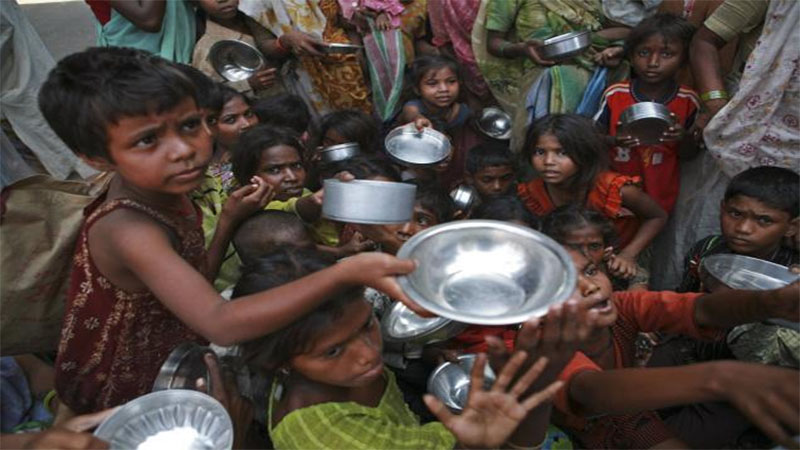
Many people in the country are now losing the ability to buy food. High inflation, income and employment crises, and natural disasters are all raising concerns about food security.
According to the World Food Programme (WFP) forecast, 18.1 million people in the country could be at risk of acute food insecurity in the last four months of 2026. This number was 2.8 million fewer at the beginning of the year.
Today, Friday, October 16, is World Food Day. This year’s theme is ‘Innovation Today, Nutrition Tomorrow’. The day was decided to be observed in 1979 at the 20th Conference of the Food and Agriculture Organization of the United Nations (FAO); it was first celebrated in 1981.
On this day to highlight the importance of food access and nutrition, the country’s food security situation has once again come under discussion.
The WFP report, released on September 22, highlights several factors behind the rising risk of food insecurity. High commodity prices and reduced purchasing power are combined with damage to agricultural land in floods, malnutrition in children, and uncertainty about the continuation of food assistance to Rohingya refugees.
Although food is available in the market, many families cannot afford to buy it. According to the government agency Trading Corporation of Bangladesh (TCB), a kilogram of coarse rice now costs at least 50 taka. Uncooked flour is also being sold for about 50 taka per kilogram. As a result, a large portion of the monthly expenses of people with limited incomes is spent on buying food.
Food prices began to rise in early 2022, following the Russia-Ukraine war. In July 2024, food inflation exceeded 14 percent—the highest in nearly a decade. The rate remained above 10 percent for several months after that. Now the inflation rate has declined, but commodity prices have not returned to their previous levels.
According to the Bangladesh Bureau of Statistics (BBS) in September, food inflation was 7.22 percent and non-food inflation was 9.30 percent. In other words, although the pace of food price increases has slowed down somewhat, the spending pressure on the common man has not been completely reduced.
There are also concerns about the economic outlook. The International Monetary Fund (IMF) forecast on October 13 said that Bangladesh’s GDP growth could decline to 3.2 percent in the current fiscal year 2026-27.
At the same time, average inflation could rise to 10.9 percent. If growth remains sluggish and inflationary pressures persist, the investment environment could become more difficult, along with people’s income and purchasing power.
Natural disasters have also affected agricultural production. According to the WFP report, about 80,000 hectares of agricultural land were damaged by floods and waterlogging in 2026. This affected 230,000 farming families and 1.3 million people.
Land degradation has disrupted production; at the same time, the income opportunities of many people dependent on agriculture have also been reduced.
Remittances also play a role in food security. The report says that nearly half of Bangladesh’s total remittances come from the Middle East. Instability in that region could disrupt remittance flows, impacting the country’s economy and the purchasing power of families.
In addition to food shortages, malnutrition is also a major concern. According to WFP, one in four children under the age of five in the country are stunted—meaning they are short for their age.
In addition, 11 percent of children are stunted, meaning they weigh less than their height. Two out of every five families in the country have significant micronutrient deficiencies. Children’s normal growth and development are being hampered by not getting enough food and essential nutrients.
There are also some indications of a shortage in government food distribution accounts. According to the Food Ministry, 834,000 tonnes of rice and wheat were distributed under various programs from July 1 to October 8 this year.
The amount is 48,000 tons less than the same period last year. However, the country currently has about 2.35 million tons of food grains in stock.
Economists have recommended prioritizing the most vulnerable people to address food insecurity.
According to Selim Raihan, a professor of economics at Dhaka University and executive director of SANEM, the government’s first task should be to identify vulnerable populations and provide them with quick and effective assistance.
He said, “Food assistance needs to be increased for low-income families, daily wage laborers, agricultural workers, female-headed families, and people in disaster-hit areas. Along with this, the sale of daily necessities including rice and pulses at fair prices and the scope of targeted cash assistance for truly needy families need to be expanded.”
Selim Raihan also emphasized preventing the creation of artificial crises in the market and manipulation of product prices.
According to him, it is important to conduct regular surveillance to prevent hoarding and ensure transparency in the food supply system. It is also necessary to ensure that food aid reaches the actual beneficiaries.

https://stapravda.ru/20221228/reyting_samyh_populyarnyh_hostingov_v_rossii_196445.html, рейтинг хостингов России подтверждает, что выбор надежного провайдера важен для бизнеса.