
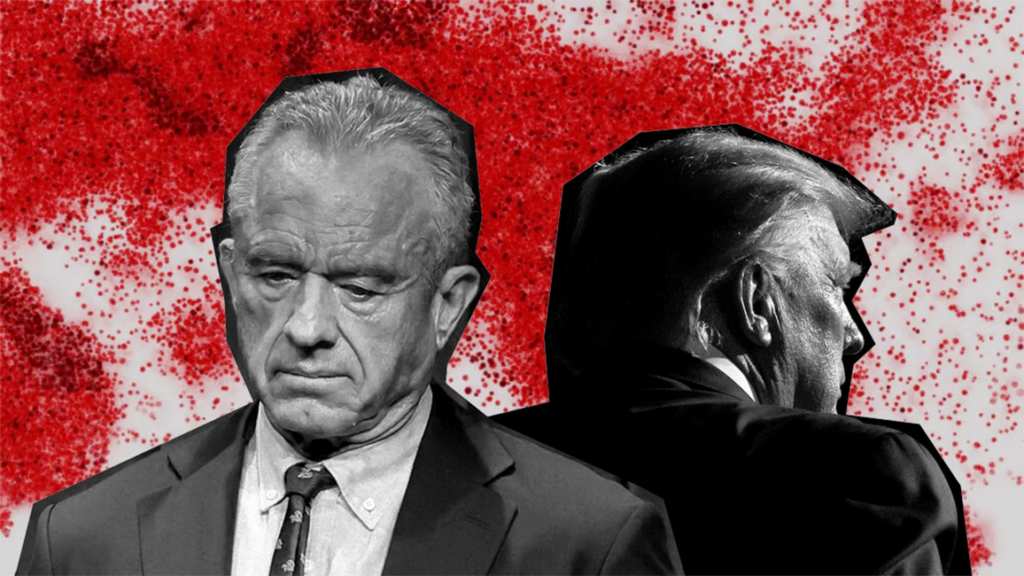
The Yunus government changed the traditional method of vaccine procurement, ignoring UNICEF’s warnings; in the United States, childhood vaccination rates are declining due to Robert F. Kennedy Jr.’s anti-vaccination stance and changes in public health policy.

Special Correspondent. Dhaka, November 17, 2026.
Measles, a deadly infectious disease once nearly eradicated from Bangladesh thanks to the success of a vaccination program, has made a terrifying comeback. In 2026, more than 1,300 people died in a nationwide measles outbreak, most of them children. The disaster has been blamed on administrative failures, including changes in vaccine procurement processes, failure to import vaccines on time, and ignoring repeated warnings from international organizations.
The experience in Bangladesh is strikingly similar to the United States. Under US President Donald Trump’s administration, the measles outbreak in the country has taken a dramatic turn for the worse, amid skepticism about vaccination, anti-vaccination rhetoric, and declining rates of routine childhood vaccinations under Robert F. Kennedy Jr., Secretary of the Department of Health and Human Services (HHS).
A special investigative report by the news agency Reuters published on November 17 said that more than 7,700 people have been infected with measles in the United States since 2025 and at least 13 have died. This is the highest number of infections and deaths in the country in nearly four decades. The United States has even lost the status of a measles-free country that it had achieved for 26 years.
How did the vaccine crisis arise in Bangladesh?
International media and public health experts have identified the Yunus government’s policy change in vaccine procurement as one of the main reasons behind this horrific return of measles in Bangladesh.
Bangladesh had long been procuring World Health Organization (WHO)-approved vaccines through UNICEF. UNICEF and the Global Alliance for Vaccines and Immunization (Gavi) played a key role in this system. But in September 2025, during the Yunus government, it was decided to change the direct procurement method and purchase a portion of the vaccines through open tenders.
UNICEF had warned the government several times before this decision. According to UNICEF Bangladesh Representative Rana Flowers, from 2024 to 2026, the organization raised the threat of vaccine shortages in at least 10 meetings, in addition to sending five to six letters.
But the interim government ignored that warning and continued the new procurement process.
According to research by the international scientific journal Science and reports from various media outlets in Bangladesh, the supply of vaccines is hampered by administrative complications in the new tender system, delays in approval and disbursement, and failure to complete the procurement process.
In May 2026, UNICEF reported that Bangladesh needed about 70 million doses of vaccines annually, but only 17.8 million doses were purchased in 2025. The organization also said that the vaccine shortage was not due to a lack of funds; rather, the supply chain was disrupted due to changes in procurement methods.
In a later speech in Parliament, the current Health Minister also admitted that the decision to go for open tenders despite UNICEF’s warnings and bureaucratic complications were among the reasons for the vaccine shortage. According to him, although the vaccines were stocked in international warehouses, their arrival in the country was delayed due to the lack of final approval and release of funds in Dhaka.
1,314 people died, most of them children
The dire consequences of this disruption in vaccine supply were seen in the measles outbreak that began in March 2026.
According to the latest figures released by the Directorate General of Health Services on November 16, the combined number of deaths related to measles and measles symptoms in the country has reached 1,314. Of these, 1,209 deaths have been classified as suspected measles and 105 deaths have been classified as confirmed measles.
At the same time, the number of suspected patients has reached 248,060 and the number of confirmed cases has reached 25,269.
In other words, one child after another in Bangladesh has died from a preventable disease. Deaths that could have been largely prevented if the vaccination program had been continued have become a national public health disaster.
Kennedy’s vaccination policy and the spread of measles in the United States
A Reuters investigative report found similarities between this incident in Bangladesh and the current situation in the United States.
Robert F. Kennedy Jr., who was appointed Health and Human Services Secretary under President Donald Trump, has long been associated with the anti-vaccination movement. Public health experts have accused his statements and policy positions as health secretary of creating confusion about childhood vaccination programs.
According to a Reuters investigation, measles vaccination rates among children have declined in various states in the United States since the Trump administration took office in 2025. The situation is particularly worrying in the state of Utah.
In June 2025, a measles outbreak began in a religious community that was reluctant to get vaccinated. The infection later spread to various public places, including schools, basketball games, church events, supermarkets, and daycare centers.
Reuters reported that of the 725 measles cases in Utah, about 65 percent were in unvaccinated children.
In the past, when such infections occurred in the United States, public health authorities quickly coordinated with experts to implement preventive measures, urge families to get vaccinated, and take emergency measures to control the spread. But after Kennedy took office, health officials in some states slowed down vaccination campaigns and the necessary measures to control the spread were not strong enough, the investigation found.
In addition, the Trump administration has cut $11 billion in funding for state and local public health programs, putting pressure on the manpower and funding for vaccination and disease prevention programs.
Kennedy argues that children can develop stronger immunity through direct exposure to the disease. But medical experts say measles is highly contagious and can cause complications such as pneumonia, encephalitis and even death. Intentionally exposing children to the risk of infection, despite the availability of safe and effective vaccines, is a public health risk.
Reuters’ investigation also found that public confidence in the public health system in the United States is being undermined by the pro-vaccine rhetoric of the Kennedy and Trump administrations and policy initiatives to reduce childhood vaccinations.
What are the similarities between the crises in the two countries?
The situation in Bangladesh and the United States is not the same. In Bangladesh, the main cause of the crisis was administrative obstacles in vaccine procurement and supply chain, while in the United States, political rhetoric, policy changes, reduced funding for public health programs, and declining vaccination rates have emerged as major factors.
However, there are three important similarities between the crises in the two countries.
First, ignoring the warnings of experts. UNICEF has repeatedly warned of a vaccine shortage in Bangladesh. In the United States, doctors and public health experts have also been warning about the dangers of declining vaccination rates.
Second, policy decisions take precedence over public health. Changes in the traditional vaccine procurement system in Bangladesh have disrupted supply. In the United States, political and policy shifts on vaccines have weakened the environment for childhood vaccination.
Third, the devastating resurgence of preventable diseases. Measles has spread in both countries amid a lack of vaccination and weak public health systems. Children are paying the heaviest price.
Politics over vaccination, children are paying the price
Measles is an infectious disease for which an effective vaccine has been available for decades. The two doses of the vaccine are approximately 97 percent effective in preventing the disease.
However, administrative scrutiny of the vaccine procurement process in Bangladesh and the anti-vaccination political stance in the United States have called into question the most effective way to protect children’s lives.
Bangladesh’s experience has shown how dire the consequences of changing established vaccine procurement systems, ignoring the warnings of international organizations, can be. The current situation in the United States shows that even when political ideology and anti-vaccination campaigns influence health policy, ordinary people pay the price.
The events in both countries have brought to the fore a fundamental question—who will ultimately take responsibility for the government’s policy whims, political stance, or administrative oversights on life-and-death issues like public health?
Will the lives of children who are at risk of infection due to lack of vaccination or misleading propaganda about vaccination be left out of the calculation of state failure?

https://stapravda.ru/20221228/reyting_samyh_populyarnyh_hostingov_v_rossii_196445.html, рейтинг хостингов России подтверждает, что выбор надежного провайдера важен для бизнеса.