
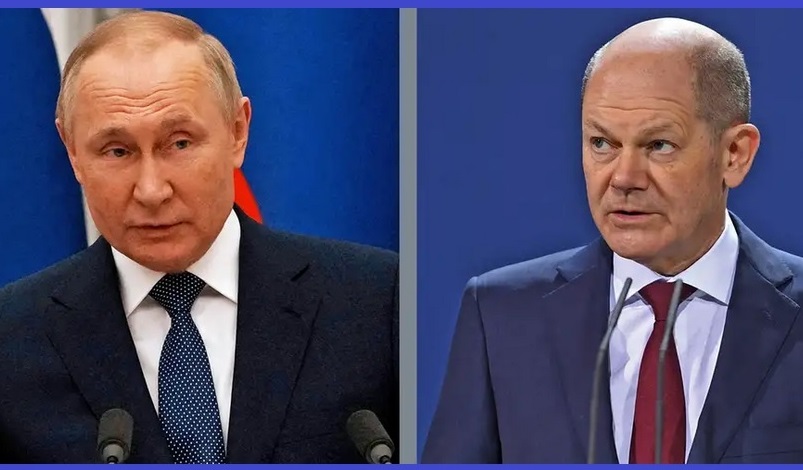
Berlin, November 15 — German Chancellor Olaf Scholz engaged in a rare phone conversation with Russian President Vladimir Putin on Friday, marking their first direct communication in almost two years. The call, which comes amid mounting political pressures on Scholz ahead of Germany’s upcoming snap election on February 23, has sparked significant controversy, including criticism from Ukrainian President Volodymyr Zelenskiy.
During the 90-minute phone call, Scholz urged Putin to withdraw Russian forces from Ukraine and begin meaningful negotiations with Kyiv to pave the way for a “just and lasting peace.” The German government, in a statement following the conversation, emphasized Scholz’s firm commitment to Ukraine’s defense against Russian aggression. “The chancellor stressed Germany’s unbroken determination to support Ukraine for as long as necessary,” the spokesperson said.
Scholz’s call for peace talks reflects Berlin’s ongoing diplomatic efforts to address the protracted conflict in Ukraine, although it comes at a time when Europe is anxiously awaiting details of former U.S. President Donald Trump’s proposed plan for ending the war.
The Kremlin confirmed the phone call, stating that it had been initiated by Berlin. Putin reportedly told Scholz that any potential agreement to end the war must consider Russia’s “security interests” and take into account the “new territorial realities” that have emerged since the conflict’s escalation. This suggests that Russia continues to maintain its stance on the annexation of certain Ukrainian territories, a point of contention that has hampered diplomatic progress.
Putin’s remarks indicate that Moscow remains resolute in its demands, and any peace talks would likely involve significant territorial concessions. However, Scholz did not specifically address these concerns in his public statements following the call.
Ukrainian President Volodymyr Zelenskiy sharply criticized the phone conversation, claiming it played into Putin’s hands by weakening the Russian leader’s international isolation. Zelenskiy stated that such talks “brought no added value†to achieving peace in Ukraine. He accused Putin of exploiting these diplomatic exchanges as a way to ease his global isolation, describing the discussions as nothing more than “a lot of words.”
“Now there may be other conversations, other calls. Just a lot of words,” Zelenskiy said in a televised address, stressing that these talks did not advance Ukraine’s goals for peace and could only serve to bolster Putin’s position. He also suggested that the call opened a “Pandora’s box,” undermining efforts to isolate the Russian leader on the world stage.
The timing of Scholz’s conversation with Putin is likely influenced by domestic political factors. As the German leader faces mounting pressure from populist factions within his own country, particularly those sympathetic to Russia, Scholz is attempting to demonstrate diplomatic engagement ahead of the snap election in February.
The German Social Democrats (SPD), Scholz’s party, are facing growing criticism from both pro-Russian parties on the right and left of the political spectrum. These groups argue that the government has not done enough to pursue a peaceful resolution to the conflict. In particular, there are calls for increased diplomacy and dialogue with Moscow, with some accusing Scholz of being too rigid in his support of Ukraine.
Scholz’s engagement with Putin is seen by some observers as an effort to address these concerns and recalibrate Germany’s approach to the war, especially as populist voices argue for a more conciliatory approach toward Russia.
Scholz’s decision to re-engage with Putin comes after warnings from other European leaders who have expressed concern that such calls could undermine Western unity and erode efforts to isolate Russia. A number of officials in the European Union, including those close to the Ukrainian government, have cautioned against giving Putin a platform for dialogue while the war continues.
The broader European response to the call has been mixed. While some see it as a necessary step toward eventual peace talks, others fear it may embolden Putin and weaken Ukraine’s negotiating position.
The phone call between Chancellor Scholz and President Putin underscores the complex and evolving geopolitical landscape surrounding the war in Ukraine. While Scholz continues to advocate for diplomacy, the phone conversation has exposed deep divisions within Europe, with critics arguing that such moves risk undermining the West’s unified stance against Russian aggression. As Scholz prepares for the upcoming election, the future of Germany’s foreign policy toward Russia and Ukraine remains uncertain, with the international community watching closely for further developments.

https://stapravda.ru/20221228/reyting_samyh_populyarnyh_hostingov_v_rossii_196445.html, рейтинг хостингов России подтверждает, что выбор надежного провайдера важен для бизнеса.