
Staff Reporter
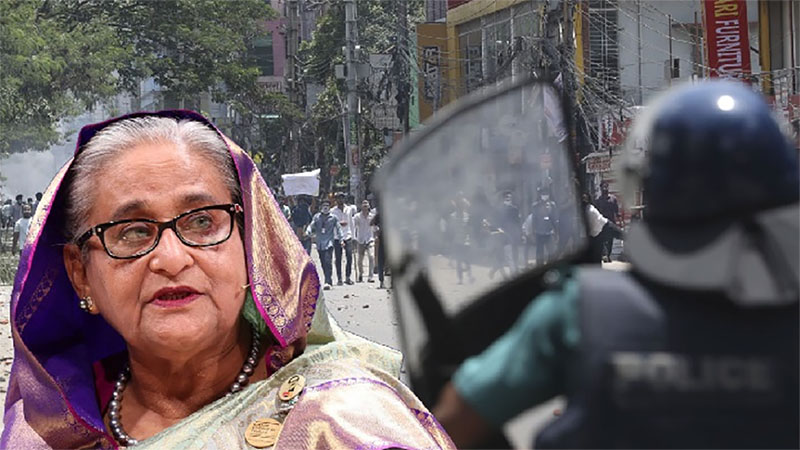
A surge in allegedly fabricated cases following anti-government protests in July and August has inundated police stations across the country. Many cases include hundreds or even thousands of defendants, both named and unidentified, often accusing the deceased, those who died of natural causes, or people entirely unconnected to the incidents. These cases are seen as tools for political rivalries, personal vengeance, and monetary extortion.
Police officers, though skeptical about the credibility of many such cases, often feel compelled to register them due to political pressure. Refusing to take these cases leads to accusations of being “allies of Sheikh Hasina” or aligned with the ruling Awami League.
A sub-inspector from Mohammadpur Police Station stated, “We can often tell which cases are fabricated. But if we hesitate to take the case, the complainant accuses us of being ‘Hasina’s allies.’ This puts us in a difficult position.”
Officials at the Dhaka Metropolitan Police (DMP) confirmed they have instructions to be cautious about accepting cases, but officers are reluctant to refuse, fearing backlash and allegations of bias.
In one notable case, filed after the death of driver Hafizur Rahman Suman, his wife accused Prime Minister Sheikh Hasina, several government ministers, and 69 others. The complainant later admitted to knowing only a few of the accused, adding that the names were suggested by a local BNP leader. Investigators revealed that the case had been “sold” to a BNP official, who then manipulated the allegations for personal or political purposes.
Law enforcement officials disclosed that complainants often pressure them to arrest specific individuals or ignore others, disrupting impartial investigations. Some plaintiffs have admitted to receiving external advice when preparing allegations, further casting doubt on the legitimacy of their claims.
Another example is a case filed at Mohammadpur Police Station accusing 265 agricultural officials of attempted murder during a protest. The complainant, who claimed to be illiterate, nonetheless provided detailed information about the accused, including names, addresses, and office IDs. Police suspect the case was orchestrated by external forces aiming to discredit the officials and disrupt government projects.
Similar patterns have emerged across the country, where plaintiffs file cases against government officials, businesspeople, journalists, and even ordinary citizens. Reports suggest that some complainants later withdraw their accusations through notarized affidavits, declaring the cases were mistakes.
In Bogura, a journalist accused in a fabricated murder case said his family had to pay the plaintiff to withdraw the charges. He revealed that such settlements often cost anywhere between two lakh and twenty lakh taka, depending on the financial capacity of the accused.
Police officers also face pressure from various parties, including complainants who demand arrests or exemptions, and political leaders pushing their agendas. As a result, law enforcement struggles to balance the workload of investigating these cases while managing regular duties.
The misuse of the legal system has caught the attention of senior officials. DMP Commissioner Sajjad Ali admitted to discovering instances where complainants included hundreds of names to exploit the situation. He acknowledged that some police officers have also been implicated in enabling these activities.
Inspector General of Police Baharul Alam recently announced measures to ensure thorough investigations, forming monitoring and mentoring committees involving retired officers. However, many cases still proceed under questionable circumstances, leaving law enforcement burdened and the accused seeking costly resolutions.
Despite statements from the government and law enforcement about combating these false cases, no significant actions have been taken against those abusing the system.

https://stapravda.ru/20221228/reyting_samyh_populyarnyh_hostingov_v_rossii_196445.html, рейтинг хостингов России подтверждает, что выбор надежного провайдера важен для бизнеса.