
Staff Reporter
In the industrial hub of Gazipur, 51 factories have closed down over the past few months due to various reasons. Among these, 41 have been permanently shut, while 10 have been temporarily closed, according to authorities. The Keya Group has announced that seven more of its factories will cease operations starting May.
The closure of these factories has left approximately 70,000 workers jobless. Among them, 42,000 workers were employed in the 16 factories of the Beximco Group. The families of these workers are now living in extreme hardship.
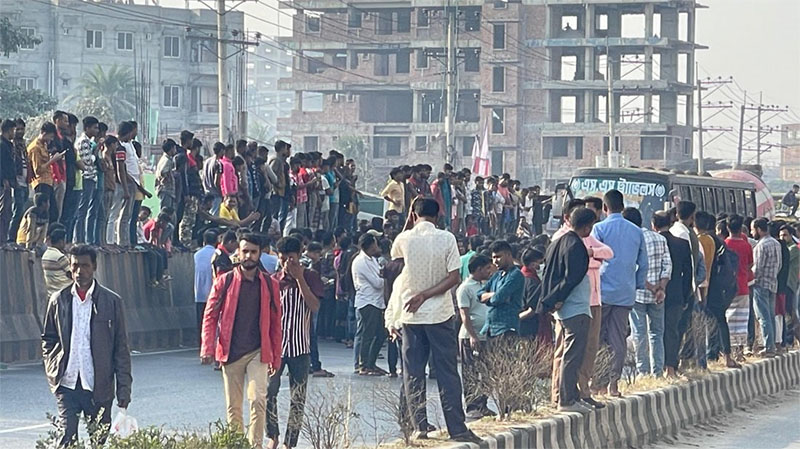
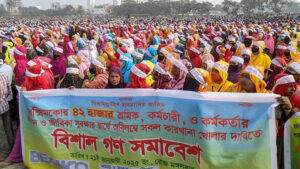
Workers have been protesting, demanding payment of overdue wages and the reopening of closed factories. Incidents of highway blockades, vandalism, and arson have been reported. Recently, agitated workers set fire to Grameen Fabrics and Fashion Limited, owned by Grameen Telecom Trust. As a result, Gazipur has turned into a city of protests.
According to Gazipur Industrial Police, there are 2,176 registered factories in the district, including 1,154 garment factories. Since November, 35 garment factories have failed to pay workers’ wages, and 45% of factories have unpaid wages since December. Many factories in Gazipur are facing worker unrest due to various issues, including disputes over wage increments. A total of 41 factories have been permanently closed, while 10 remain temporarily shut.
Notable among the closed factories are 16 units of the Beximco Industrial Park, TMS Apparels in Tongi, Polycon Limited and Apparel Plus in Konabari, Niagara Textiles in Kaliakair, and Mahmud Jeans. Most of these factories closed due to banking and financial complications.
The Keya Group has already announced the closure of six factories in the Zirabo area, where around 15,000 workers, including a significant number of hearing and speech-impaired individuals, were employed. Four factories will close permanently from May 1, and three more will follow on May 27. The group, which earned billions in foreign currency annually, cited market instability, banking complications, raw material shortages, and insufficient production capacity as reasons for the closures.
In a notice, the Keya Group assured that workers’ dues would be paid within 30 working days of the factory closures, as per labor laws. Sabina Yasmin, Manager of the Human Resources Department at Keya Group, stated, “Export activities are being hampered due to banking complications. We have been forced to close the factories, but all workers’ dues will be cleared.”
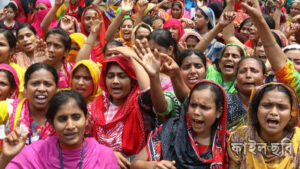
Meanwhile, the closure of 16 factories in the Beximco Industrial Park has left 42,000 workers unemployed and struggling to survive. The decision to shut down these factories was made at a meeting of the Ministry of Labor and Employment on December 15. The reasons cited include a lack of orders and loan defaults, making it impossible to continue operations.
SM Abdul Latif, Senior General Manager (Administration) of Beximco, said, “The livelihoods of our 42,000 workers are at risk. We urge the government to help us lift the layoffs and resume operations by facilitating back-to-back LCs and other banking facilities.”
Workers of Dard Composite Textile Limited in Rajendrapur, Gazipur, have also protested, demanding unpaid wages and other dues. Over 200 workers have not received wages, provident funds, service benefits, or maternity allowances for seven months. Despite repeated promises from the owners, no solution has been provided.
Safiqul Alam, President of the Gazipur Metropolitan Branch of the Bangladesh Garment and Industrial Workers Federation, said, “The government has provided an interest-free loan of Tk 13 crore to the owner of Dard Composite Textile Limited to clear workers’ dues. However, even after a month, not all workers have been paid. While Tk 8.65 crore has been disbursed, over Tk 14 crore remains unpaid.”
Foyez Ahmed, Chief Financial Officer of the Dard Group, said, “We have paid some of the workers’ dues. It is not possible to pay everything at once, but the remaining amount will definitely be cleared.”
He added, “After August 5, several factories in Gazipur closed due to unpaid wages. Some factory owners were associated with Awami League politics, and their absence for various reasons led to the closures. Thousands of workers have been left unemployed. Worker unrest persists in many factories. The government has not taken the necessary steps to address labor grievances. It is essential to bring workers from the streets to the negotiation table and resolve issues through dialogue.”
AKM Zahirul Islam, Superintendent of Industrial Police-2, stated that 51 factories in the district are closed, including 10 temporarily. The closures are due to banking issues, owner absenteeism, and other factors.
Law enforcement agencies are struggling to manage the growing worker unrest. Agitated workers continue to take to the streets, protesting for their rights.

https://stapravda.ru/20221228/reyting_samyh_populyarnyh_hostingov_v_rossii_196445.html, рейтинг хостингов России подтверждает, что выбор надежного провайдера важен для бизнеса.