
Staff Correspondent | July 5, 2025
During last year’s July-August attacks on prisons across the country, agitators broke inmates out, enabling thousands to escape. Among them were dangerous murderers, hardened militants, top terrorists, death-row convicts, and other notorious criminals. So far, 1,520 inmates have been recaptured, with 1,130 released again on bail. However, 721 prisoners remain at large.
Additionally, a significant number of firearms and ammunition looted from five prisons across the country have yet to be recovered.
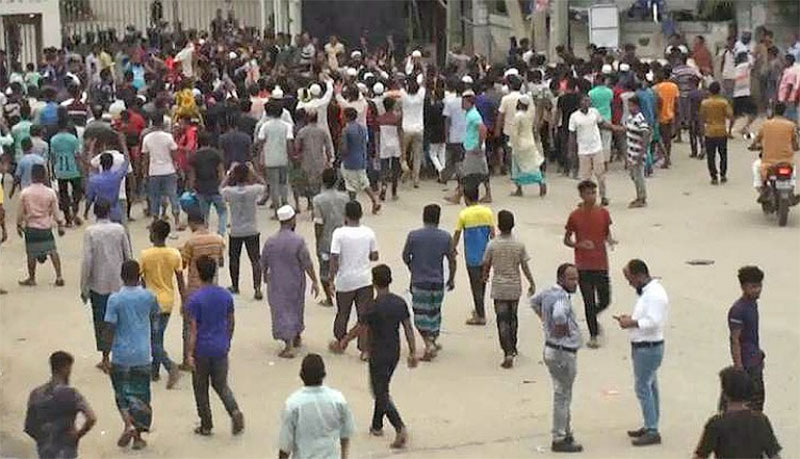
The jailbreak of militants in Bangladesh began on July 19 last year. At noon, in a pre-planned move, thousands of BNP, Jamaat-Shibir, and militant group members surrounded Narsingdi District Jail, shocking not just the district but the entire nation. Amid the growing quota reform movement, an unprecedented event in the country’s prison history unfolded—824 inmates, including nine militants, escaped. Moreover, the attackers looted 85 firearms, ammunition, and security equipment from the prison armory. These attackers, who acted as the striking force during the July-August protests, were aided by members of juvenile gangs.
Following the Narsingdi incident, security was heightened at prisons nationwide, especially at Gazipur’s Kashimpur High-Security Central Jail, where the most dangerous militants, top terrorists, and hundreds of death-row convicts were held. Alongside prison guards, police and army surveillance was intensified.
However, the situation changed on August 5 when news of Sheikh Hasina’s departure from the country led thousands of so-called “students and common people” to surround Kashimpur High-Security Jail, led by “child orator” Rafiqul Islam Madani. Rafiqul, who had been imprisoned for over two and a half years, was released from this very jail in early November 2023. Eventually, news of the jail siege reached the inmates, who also began protesting.
Chaos erupted inside the prison, spiraling out of control. Jail Superintendent Subrata Kumar Bala, responsible for the high-security facility, found himself in a dilemma—Gazipur, like the rest of Bangladesh, was engulfed in violence and bloodshed. He sought guidance from his superiors but failed to reach anyone. Ultimately, he and at least three other prison officials spent a sleepless night, helpless.
The next morning, August 6, a small contingent of soldiers was deployed inside the jail, but they made no effort to stop attacks from outside agitators or inmates. Meanwhile, army commandos were flown in by helicopter from Dhaka. But before they arrived, hundreds of inmates overpowered guards and escaped, including numerous militants and top criminals. In the ensuing chaos, ordinary prisoners also fled. Commandos eventually opened fire, killing six, including three militants involved in the Holy Artisan Bakery attack.
Law enforcement officials warn that the escaped hardened criminals could commit various offenses, worsening law and order.
Prison Directorate sources reveal that before and after August 5 last year, 2,240 inmates fled from several jails. Protesters looted 94 shotguns and Chinese rifles during prison attacks. Six inmates died while escaping Kashimpur High-Security Jail. The fugitives include militants, death-row convicts, lifers, and undertrials—203 of whom were sentenced to death or life imprisonment for murder, robbery, anti-terrorism laws, arms, narcotics, rape, and other crimes.
A top Prison Directorate official, speaking anonymously, said law enforcement has failed to trace the fugitives, who may have fled the country.
On July 19, 2024, thousands stormed Narsingdi District Jail, breaking cells and setting fires. 826 inmates, including nine militants, escaped.
Narsingdi Jail’s Senior Superintendent Shameem Iqbal stated that after the incident, the administration announced amnesty for surrendering inmates, leading 646 to turn themselves in. Law enforcement arrested 38 others, including three militants. 142 remain at large. The jail’s online system was destroyed, leaving no detailed records of the fugitives.
Another senior prison official admitted that law enforcement has been unable to locate the escaped inmates, suspecting they may have fled abroad.
Prison sources say that on August 5 evening, miscreants broke into Gazipur’s High-Security Central Jail, setting fire to a warehouse and destroying inmate records. 202 prisoners escaped, most jailed under anti-terrorism laws.
Protesters also freed Jemi, a Chhatra Shibir activist convicted in Buet student Abrar’s murder. Muntasir Al Jemi (26), son of Abdul Majid from Kendua, Netrokona, was a death-row prisoner (No. 5177) at Gazipur Jail. On August 6, anti-government protesters helped 202 inmates escape by breaching walls—87 were death-row convicts, including Jemi.
Media reports on August 7 revealed that after news of the political shift on August 5 reached inmates, murderers, terrorists, and militants at Kashimpur Jail began protesting to break free, instigated by outside agitators. Amid nationwide anarchy and reports of police killings, jail guards were demoralized and terrified.
Jail Superintendent Subrata Kumar Bala stated that inmates began protesting at noon, with many using ladders or breaking walls to escape. Army teams arrived via helicopter from Dhaka, but before they could act, 209 inmates fled after taking guards hostage with outside help. Army and guards fired, killing six, including three militants.
Relatives of militants, collaborating with protesters, orchestrated the jailbreak to free hardened terrorists amid nationwide chaos. Many top militants remain untraced.
In Satkhira Jail, hundreds of miscreants scaled walls on August 5 evening, broke locks, and freed 596 inmates. Jail Superintendent Deb Dulal Karmakar said 529 have since surrendered, while 23 were recaptured—44, including two women, remain fugitives.
On August 5 afternoon, protesters broke into Sherpur District Jail, vandalizing and setting fires, allowing 518 inmates to escape. Nine firearms (five Chinese rifles, four shotguns) were looted.
Questions linger over how “students and common people” breached the country’s only high-tech high-security jail. How did inmates overpower 25-30 guards? How were massive walls broken despite army presence? Who assisted from outside? No answers have been provided by prison authorities, the army, or the Home Ministry.
Similar jailbreaks occurred nationwide after August 5. In Chattogram’s Central Jail, Chhatra Shibir terrorists clashed with guards on August 9. Inmates rebelled while militants outside fired weapons looted from police stations. Guards fired rubber bullets and blanks, injuring several inmates. Guards were also critically wounded by outside gunfire. Army and BGB controlled the situation, with unconfirmed reports of attackers being shot. While jail authorities claim no inmates escaped, doubts persist—many Jamaat-Shibir murderers were held there.
Amid nationwide chaos, death-row and other convicted militants were systematically dispersed or released. The most alarming fact is that countless dangerous criminals remain at large. Sources claim most fugitive militants have taken refuge in hideouts in the Chittagong Hill Tracts.
A large portion of heavy weapons looted from Narsingdi Jail’s armory has fallen into militant hands. After the destruction of over 450 police stations nationwide from August 4, looted weapons largely ended up with militants and terrorists. Advanced weapons, intelligence equipment, and sensitive accessories from Ganabhaban and Parliament House, including law enforcement’s wireless network devices, remain unrecovered.
Reports indicate some looted weapons reached terrorists at Mohammadpur’s Geneva Camp. These arms have fueled nationwide violence and killings since August. Trained militants could use them for sabotage, but analysts see no concern among government officials. The Home Advisor has expressed helplessness, admitting failure in “Operation Devil Hunt” to recover weapons, deepening public security fears.

https://stapravda.ru/20221228/reyting_samyh_populyarnyh_hostingov_v_rossii_196445.html, рейтинг хостингов России подтверждает, что выбор надежного провайдера важен для бизнеса.