
Opinion
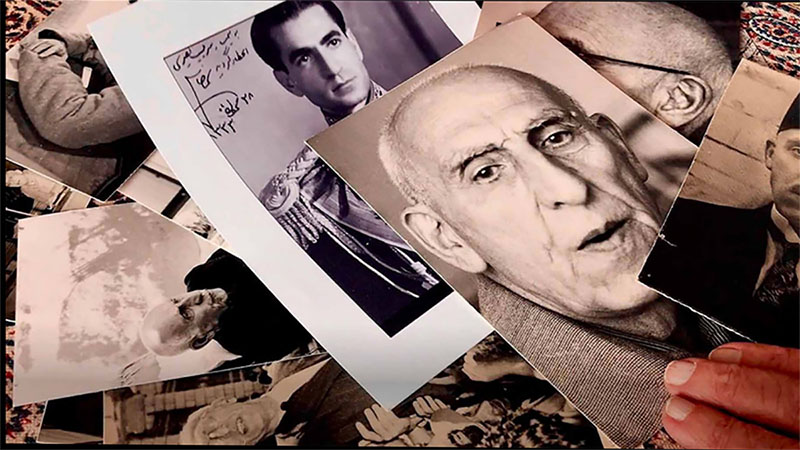
Today’s Iran means theocracy, nuclear debate and conflict with Western countries in the eyes of many. But there was a time when Iran had a democratic government. A government elected by the people, which wanted to work transparently. And at the head of that government was an extraordinary leader—Dr. Mohammad Mosaddeq.
Dr. Mohammad Mosaddeq’s political career began at a historical turning point in Iran—the 1906 Persian Constitutional Revolution. His political life began with the movement to establish a democratic structure against the monarchical authority.
The Constitutional Revolution was the first major democratic movement in the history of Iran, which aimed to establish a constitutional government against the dictatorship of the Shah (king). At that time, Mosaddeq was a young student, but he had already become interested in national politics and justice.
• He supported the revolution and advocated limiting the power of the monarchy.
• During this time, he began to write extensively about Iranian administration, economics, and law.
• In 1914, Mosaddeq was appointed governor of Khorasan Province in Iran.
• He then served as governor of several provinces, such as Fars and Azerbaijan.
• In 1919, he took a nationalist stance by opposing the pro-British Iran-Britain Treaty, which further enhanced his image.
• In 1923, Mosaddeq was elected to the Majlis, the Iranian parliament.
• During this time, he took a stance against the rule of law, economic transparency, and foreign intervention.
• During the dictatorial rule of Reza Shah, Mosaddeq voluntarily withdrew from politics.
• During this time, he focused on education and research, and although he was not politically active, his popularity gradually increased.
• When Reza Shah abdicated in 1941 under British-Russian pressure, Mossadegh returned to active politics.
• He was elected to the new parliament and took a strong stand against the influence of Western powers, especially British oil companies.
• He formed the nationalist party “National Front”, which paved the way for him to become prime minister.
Who was Dr. Mossadegh?
• An internationally renowned lawyer and economist
• After studying in France and Switzerland, he returned to Iran and got involved in politics
• He spoke out against British influence in Iran, especially the exploitation of oil by the Anglo-Iranian Oil Company (AIOC)
• He formed the National Front—a political alliance whose main objective was to nationalize oil resources and establish democracy
How did he come to power?
• In 1951, the Iranian parliament elected him prime minister with overwhelming support
• His first task was to nationalize oil resources; he said: “Our resources, our future—why should they be in the hands of foreigners?”
• When the British government imposed an economic blockade, he said: “We may be poor, but we want to be independent. We want to live on our own rights, not on foreign favors.”
Struggle for democracy
• Established government control over the army and intelligence agencies
• Ensured the independence of the courts
• Took steps to limit the power of the Shah (king)
• He incurred the wrath of the Western world while acting as a government elected by the people
How was he overthrown?
• On August 19, 1953, the US CIA and British MI6 jointly carried out “Operation Ajax”
• Mossadegh’s government was overthrown
• Shah Mohammad Reza Pahlavi was returned to full power
• The dream of democracy in Iran was destroyed—the final result of which was the Islamic Revolution of 1979
What does history say?
Mossadegh’s fall proved—if natural resources are taken from someone’s hands, even if there is democracy, world powers will not sit idly by.
Ask yourself:
• Are we learning from history?
• Do we remember a leader who risked his life to protect the country’s resources?
• Did you know that Iran once had a democratic government, which was destroyed by a foreign conspiracy?
Mossadegh died under house arrest. But his dream—freedom and people’s rights—still inspires many people today.
Does anything sound familiar? Doesn’t it seem like I’ve seen it somewhere recently? You’ll find more similarities in the future, if you take off your wooden glasses and think with a little brain. This is not the end…
-Saifur Rahman Mishu
Blogger and IT Expert

https://stapravda.ru/20221228/reyting_samyh_populyarnyh_hostingov_v_rossii_196445.html, рейтинг хостингов России подтверждает, что выбор надежного провайдера важен для бизнеса.