
Opinion
Bangladesh is today immersed in a deep political, social and economic crisis. Bangladesh today has lost its way under the interim government led by Dr. Muhammad Yunus. The current illegitimate government, having overthrown the legitimate democratic government through conspiracy and opaque political processes, has resorted to mob terrorism, religious extremism, political violence, persecution of minorities, and foreign intervention to survive. Bangladesh has abandoned the path of development and is heading towards social and economic stagnation.
This government has not only deviated from the philosophy and spirit of the great liberation war on which Bangladesh was founded, but it is also continuing its activities to completely destroy it with the political forces that deny Bangladesh. It is surprisingly similar to the situation during the Pakistan period. Just as the ruling class at that time suppressed political opponents through conspiracies, false cases and imprisonment, similar tactics are being used today. In fact, today’s crisis is more complex. Like the conspiracies, false cases and extrajudicial torture and imprisonment of the then Pakistani ruling class, today’s Bangladesh is experiencing a combination of economic disaster, international diplomatic pressure and religious extremism. In uncomfortable circumstances, a review of history reminds us that Bangabandhu Sheikh Mujib overcame the politics of repression and conspiracy during the Pakistan period through his infinite political wisdom, courage and foresight. When we look at history, we see that basically every crisis and conspiracy against him has sharpened his political wisdom and ability to inspire Bengalis.
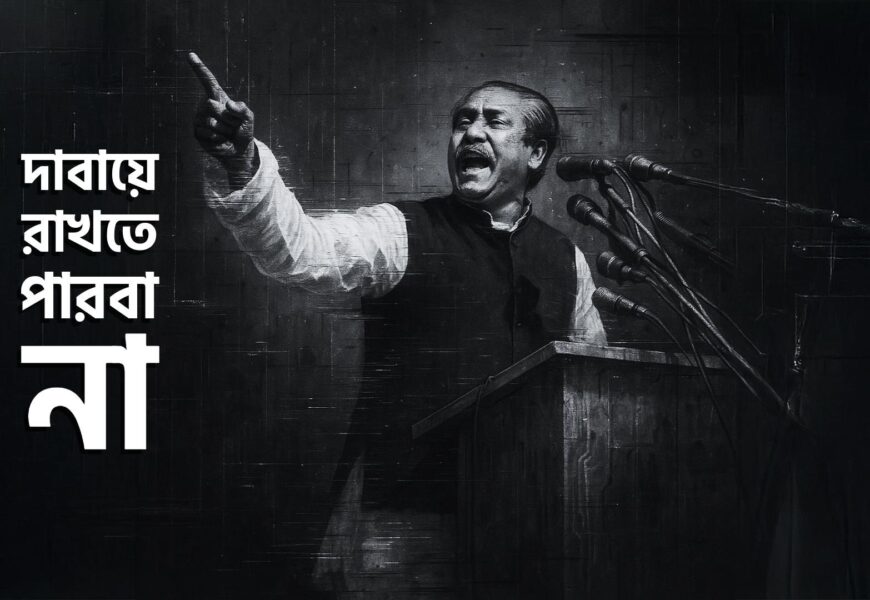
Just as all patriots and progressives must unite to get out of today’s dark situation in Bangladesh, to overcome the current crisis of political instability, religious extremism, minority oppression, economic pressure, and foreign intervention in Bangladesh, we must look back to the speeches, memoirs, and ethical philosophy of the Father of the Nation, Sheikh Mujibur Rahman, which will be a strong moral and political guide.
Bangabandhu believed that the foundation of a state is built on democracy, non-communalism, human values and social justice. Therefore, Bangabandhu’s political philosophy, ‘Mujibism’, was based on four principles – nationalism, democracy, socialism and secularism. The state philosophy of Bangladesh has evolved through the inclusion of these four principles in the 1972 Constitution. In today’s crisis, these principles can be the guidelines for the revival of the nation.
Bangabandhu Sheikh Mujibur Rahman spent a large part of his life in prison. He spent 4682 days in prison. He spent almost a quarter of his 54-year life in prison during the British rule, starting from his school days. During the rule of Pakistan, Bangabandhu was imprisoned 18 times and faced death twice.
In 1968, the Pakistani military junta arrested Bangabandhu Sheikh Mujib and 35 other prominent individuals in the so-called ‘Agartala Conspiracy Case’ on charges of treason. The purpose of this case was to politically cripple Sheikh Mujib and the Awami League and silence the Bengali freedom movement. The Pakistani rulers thought that a long prison term would break Sheikh Mujib mentally. But the opposite happened. Bangabandhu was at the center of the movement even from prison. This conspiracy case increased his political wisdom and vitality. Through the mass movement of 1969, the people of this country forced the Ayub government to withdraw the so-called case against Bangabandhu. On February 22, 1969, Sheikh Mujib, the undisputed leader of Bengal, and others were released. The next day, on February 23, 1969, at a public meeting at the Racecourse Ground, Sheikh Mujib, the dreamer of Bangladesh, was unanimously awarded the title of ‘Bangabandhu’ with the unwavering love of all the citizens of the country.
The night of March 25, 1971, was the most brutal and horrific night in history. On one hand, there was a massacre on this night, and on the other hand, Bangabandhu, the beloved leader of the land, soil and people of Bengal, was arrested. After his arrest, no one knew where he was or how he was. The Financial Times first reported the news of Bangabandhu’s imprisonment in a Pakistani prison on July 19, 1971. On the same day, the Pakistani authorities announced the imminent trial of Bangabandhu in a military court. Later, on August 8, General Yahya Khan told the Sunday Times correspondent that Sheikh Mujib, who was detained in the highest-ranking prison in West Pakistan, was alive and well. He also said, ‘I cannot promise anything about what will happen to Sheikh Mujib’s life after today.’ From July to December, many dramatic events took place in Pakistan regarding Bangabandhu’s trial. On December 4, 1971, Bangabandhu was sentenced to death in a military court trial. Bangabandhu was brought from Lyallpur Jail to Mianwali Jail. A grave was dug for him next to the cell he was in. But he did not give up. Even after knowing the fate of death, he held on to the independence he had built with his wisdom for Bangladesh and the people of Bangladesh. He relentlessly surrendered to God for the good of the land and the people.
Bangabandhu Mujib returned to Bangladesh on 10 January 1972, shortly after the independence of Bangladesh. From the moment he stepped into the open air, he began to fulfill his responsibilities towards his people. On his journey back home, the visionary Mujib performed very important diplomatic duties in London and Delhi.
Bangabandhu Sheikh Mujibur Rahman was a leader who placed democracy, secularism and human liberation at the center of politics. Bangabandhu pledged not to use religion politically. Therefore, during the formulation of the 1972 constitution, Bangabandhu included secularism as one of the state policies. This policy is particularly relevant today, because the current secular and extremist trends are breaking the cohesion of society. Therefore, we must hold the firm conviction to re-establish religious tolerance and minority protection in state policy by embracing Bangabandhu’s ideals.
Bangabandhu’s diplomatic strategy, with independent multidimensional diplomacy and prioritizing national interests, was multifaceted and a shield to protect the country’s sovereignty. Such self-reliant diplomacy is needed to counter contemporary foreign interference. And therefore, the life and philosophy of Bangabandhu Sheikh Mujibur Rahman are our guide to resolving the current crisis in Bangladesh.
Today, the stability of the democratic system, protection of minorities, religious tolerance and economic stability in Bangladesh are at stake and the very existence of Bangladesh is threatened amidst political, social and economic uncertainty. The thoughts, philosophy, political struggle and wisdom, life and experience of governing the state of the Father of the Nation Bangabandhu Sheikh Mujibur Rahman are not only history, but also an effective guide to dealing with today’s crisis.
–Ejaz Mamun

https://stapravda.ru/20221228/reyting_samyh_populyarnyh_hostingov_v_rossii_196445.html, рейтинг хостингов России подтверждает, что выбор надежного провайдера важен для бизнеса.