
International Desk
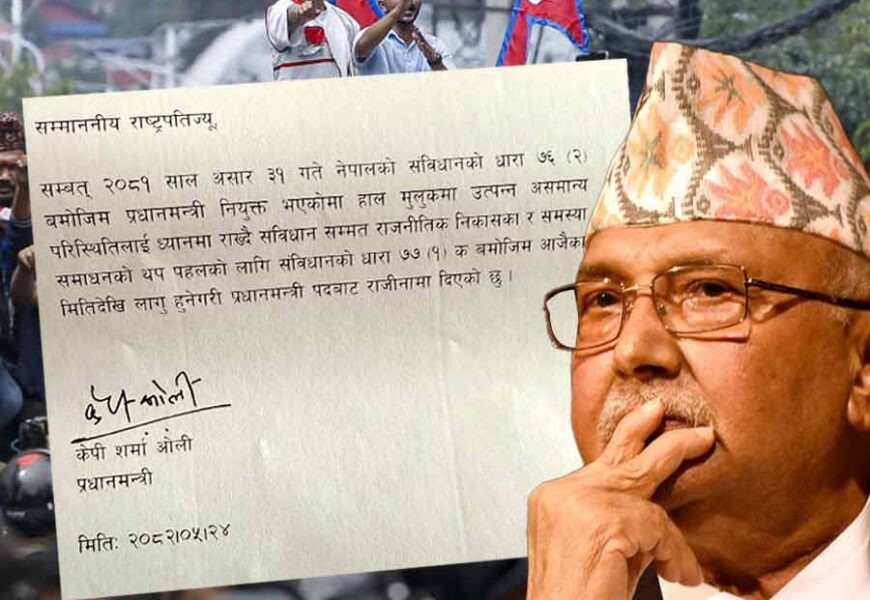
Kathmandu: Prime Minister K.P. Sharma Oli resigned on Tuesday (September 9) in the face of Generation G (Gen-Z)-led protests against corruption and social media bans in Nepal.
Earlier on Monday (September 8), at least 19 people were killed and hundreds more injured in police firing on protesters, triggering an unprecedented political crisis in the country.
Protests continue despite Oli’s resignation and the country’s political future is uncertain. A statement from Oli’s secretariat said he is resigning to address the extraordinary situation in the country and to find a constitutional political solution.
He has tendered his resignation with immediate effect in a letter to President Ramchandra Paudel in accordance with Article 77(1) of the Constitution of Nepal. An aide to the president said the resignation has been accepted and the process of appointing a new prime minister has begun.
The protests began after the government imposed a temporary ban on social media platforms (such as Facebook, Twitter, Instagram). It has fueled the anger of Gen-Z youth against corruption, favoritism, nepotism (giving unwanted favors to loved ones), and government inefficiency.
The protesters chanted slogans like “K.P. Chor, Desh Chhat” (Oli Chor, leave the country) and demanded strict action against corrupt leaders, freedom of expression and age limit for political posts. The youth spread the movement by questioning the miraculous wealth of ministers’ children on Reddit and Instagram.
Police used rubber bullets and live ammunition during Monday’s protests, killing 19 people and injuring over 400. On Tuesday, protesters continued to take to the streets despite an indefinite curfew, clashing with police. They attacked and set fire to the Prime Minister’s residence in Balakot, the homes of former Prime Ministers (Prachanda and Sher Bahadur Deoba), the headquarters of the Nepal Congress and the Communist Party.
The parliament building was also set on fire and vandalized. Local media reported that some ministers were airlifted to safety in military helicopters. Three other ministers in the government resigned before Oli’s resignation. Home Minister Ramesh Lakhok, Agriculture Minister Ramnath Adhikari and others resigned on moral grounds.
Nepal’s Army Chief General Ashok Raj Sigdel has also suggested that Oli resign so that the army can help control the situation.
Sources said that Oli planned to flee to Dubai under the guise of medical treatment, but after resigning, the army appealed for peace.
Oli, 73, became prime minister for the fourth time in July 2024, forming an alliance with the Nepali Congress. His rule has been criticized for strengthening ties with China and for being harsh on critics. The resignation is the 14th prime minister to fall since Nepal’s 2008 constitution was adopted. Protesters are now demanding the formation of a national government and tough anti-corruption laws.
India has urged citizens along the border to be on alert and is closely monitoring the situation. The situation remains volatile. The army has called for peace, but protesters see Oli’s resignation as insufficient. The incident could open a new chapter of democratic change in Nepali politics.

https://stapravda.ru/20221228/reyting_samyh_populyarnyh_hostingov_v_rossii_196445.html, рейтинг хостингов России подтверждает, что выбор надежного провайдера важен для бизнеса.