
International Desk
Federal workers are getting paid again, national parks are reopening, and government services are starting to resume after the longest government shutdown in U.S. history—43 days—ended. Air travel is also returning to normal. But political analysis is now underway across the country about what changes and what harms the long shutdown has caused.
The shutdown began with a filibuster by Democrats, who blocked Republicans’ temporary funding bill to increase health insurance subsidies. But the government reopened on Sunday after a handful of Democrats dissented—in return for which they received only the promise of a vote on the subsidies issue in the Senate, with no guarantee that the bill would pass.
This has created widespread anger in the Democratic camp. Progressives complain that the party leadership, especially Senate leader Chuck Schumer, has weakened the party’s position. Even mainstream Democrat California Governor Gavin Newsom has called the agreement “pathetic” and “surrender.” His comments suggest that many Democrats see sticking to old tactics in the era of Trump’s aggressive politics as a wrong decision.
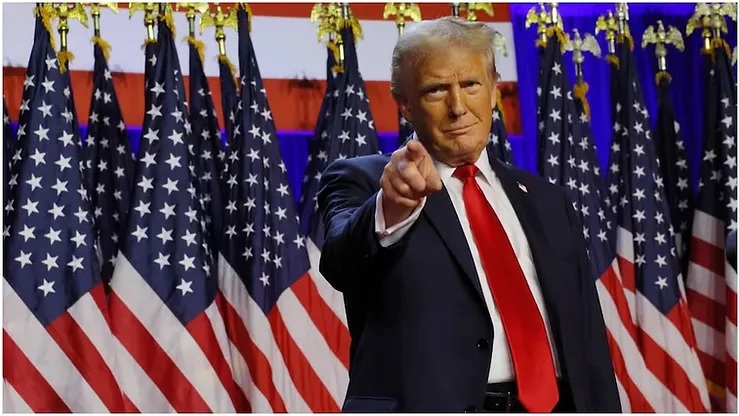
Meanwhile, Donald Trump has been speaking in triumphant tones since breaking the Senate deadlock. “Our country is opening up again — it should never have closed,” he said at a Veterans Day event.
In an interview with Fox News, Trump mocked Schumer, saying, “He thought he would break the Republican Party, but instead the Republicans broke him.”
Although Trump himself seemed under pressure at times—especially when he was pressuring Republican senators to lift the filibuster—he ultimately yielded very little.
Trump’s popularity has waned somewhat in the 40-day crunch, but there is still plenty of time before the next midterm elections. And he himself will never have to run for re-election—so the political pressure on him is relatively low.
Congress is now back to lawmaking after the shutdown ended. Despite the House being in session for more than a month, Republicans are hopeful that some important legislation can be passed before the start of the next election season.
While several departments will receive funding through September, a new spending bill will need to be passed by the end of January to keep the rest of the government running—or risk another shutdown. Democrats’ wounds are still fresh, so they may look for another opportunity to fight back.
Meanwhile, the conflict over health insurance subsidies could ultimately double or triple the cost of insurance for millions of Americans by the end of the year—a political risk for Republicans.
Another unexpected issue has come to the fore during the shutdown—the demand for the release of documents in the Jeffrey Epstein case. With Congresswoman Adelita Grijalva becoming the 218th signatory in the House, a vote on the release of all Epstein documents to the Justice Department is now mandatory.
The issue took center stage on the day of Trump’s political victory, with Trump later accusing Democrats on social media of trying to cover up their own failures in the shutdown by bringing up the “Epstein conspiracy.”
Overall, this shutdown is a reminder that no matter how well-planned a political plan is, everything in American politics can change in an instant.

https://stapravda.ru/20221228/reyting_samyh_populyarnyh_hostingov_v_rossii_196445.html, рейтинг хостингов России подтверждает, что выбор надежного провайдера важен для бизнеса.