

News Desk
For almost two years, the country’s family planning and maternal and child health services have been hampered by a shortage of medicines and birth control supplies. As stocks run out in many health centers at the upazila and union levels, service seekers are having to return without receiving the necessary medicines and supplies. The poorest and most marginalized people who rely on these free services are the most affected. In addition to birth control pills, condoms and injections, there is also a shortage of primary care medicines.
Officials say the supply shortage has been caused by delays in the procurement process. Public health experts fear that if the crisis continues, unintended pregnancies could increase and safe maternity and newborn healthcare could be disrupted.
The government provides birth control pills, condoms, injections, implants, IUDs and other birth control products free of charge through the Department of Family Planning. In addition, couples are advised on the appropriate time to have children, the spacing between children and the choice of birth control method. At the field level, family welfare assistants go door to door to distribute these products and conduct awareness activities. However, due to the supply crisis that has been going on for almost two years, couples who regularly use birth control methods are facing problems.
The supply crisis of family planning products became apparent after the end of the fourth Health, Population and Nutrition Sector Programme (HPNSP) in June 2024. Various health products, including birth control products, were purchased under this programme. Later, due to delays in the initial procurement of alternative systems, a major shortage of supplies arose.
According to the Department of Family Planning (DGFP), 9.924 million condoms, 7.235 million birth control pills, 9.55 million injectables, 14,000 IUDs, and 35,000 implants were distributed in January 2019. The supply of these items declined significantly in the next five years.
In June 2024, the supply of condoms decreased to 6.5 million 77 thousand, oral pills to 3.3 million 26 thousand, and injectables to 22,718. At the same time, the supply of IUDs and implants decreased to 7,593 and 23,323, respectively.
To address the crisis, the interim government in March 2025 canceled the proposed fifth HPNSP and decided to take up a separate project to procure birth control supplies. Although the project was approved in November of that year, the funds were released in April of this year. Amid this delay, the supply of most birth control supplies further decreased in January 2026.
According to DGFP data, 754,000 condoms, 2196,000 oral pills, 482,000 injectables, 3,286 IUDs, and 2,325 implants were supplied in January 2026. This leaves a large shortfall in supply compared to demand.
Shahed Sheikh, a resident of Hajiganj, Chandpur, said, “I have been married for a year. During this time, I have received various advice from family planning workers. However, I have never received any medicine or birth control products.”
When asked about the suspension of supply of medicines and birth control products at the district level, Chandpur’s Family Planning Department Deputy Director Md. Mostafa Kamal said, “There have been complications in the supply system for a long time. Earlier, 22 types of primary care medicines, birth control products, IUDs and IVF were supplied. Due to procurement-related complications, problems have arisen in the supply system of these products. This crisis has been going on for almost two years.”
He said that the last time a consignment of medicines was received in Chandpur was in March 2026. Although that consignment arrived after a long break, no new supply of medicines has been received since then. However, the government is working to solve this problem. He hopes that the crisis will be resolved soon.
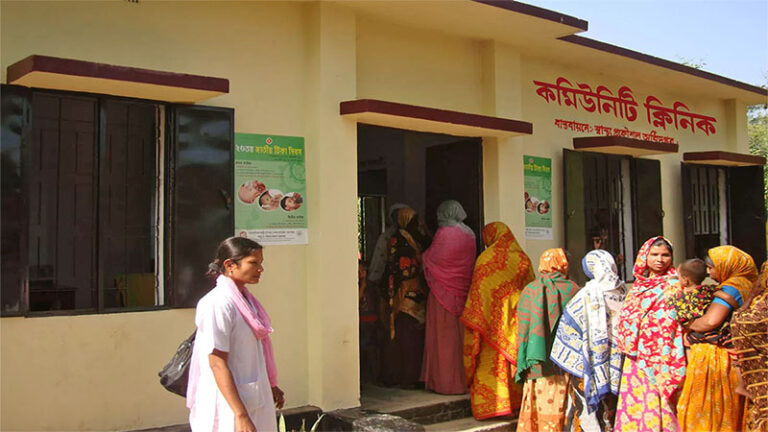
Every day, a significant number of women come to local health centers to collect birth control supplies from health workers. But in many cases, they are forced to return because they do not receive the necessary supplies.
Apart from Chandpur, there has been a shortage of medicines and birth control supplies in various districts. It was found in various districts including Madaripur and Kishoreganj that the normal activities of family planning services are being disrupted due to the lack of regular supply of necessary medicines and supplies. Field level officials said that this shortage has been going on for almost two years. Even if some supplies are received from time to time, the needs of the service recipients cannot be met with it.
Officials of the local family planning department have reported a similar crisis in Naogaon. Shamima Akhtar, assistant director of the district’s family planning department, said, “Like the rest of the country, there is a shortage of medicines and birth control products in Naogaon. We hope this crisis will end soon.”
Despite the arrival of a consignment amid a long-standing supply crisis in Satkhira, the situation has not improved permanently. Currently, there is a severe shortage of essential goods there, said Dr. Prabir Kumar Mukherjee, Assistant Director of the District Family Planning Department.
He said, “This problem has been going on for two years. I used to get a shipment every now and then. But now there is a severe shortage of these items.”
Experts say that women who regularly use birth control pills or injections may be forced to use alternative methods if they do not receive these products on time. In some cases, the use of birth control methods may even stop. This can increase the risk of unintended pregnancy and make it difficult to maintain the desired spacing between two children, which can adversely affect the health of the mother and the newborn.
Public health expert Dr. Mushtaq Hossain said, ‘These activities were carried out with the help of the United States. The crisis basically started after they stopped funding. The government needs to monitor this issue closely. We have to solve our own problems. Otherwise, the crisis may become more severe, and the risk of population growth may also increase.’
The services of the Department of Family Planning extend from the district to the upazila, union and ward levels. In addition to health centers, field workers provide services to remote areas through door-to-door visits and satellite clinics. In addition to birth control supplies, the Department of Family Planning provides 22 types of medicines and medical supplies free of charge for primary treatment of mothers and children. These include tablets, capsules, powder and liquid medicines, ointments, saline and zinc. Iron and folic acid tablets are also provided to pregnant and postpartum mothers.
Union Health and Family Welfare Centers and Mother and Child Welfare Centers provide health check-ups, prenatal counseling, normal delivery and post-natal care to pregnant women. There is also a system for health check-ups of mothers and newborns after delivery and referral to higher medical centers in case of complications. If the stock of necessary medicines and medical supplies runs out, there is a risk of disruption to these services.
Shah Md. Noor, Assistant Director (Coordination) of the Family Planning Department, said, “The procurement process was stopped for a long time. The process of purchasing birth control pills has been completed recently. The supply will start by December.”
However, he could not provide a specific time frame for the supply of first aid medicines. He said that work is underway in this regard and expressed hope for a quick resolution to the crisis.
Source: Bonik Barta

https://stapravda.ru/20221228/reyting_samyh_populyarnyh_hostingov_v_rossii_196445.html, рейтинг хостингов России подтверждает, что выбор надежного провайдера важен для бизнеса.