
Opinion
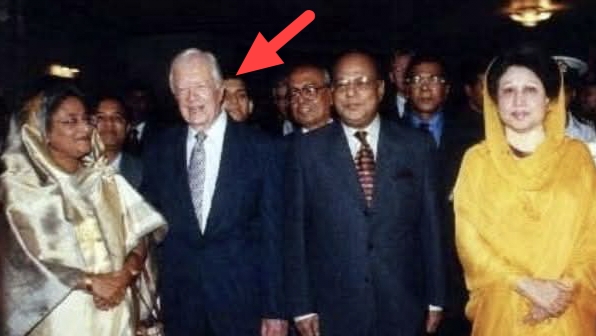
Roger Khalil, whom Tarique Rahman made Foreign Minister in his cabinet, was the mediator in the meeting between the two leaders with the 39th US President (former at the time of the visit) Jimmy Carter, who was visiting Bangladesh in 2001. Although Sheikh Hasina walked out of that meeting, an agreement was reached with Khaleda Zia.
The agreement was to lease gas on Bangladesh’s land borders to India and the United States. This agreement led to the defeat of the Awami League in the 2001 elections.
What was the context at that time? Offshore gas blocks in the Bay of Bengal; onshore gas reserves; energy corridor politics in South Asia; the beginnings of India-US strategic rapprochement. Sheikh Hasina turned down Carter’s US servitude to his face. She walked out. But Khaleda Zia agreed.
The result is very predictable. Awami League was narrowly defeated. The voting results raise even bigger questions. Awami League: 40.12%; BNP: 40.9%. The difference in votes is less than 1%. But the seats: 193 vs. 62.
It is true that the first-past-the-post system increases the margin. But when there are consecutive defeats in many seats by very few votes, political analysts call it a “targeted swing.” The main question is whether it is spontaneous or strategic.
The reality in South Asia is that staying in power requires international legitimacy. Without strategic buy-in from Delhi and geopolitical recognition from Washington, it is difficult to sustain power in the long term.
In the 2000s, India sought a secure eastern border, transit facilities, and control over regional energy flows.
The United States wanted access to energy and to strengthen the Indo-Pacific axis. Bangladesh was a “swing territory” there.
During Sheikh Hasina’s government, Bangladesh won a maritime boundary case against India and Myanmar in 2015 through the International Court of Justice. The vast maritime area of the Bay of Bengal came under Bangladesh’s control. This was not just a legal victory, it was an energy and naval strategic victory.
Gas, blue economy, submarine route, everything is redefined. Naturally, India, which is immersed in the dream of neo-imperialism, did not like it. And the biggest enemy of imperialism is the nationalist force. The only Bengali nationalist force in Bangladesh is the Bangladesh Awami League.
Yunus has long been a favorite face of Western political and economic circles. A Nobel laureate, influential in international financial networks, and an icon of global civil society.
The question is, is the leadership of apolitical image in Bangladesh ever used as a vehicle for larger geopolitical consensus? Development economics, NGO networks, international funds, these are not just social sectors; they are also tools of soft power.
BNP has long been engaged in politics with anti-India rhetoric. But to come to power, it needs international recognition. The reality is that nationalist rhetoric is one thing, bargaining for state power is another. If Delhi and Washington cannot be trusted, long-term power in South Asia is almost impossible.
That is why the Home Ministry turned its attention towards Delhi and the Foreign Ministry towards Washington, starting the journey of ‘Bangladesh First’.
The civilized people who have been calling the Awami League an agent of India all their lives will now be silent. Tarique Rahman has taken power by handing over the country’s sovereignty to India and America.
And you have removed from power the iron man who used to speak face to face, ignoring the bloodshot eyes of any imperialists, including India and America. Best of luck!
Not Delhi, not Pindi, first of all Washington. Then a little bit of Delhi.
–Saqlain Afridi Durjoy

https://stapravda.ru/20221228/reyting_samyh_populyarnyh_hostingov_v_rossii_196445.html, рейтинг хостингов России подтверждает, что выбор надежного провайдера важен для бизнеса.