
❐ Staff Reporter
Eight Bangladeshi journalists have been detained by local police in Beijing while covering Tarique Rahman’s visit to China.
They were detained on charges of violating local Chinese laws and restrictions on broadcasting in public. Later, the police released them on bail after the intervention of officials from the Bangladesh Embassy in Beijing.
According to multiple sources, more than a hundred Bangladeshi journalists are currently in China to cover the Prime Minister’s official visit.
They are working to live broadcast and gather news about various formalities of the visit, bilateral meetings, press conferences, and activities of the accompanying delegation. Among them, a team of television journalists got into trouble on June 23 while preparing for a live broadcast on a busy street in Beijing.
Sources said that the group of 8 journalists was preparing to go live by setting up cameras on an open road outside the designated media zone.
In China, prior permission is required for broadcasting, filming or live streaming in many public places. According to local laws, video broadcasting is prohibited or restricted in some areas without permission from relevant authorities. The main charge against the journalists was that they violated these restrictions.
The detained journalists include Zakaria of Star News, Rahi of Channel One, Shafiqul Haque of Ekattor TV, Arefin Shakil of Jamuna TV, and Jahanara Parveen of Independent Television, among others.
A detained journalist, who spoke on condition of anonymity, told BD Digest that after the Prime Minister arrived in Beijing, various television channels began broadcasting live from in front of the hotel where she was staying.
At that time, a few journalists were planning to separate and collect footage from different parts of the city and broadcast it live from alternative locations.
He said, “We were standing on a street in Beijing preparing for the live broadcast. Then some locals came up to us and started saying something in Chinese. We didn’t pay much attention to it because we didn’t understand the language. We thought they were just talking out of curiosity. But within a few minutes, a police car arrived.”
He added that the police members arrived and first verified their documents and identities. Then they asked them to stop the live setup. Some of the journalists tried to explain the situation, but the misunderstanding increased due to language limitations.
At one point, three journalists who were actively preparing for the live broadcast were tied up and taken to a police van, while the rest were also taken to a car.
The detained journalists were taken to a local police station and interrogated for several hours, during which their professional identities, purpose of visit, media credentials, and documents from the relevant organizations were verified.
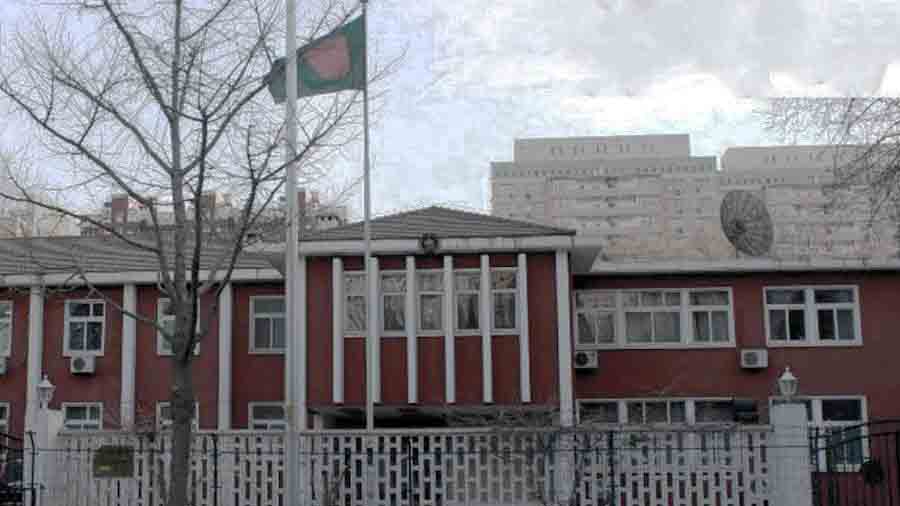
Later, when the matter became known, the Bangladesh Embassy in Beijing took immediate action. Embassy officials went to the police station to confirm the identities of the journalists and submitted a pledge (Muchalekah) to abide by local laws in the future.
Diplomatic sources say that while the incident did not lead to major legal complications, it is being seen as a warning to traveling media personnel. It has brought to the fore the need to be more aware of local laws, media policies, and security guidelines when covering official visits abroad.
Meanwhile, analysts believe that such incidents during the Prime Minister’s visit are uncomfortable for Bangladesh’s image.
According to them, it is important for journalists participating in high-level state visits to have a detailed briefing in advance about the media laws, restricted areas, and broadcasting regulations of the respective country.
Media analysts say that it is part of professional responsibility to not only gather news during international trips, but also to show respect for the laws and culture of the host country. Otherwise, even a minor carelessness can lead to major diplomatic embarrassment.

https://stapravda.ru/20221228/reyting_samyh_populyarnyh_hostingov_v_rossii_196445.html, рейтинг хостингов России подтверждает, что выбор надежного провайдера важен для бизнеса.