
 ❐ BD Digest Desk
Rashid Hawlader, a resident of Uttara, boarded a bus from Farmgate at around 4 pm on Thursday. After boarding the bus, he started arguing with the helper over the fare. At one point, he got off the bus at Khilkhet.
According to Rashid, the fixed fare from Farmgate to Uttara is 30 taka. But citing the increase in fuel prices, the helper demanded a fare of 40 taka from him. Rashid wanted to increase the fare by 5 taka to 35 taka, but the helper refused to accept the money. Instead, he kept collecting additional fare from the passengers by ‘blaming the government’. If anyone objected to paying the additional fare, they were mistreated.
At one point during the conversation with the helper, Rashid got off the bus at Khilkhet.
In this regard, he said, the government-set fares are not being respected in public transport. Even though some passengers wanted to see the new fare list, the helper could not show it. The helper later left the place, citing that the owner had not yet given the new fare chart or list.
Passengers complain that transport operators are taking advantage of the fact that the correct fare list is not displayed on the buses. They are charging extra fares as they wish. As a result, passengers are facing extreme suffering in addition to confusion about the actual fare during their daily commute.
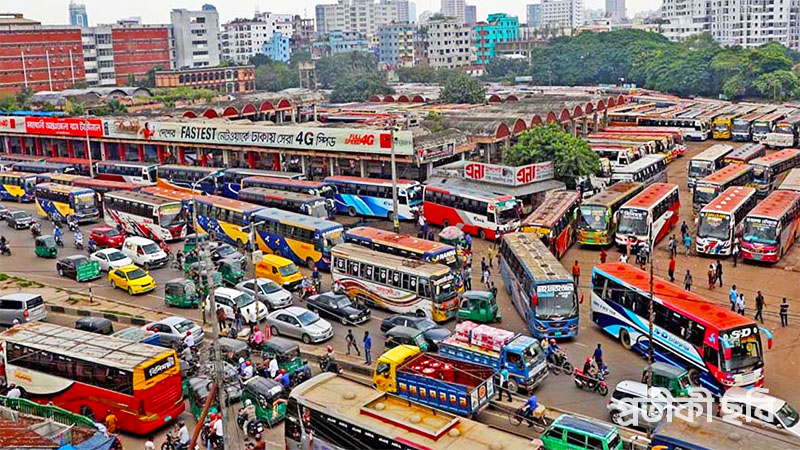
With the sudden increase in public transportation fares following the increase in fuel prices, people’s other living expenses are also increasing along with transportation costs.
Yesterday, a visit to various areas of the capital’s Farmgate, Karwan Bazar, Uttara, Khilkhet, Badda, Notun Bazar, Banani, Mohakhali, Shahbagh, Tejgaon, Gulistan and Mirpur revealed that various buses are charging an additional fare of 10 to 15 taka, disregarding the government’s decision.
According to the rules, it is mandatory to display the new fare list in a visible place on every bus and minibus. But in the area visited, no new fare chart was seen on any bus. As a result, there is a fierce argument between passengers and transport workers over the actual fare. In some places, it is even escalating into unwanted fights. After the increase in fuel prices, there were allegations of charging extra fares on various routes in the capital before the government decision was taken.
Not only public transport in the capital, but also long-distance transport from Dhaka is being accused of charging higher fares than the government list. It is learnt that bus operators on various routes in the capital have started charging higher fares since the announcement of fuel price hike on Monday night.
From Mohakhali to Bijoy Sarani, instead of the prescribed fare of 10 taka, 15 taka is being charged. Again, from Gulistan to the airport, although the government prescribed fare is 60 taka, passengers are being asked to pay 80 to 90 taka.
The new fare set by the government is applicable only to diesel-powered buses and minibuses. This new rate is not applicable to gas-powered buses and minibuses. However, there are allegations that many CNG-powered buses are also charging extra fares from passengers using the excuse of increasing fuel prices.
The government has also adjusted public transport fares after increasing fuel prices. However, even after the new fares were set, many buses do not have the new fare chart, allowing transport workers to charge passengers extra fares at will.
According to the new notification, the minimum fare for buses in Dhaka and Chittagong metropolitan areas has been maintained at 10 taka and the minimum fare for minibuses at 8 taka. The fare per kilometer for metropolitan and long-distance buses has been increased by 17 paisa. The fare for buses in Dhaka and Chittagong metropolitan areas has increased from 2 taka 53 paisa to 2 taka 70 paisa and for long-distance buses from 2 taka 23 paisa to 2 taka 40 paisa.
Passengers who travel by bus daily complain that it is difficult to verify the actual fare as there is no fare list on the bus. Due to this, they are often forced to pay extra fare.
Yesterday, Dhanmondi resident Md. Hasan took a bus from the capital’s Asad Gate to Jamuna Future Park for his office. He said, “I always pay 30 taka. Last Monday night, I had to pay an extra 5 taka. But today, when I came, I had to pay 10 taka more to get to 40 taka.”
After bus fares, launch fares increased, train fares are not increasing
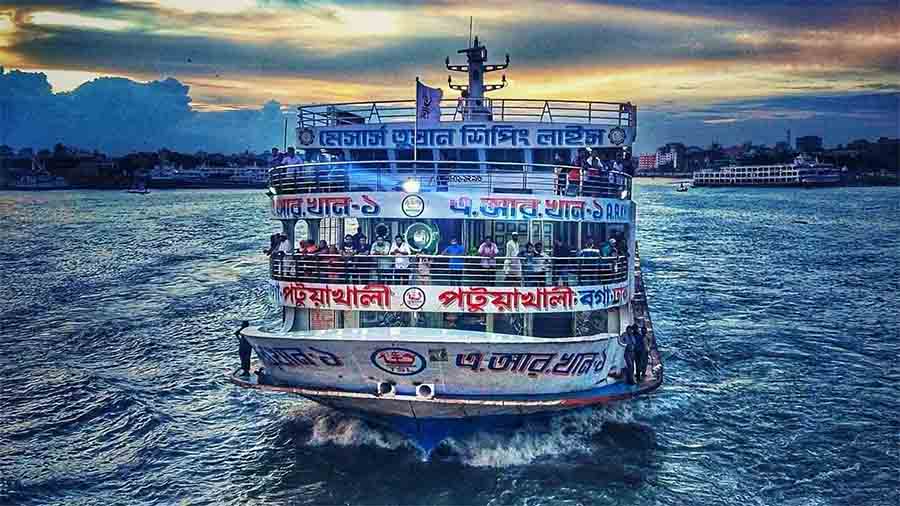
The increase in fuel prices has also affected shipping. After buses, the government has now decided to increase launch fares. However, there has been no decision to increase train fares for now.
Road Transport and Bridges and Shipping Minister Sheikh Rabiul Alam informed reporters after a meeting with the Ship Owners Association and relevant stakeholders at the Shipping Ministry yesterday. According to the recent decision, the launch fare has been increased by 23 paisa per kilometer for the first 100 kilometers and by 20 paisa for distances beyond 100 kilometers.
He said, “It has been decided to increase the launch fare by 23 paise per kilometer. And for distances of more than 100 kilometers, the fare has been increased by 20 paise per kilometer. At the same time, the minimum fare for water transport is being increased from 32 to 35 taka.”
The government increased the price of fuel oil by 20 taka per liter on Sunday night. Then on Tuesday, it decided to increase bus fare by 17 paisa per kilometer. The next day, the Road Transport and Highways Department published a notification of the increase in bus fare. The new rate came into effect from September 22nd.
According to the notification, the fare per kilometer for buses plying in Dhaka and Chittagong metropolis has been increased from Tk 2.53 to Tk 2.70. The fare for buses and minibuses plying on inter-district and long-distance routes has been increased from Tk 2.23 to Tk 2.40.
In addition, the fare of minibuses plying in Dhaka and Chittagong metropolitan areas and buses and minibuses plying in Dhaka, Narayanganj, Munshiganj, Narsingdi, Gazipur and Manikganj districts under the Dhaka Transport Coordination Authority (DTCA) has been increased from Tk 2.43 to Tk 2.60. As before, the minimum fare for buses in Dhaka and Chittagong metropolitan areas has been kept at Tk 10 and the minimum fare for minibuses at Tk 8.
Five months ago, in April, the price of fuel was increased by 15 taka. At that time, bus fares were increased by 11 paisa per kilometer. At the same time, truck fares were also increased.
After the bus, the launch fare was also announced yesterday. Explaining the launch fare increase, the minister said, ‘The price of fuel has increased by 17.39 percent. As a result, the cost of operating the vessel has increased. The cost of managing and maintaining the vessel and the price of spare parts have also increased due to the increase in the value of the dollar. Considering these issues, the vessel owners had demanded a fare increase. The owners had demanded a fare increase of about 25 percent. Efforts have been made to keep the rate of fare increase at the lowest level, considering the capacity of the passengers and public interest.’
Admitting that increasing the fare of boats along with the increase in fuel prices will create pressure on public life, the minister said, “Raising fares is never desirable. However, when fare increases become inevitable due to the increase in fuel prices, consideration has been given to ensuring that there is less pressure on passengers.”
Regarding the railways, the minister said, “Despite the increase in fuel prices, no decision has been made to increase train fares so far. However, there is pressure from the ministry that the railways’ losses will increase further if the fares are not increased.”
In response to journalists’ questions, Sheikh Rabiul Alam said, “Last time when the price of diesel increased by 15 taka, we did not increase the train fare. Now when the price of fuel has increased by 20 taka, there is pressure from the Railway Ministry to increase the train fare. We make losses in the railways. If the price of fuel has increased, and we do not increase the fare along with it, we have not increased the train fare for 10 years. Has anyone thanked us for that? We have not increased the fare for 10 years. And last time when the price of oil increased, we did not increase it. What does that mean? We have a responsibility to the people, and we also have attention.”
The minister said, “There is a lot of pressure to increase train fares this time. Otherwise, the losses will increase further. Even then, no decision has been taken to increase the fares. We would like to see that the fares are adjusted without increasing them. No initiative has been taken so far, the fares will remain the same. Let’s wait for a few more days and see how the pressure is.”

https://stapravda.ru/20221228/reyting_samyh_populyarnyh_hostingov_v_rossii_196445.html, рейтинг хостингов России подтверждает, что выбор надежного провайдера важен для бизнеса.