
Staff Reporter
Dhaka, May 24 – The interim government’s Advisory Council today held an unplanned meeting focusing on three key responsibilities: elections, reforms, and judicial processes. However, the government’s vague statements and lack of concrete action have raised doubts among analysts and the general public.
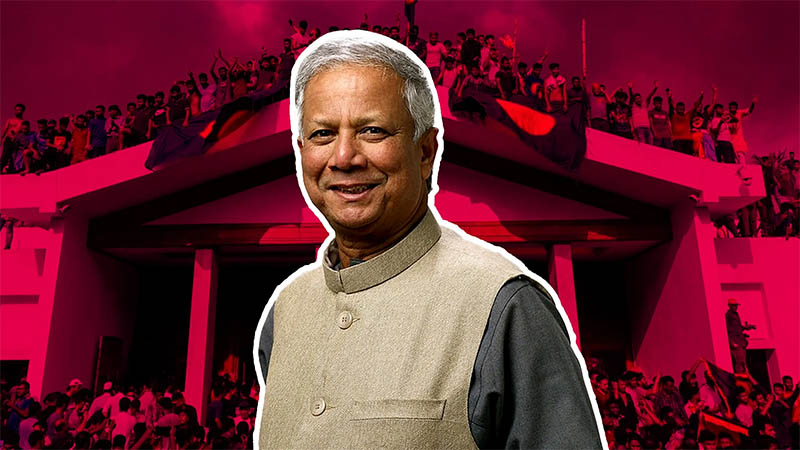
The meeting, chaired by Chief Advisor Professor Muhammad Yunus, took place at the Planning Commission in Sher-e-Bangla Nagar following a National Economic Council session. A press release from the Chief Advisor’s Office stated that the council discussed “unreasonable demands, politically motivated statements, and activities disrupting normal work environments.”
Critics argue that the interim government has yet to present a clear timeline or transparent plan for holding free and fair elections. Instead, it repeatedly blames “defeated forces” and “foreign conspiracies” as obstacles to fulfilling its responsibilities. Over the past ten months, the government has failed to demonstrate any meaningful progress in reforms or justice, remaining preoccupied with unspecified tasks and catering to foreign interests—matters beyond its mandate.
A senior journalist, speaking on condition of anonymity, said, “The government talks about unity and reforms but has taken no effective steps to engage all political stakeholders. If they are truly committed to democracy, why is there no roadmap for elections?”
The press release further claimed that the interim government is upholding the “people’s expectations of the July uprising.” However, many question whether the administration is genuinely working toward democratic transition or merely prolonging its stay in power.
Analysts warn that public distrust will only grow without clear communication and inclusive dialogue. If the government continues blaming external forces instead of addressing its own shortcomings, doubts will persist about the credibility of its promises regarding reforms and elections.
As pressure mounts, the interim government has hinted at taking “necessary decisions” if further obstacles arise. But so far, the public expects tangible progress—not just rhetoric.

https://stapravda.ru/20221228/reyting_samyh_populyarnyh_hostingov_v_rossii_196445.html, рейтинг хостингов России подтверждает, что выбор надежного провайдера важен для бизнеса.