
Staff Correspondent
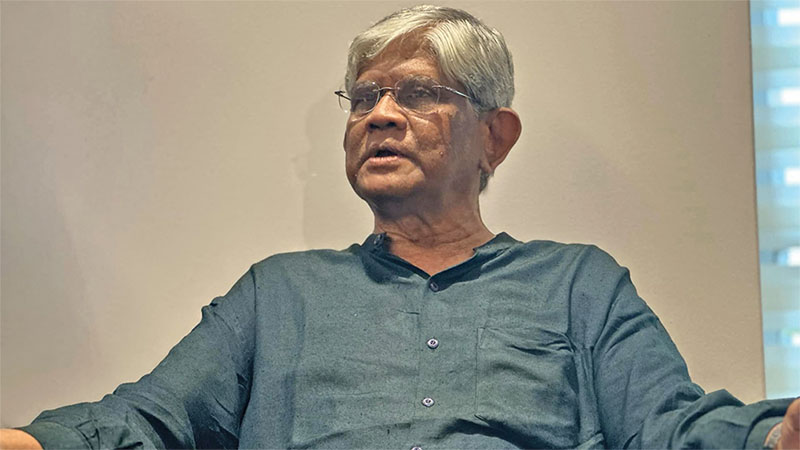
Although the Chief Advisor’s press wing and various newspapers have expressed excitement about the increase in reserves in Bangladesh’s economy and the significant flow of remittances, the recent statement by Financial Advisor Dr. Saleh Uddin Ahmed has revealed a picture of a deep crisis in the economy.
He identified the lack of funding in the social security, education and health sectors as the biggest challenges for the government. In light of this statement, an analysis of the current situation and challenges of the Bangladesh economy is presented.
Financing crisis: Shortages in social security and priority sectors
Financial Advisor Dr. Saleh Uddin Ahmed said that the government’s expenditure requirements are much higher than its income, which has become a major obstacle to financing the social security sector.
He said, “We say we need to increase allocations to the health sector, we talk about education. But where is the money?”
This statement clearly shows that the government’s limited revenue is failing to meet the needs of important sectors. Social security programs, such as poverty alleviation, old age allowances, or disability allowances, are not being implemented to the desired extent due to lack of sufficient funds. This shortfall is creating obstacles to ensuring social security for the poor and marginalized population of the country.
However, the Awami League government implemented a comprehensive program in the social security sector during its tenure (2009-2024). According to government data, various benefits such as old age allowance, widow allowance, disability allowance, maternity allowance, and stipend for students were provided through 138 allowance programs.
In addition, rice, wheat and other essential commodities were provided to about 10 million poor and marginalized people at fair prices under the VGF (Vulnerable Group Feeding) program. These programs played a significant role in poverty alleviation, ensuring food security and social protection.
According to World Bank data, between 2010 and 2020, this program reduced Bangladesh’s poverty rate from 31.5% to 14.8%.
Low tax-GDP ratio: Weakness in revenue collection
Dr. Saleh Uddin, in his speech, pointed out the weakness of Bangladesh’s tax-GDP ratio.
“Our tax-to-GDP ratio is only 7.2 percent, while in countries like Brazil it is 26 percent. They pay taxes, they get services,” he said. This low tax collection has led to insufficient government revenue, which is hindering adequate investment in sectors such as education, health and infrastructure.
He also said, “There is talk of reducing taxes. If we reduce them gradually, we may not be able to pay salaries and allowances.”
In this speech, he alludes to the people’s reluctance to pay taxes and the tendency to evade taxes. In such a situation, it is becoming difficult to provide government services, such as increasing teachers’ salaries or ensuring quality education. He raises the question, “What will teachers teach with this salary?”
Dependence on the private sector and lack of investment
The Financial Advisor mentioned the over-reliance of Bangladesh’s economy on private sector investment.
“Our private sector is dependent on investment banks. Our demand is very high,” he said.
The necessary environment for increasing private investment in the Bangladesh economy has not yet been fully developed. Over-reliance on bank loans and limited inflow of foreign investment are slowing down economic growth. In addition, large amounts of money are needed for major infrastructure projects, but it is not being met. This situation has become an obstacle to sustainable economic growth.
Reserves and remittances boom
Contrary to reality, the Chief Advisor’s press wing and various newspapers have been promoting the increase in reserves and the increase in remittance flows, but Dr. Saleh Uddin’s statement clearly shows the limitations of these positive aspects. While the increase in remittances may bring short-term relief to the economy, it cannot solve long-term structural problems, such as low revenue collection and financing deficit.
He said, “Where we sit, government officials think they can give everything. Every day they say give this, give that. We are not getting what we can afford.”
This statement highlights the gap between the government’s excessive expectations and reality.
Challenges and solutions
It is clear from the statement of the Financial Advisor that the economy of Bangladesh cannot achieve sustainable development without increasing revenue and reforming the tax system. To increase the tax-GDP ratio, initiatives are needed to prevent tax evasion, increase tax management efficiency, and add new taxpayers.
In addition, policy reforms are necessary to create a business-friendly environment to increase private sector investment and attract foreign investment. To ensure adequate allocations to social security, education, and health, the government needs to find new sources of financing, such as public-private partnerships (PPPs) and the proper use of international aid.
Despite the good news of increasing reserves and remittances, Bangladesh’s economy is facing a deep crisis. In the speech of Financial Advisor Dr. Saleh Uddin Ahmed, low revenue, excess demand and financing deficit have been identified as the main reasons for this crisis. The biggest challenge for the government now is to fill this deficit and take the economy on a sustainable path. Without structural reforms and conscious participation of the people, this challenge will be difficult to face.

https://stapravda.ru/20221228/reyting_samyh_populyarnyh_hostingov_v_rossii_196445.html, рейтинг хостингов России подтверждает, что выбор надежного провайдера важен для бизнеса.