
❐ Aynal Karigor
After the bloody conflict of July 24, the state institutions were under immense pressure. The political situation was tense, and public expectations were skyrocketing. In such a turbulent situation, steering the country towards elections and maintaining stability was the biggest challenge for the interim government.
Although belatedly, the government led by Dr. Yunus realized that there was no alternative but to return to the electoral path, because elections were the only sustainable way to restore normal democracy. In those turbulent times, it was essential to maintain public order and balance, because organizing elections acceptable to all in a divided society is never an easy task.
The interim administration must accept that their main responsibility was to lead the country to elections. The people have given them the legitimacy to exercise certain special powers, but one thing to remember is that the longer the interim government is in power, the more the elections are delayed and the more powerful the attempts to justify that delay become. The Yunus government was no exception. And this was the biggest contradiction of the government.
The interim government is given the responsibility of running the state for a limited period of time, they do not have the moral basis to remain in power for a long time. Because of this temporary character, the people accepted certain powers they had, because they knew that these powers would be used for limited purposes. But as soon as the government started behaving like a permanent or elected government, questions began to arise.
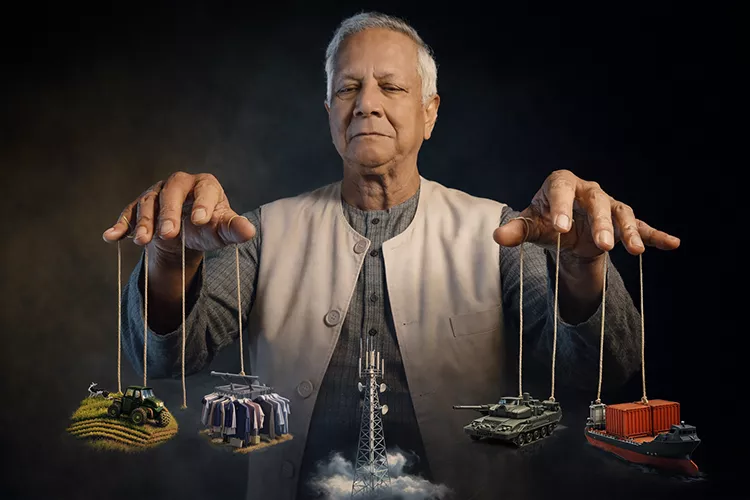
Analysts believe that three new zeros have emerged in Bangladesh during the interim government’s rule. The first is zero accountability, the second is zero public trust, and the third is zero democratic tolerance. When history evaluates this government in the future, these three aspects must be taken into account.
The government’s main task was clear and far-reaching: to restore order, ensure an acceptable electoral environment, and hand over power to elected representatives. But gradually the scope of the government’s program began to expand, which the people could not accept. Because this expansion was rapidly going in the opposite direction of the elections. As a result, as the months passed, the government began to move away from the role of caretaker and into the role of reformer.
A commission was formed to review constitutional issues, proposals were made to reform the judiciary and administrative structures, debates began on the outlines of a new system of governance, and long-term institutional questions of the state came up for public discussion. This raised a fundamental democratic question: to what extent does an unelected government have the right to reform before gaining legitimacy through elections?
The question is not unique to Bangladesh; any interim government faces this dilemma. The more the reform agenda expands, the further the government moves away from its core responsibilities. And the more ambitious the government becomes, the stronger the public argument for the democratic process becomes. This was also the case with the Yunus government.
Reform and democracy are not enemies, but neither can they be substitutes for each other. An interim government may be efficient, well-intentioned, and even popular. But none of these are a complete substitute for electoral legitimacy. This tension becomes apparent as the debate over the timing of elections intensifies.
The people of the country wanted transparency, political parties wanted certainty, and businessmen wanted stability. But with no specific date for the election, speculation grew, priorities shifted, and public anxiety intensified.
Prolonged uncertainty comes at a cost. Political leadership grows impatient, public trust erodes, conspiracy theories become popular, and every government move is judged from a partisan perspective. What began as an administrative precaution has come to appear to some as an abuse of power.
Democracy depends not only on the right to vote, but also on a civic culture where dissent, criticism, and debate can flourish. But during the interim government, there were a number of unexpected incidents involving media outlets and journalists that worried observers at home and abroad. Attacks on newspaper offices and intimidation targeting media organizations created an atmosphere of terror. Regardless of the identity or motives of those responsible, these incidents struck at the fundamental foundations of a democratic environment.
This was not just a visible loss to a few institutions, but a profound message for society. Democracy depends on a free media to survive. Without an environment free from fear, there is no freedom to criticize the government, political parties, or prominent figures. And when journalists or media institutions become targets, freedom of expression is not protected. This responsibility falls squarely on the shoulders of state leaders.
Equally worrying was the tendency to turn political differences into policy antagonisms. Words like fascist were used arbitrarily even in the general public. The custom of using this label to smear anyone and everyone began to emerge. Democracy means that citizens will disagree vehemently on politics, but when political opponents are viewed as enemies rather than fellow citizens, democracy becomes fragile.
The task of a government committed to democratic transformation is to protect pluralism, eliminate a climate of fear, and demonstrate through words and actions that tolerance for dissent is a condition for democratic competition. When these signals weakened during the interim government, uncertainty increased. And uncertainty in society is a danger to democracy.
The combined impact of these events raises deeper questions about the process of democratic transformation. Is the country moving towards democracy, or is democracy becoming secondary to other goals? The question may seem unfair, because the government has repeatedly reiterated its commitment to elections. But without a specific date for the elections, that commitment has become practically meaningless.
People judge governments not only by their promises, but also by what they prioritize. As a result, the longer the democratic transition drags on, the more doubts begin to grow in people’s minds: Is reform, rather than elections, the real goal of this government?
Democracy is not just a system centered on elections, nor is it just a tool for implementing policies. It is a system of exercising popular consent and tolerance, a representative and accountable governance structure. Most importantly, the source of power for political leadership is the people. No matter how efficient an unelected government may be, its legitimacy will be questionable if it does not respect popular consent.
Unelected governments can contribute to public welfare, plan reforms, improve institutions. But it should not be forgotten that they can in no way be a permanent alternative to elected governments. Expertise can guide governance, but the only source of approval is the people. Dr. Yunus’ government has failed to grasp this fundamental truth of democracy.
This debate is not about the competence of the government or the intentions of Dr. Yunus. It is about the limitations of unelected government in a democratic society. Those limitations are not due to anyone’s incompetence, but to the very nature of democracy. Because popular consent is essential in democracy, and there is ultimately no alternative to elections for that popular consent.
Dr. Yunus dreamed of a world without poverty, without unemployment, and without carbon emissions. But history may remember his rule in Bangladesh with three different zeros: zero accountability, zero public trust, and zero democratic tolerance.

https://stapravda.ru/20221228/reyting_samyh_populyarnyh_hostingov_v_rossii_196445.html, рейтинг хостингов России подтверждает, что выбор надежного провайдера важен для бизнеса.