

❐ Staff Reporter
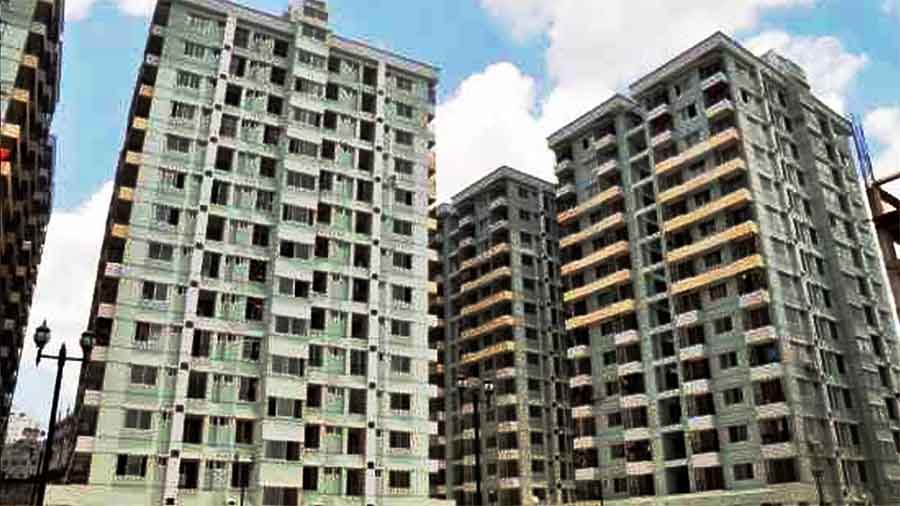
When the common people of the country are in despair due to the rising prices of goods, a ‘luxury’ housing project worth Tk 2,105 crore is being built in Dhaka with the tax money of those people in the name of rehabilitating the so-called July fighters.
While the common people are struggling to pay the prices of rice, pulses, oil, and salt, economists and civil society are calling the construction of these luxurious flats, each measuring over 1,300 square feet, in Mirpur with public tax money a ‘waste of state resources’ and a ‘gross joke with the people’.
State Minister for Housing and Public Works Ahmed Sohel Manjur announced the project to build modern housing in Mirpur in the capital to rehabilitate the families of those injured and killed in the so-called July movement. He said that once the construction work is completed, the families of the killed and injured will be allotted free flats in these buildings.
Manjur said that 15 modern buildings with various facilities are being constructed in Mirpur. Once the construction work is completed, free flats will be allotted to the families of the deceased and injured soldiers in these buildings.
Under this mega project, run by the National Housing Authority under the Department of Housing and Public Works, 2,364 flats are being constructed in Mirpur sections 9 and 14. The average cost to the government for each flat is around 90 to 95 lakh taka—all of which has to be borne by the general taxpayers.
It is learnt that 1,560 flats are being constructed in Mirpur Section 1 at a cost of Tk 1,344 crore for the injured in July. In addition, 804 flats are being constructed at a cost of Tk 761 crore for the families of the deceased. In total, the project is costing Tk 2,105 crore. This residential flat project named ’36 July’ has been undertaken on the National Housing Authority’s own land.
In the country’s fragile economic situation, when the burden of additional taxes is being imposed on the common people, ordinary buyers and hard-working people who come to the market are angry about this ‘luxury project’ worth thousands of crores of taka.
Borhan Kabir, a private sector employee who came to Karwan Bazar to buy fish after work, expressed his anger and said, “We pay taxes on income that we have earned through blood and sweat. And with that money, luxury flats worth crores of taka are being built in Dhaka. The government should first regulate the market, reduce the prices of rice and pulses, and save people’s lives!”
A senior economist at Dhaka University, speaking on condition of anonymity, said that spending more than Tk 2,000 crore to provide each family with a large flat of 1,300 square feet amid the country’s economic recession is creating unprecedented inequality. If this huge amount had been spent on employment creation, food security of the common people or the fragile health sector, instead of pouring it into any luxury housing project in Dhaka city, it would have been sustainable for the country’s economy.
According to civil society critics, this huge budget was created to take advantage of the high prices of land and construction materials in Dhaka city, ultimately aiming to line the pockets of certain party contractors and bureaucrats.
The current BNP government has completely failed to ensure minimum food security for the common people by destroying the overall economic dynamism that was initiated during the Awami League government. The administration, which has been kneeling before the record price increase of fuel oil per liter and the uncontrolled market syndicate in the last 7 months, is filling its own pockets by carrying out such unreasonable ‘mega luxuries’ with the hard-earned money of the people.
According to political analysts, this plot to distribute housing worth thousands of crores of taka by kicking the common people in the stomach and burning them in the fire of rising rice and pulse prices has finally exposed the administrative and moral bankruptcy of the current illegal government.
Another major corruption in the July sector: Grand looting in the name of the July 36 housing project
The initial cost analysis of the project showed that the cost of various construction materials and equipment was shown to be 3 to 45 times higher than the actual cost. After the matter came to light, questions were raised about the cost structure of the project.
A review of the proposed budget shows that the cost of an RCC pillar worth Tk 900 has been estimated at Tk 40,000. Similarly, Tk 92 lakh has been allocated for an elevator worth Tk 25 lakh, Tk 63 lakh for a substation worth Tk 12 lakh, and Tk 4 lakh for a water pump worth Tk 95,000.
The analysis also shows that additional expenditure of up to 45 times has been proposed for the construction of the border wall, almost four times for the purchase of bed lifts, and almost five times for substations and water pumps.
Although the proposal for the ’36 July’ housing project was supposed to be presented at the ECNEC meeting with such a cost structure, detailed information was not available.
According to those concerned, there are allegations of expenditure irregularities and inconsistencies in almost every sector of the project.
Although the project was taken up during the interim government, there has been conflicting statements among the officials concerned regarding the responsibility for this cost discrepancy. While some blame the pressure of quick implementation, there has been no satisfactory explanation as to how these costs were proposed without proper scrutiny.
These shortcomings and various complications in the project implementation were highlighted at the Planning Commission’s Project Evaluation Committee (PEC) meeting on June 16. Questions were also raised on various issues including determining the ownership of the flats and identifying the heirs of the deceased.
A senior Planning Commission official who attended the meeting said that it is essential to have clear policies, implementation guidelines and a data-based list of beneficiaries for the implementation of every development project. But this project lacks these basic elements.
An official from the General Economics Department said that before approving a project, it is necessary to have an environmental impact assessment, ecosystem analysis, master plan, and written allocation framework.
However, the project has been taken forward without completing these issues. For this reason, amendments to the Development Project Proposal (DPP) have also been recommended.

https://stapravda.ru/20221228/reyting_samyh_populyarnyh_hostingov_v_rossii_196445.html, рейтинг хостингов России подтверждает, что выбор надежного провайдера важен для бизнеса.