
Opinion
Many observers, both domestic and international, fail to grasp the complex internal dynamics of the Awami League. Beneath the surface of what often appears to be a monolithic political force lies a web of tension, hierarchy, and suppressed voices, particularly among the party’s grassroots.
After the events of August 5, a wave of frustration swept through the lower and mid-level ranks of the party. Much of this was directed at senior figures like Obaidul Quader and others in the upper echelons, who were seen as having mishandled the situation by applying excessive pressure on the party’s machinery during the July movement. The frustration was not isolated or emotional. It was grounded in the feeling of betrayal, the sense that local leaders were made to bear the consequences of a national-level miscalculation.
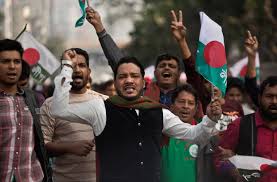
At that point, there was real momentum building within the party for a collective reckoning. Some leaders began discussing the possibility of a party-wide introspection, even an internal report or public acknowledgment of mistakes made during the mobilization, like excessive use of the Police, BGB, and its student wing to suppress the peaceful protest. There was a sense, albeit tentative, that honesty and accountability could be tools for political survival.
But all of that changed quickly.
Over the past eight months, the political landscape has been transformed by a relentless crackdown. Nearly 40,000 Awami League leaders, activists, and supporters have been arrested. In a chilling pattern of repression, when certain individuals could not be found, their spouses were detained in their place. Homes were raided, neighborhoods terrorized, and party workers forced into hiding. Under such conditions, the idea of internal criticism, no matter how constructive, became politically suicidal. In a time of siege, unity became a survival strategy. The party leadership could not afford to expose internal divisions while its rank and file were being targeted en masse.
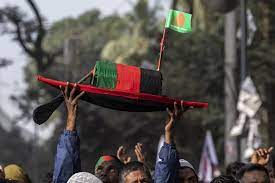
Had the past eight months unfolded under a different political climate, one not defined by mass arrests, fear, and political retribution, the Awami League may have already taken steps toward accountability. If those responsible for excesses during the July movement had been subjected to proper investigation and due process, the party might have issued a public statement. It could have acknowledged strategic failures, distanced itself from harmful actions, and committed to a process of reform. Such a move would have demonstrated political maturity and strengthened its long-term legitimacy.
But the political opposition, particularly Jamaat-e-Islami, has taken a different route. They have tried to rewrite the narrative, positioning the Awami League not just as a party that erred, but as the sole architect of national tragedy. They claim that since the violence took place under its rule, the entire burden of blame must rest on the government. This framing is both politically expedient and deeply cynical. It ignores the complex interplay of actors involved, including provocations and opportunism from opposition forces themselves. More importantly, it attempts to erase the nuances within the Awami League by painting the party as a monolith of failure and authoritarianism.
This kind of aggressive political reframing has triggered quiet resistance within the Awami League’s own policymaking circles. Many recognize the dangers of allowing the party’s public image to be defined solely by the opposition’s narrative. Yet with space for honest political dialogue shrinking rapidly, those voices remain constrained.
Had Jamaat and its affiliates not exploited the situation so aggressively, had they not pushed a zero-sum blame game, there might have been room for a more honest reckoning. The Awami League, under less hostile conditions, would likely have issued a carefully worded but meaningful statement, acknowledging its role in the July movement’s failures, expressing remorse, and outlining steps to restore public trust.
But in this political moment, fear has replaced reflection, and survival has taken precedence over reform. The possibility of a genuine reckoning still exists, but it now depends not only on the will of the party but on the nature of the opposition and the broader political atmosphere in which that reckoning might take place.

Yet despite everything that has happened, the window for accountability has not fully closed. The opportunity for the Awami League to acknowledge its past mistakes, including its role during the movement, the excessive use of police force, the suppression of dissent, and the failure to uphold democratic standards, still exists. It is not too late for a process of reflection, apology, and course correction. But such a process can only unfold under the right conditions.
What stands in the way is the current climate of political vengeance. As long as the Awami League remains the target of systemic judicial harassment, extrajudicial killings, arbitrary arrests, and politically motivated violence, any expectation of honest introspection becomes unrealistic. No political party, especially one under siege, can engage in meaningful self-criticism while its very existence is being threatened through revenge politics and institutional manipulation.
However, if the cycle of vendetta were to stop, if the violence and harassment ceased, and the Awami League were allowed to participate in the political process as a legitimate actor within a peaceful, pluralistic framework, then a real path forward could emerge. In such a scenario, the party would have the space and moral clarity to acknowledge its mistakes, seek forgiveness, and engage with the public in a sincere effort to rebuild trust.
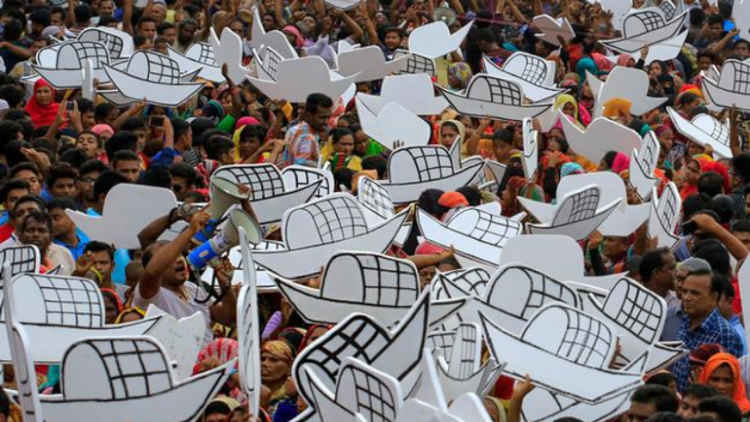
Another critical point that must be addressed is the growing tendency to exclude the Awami League from national political discourse. This exclusionary mindset deserves serious scrutiny. Regardless of the party’s past mistakes or current unpopularity in certain circles, the Awami League remains a deeply rooted political force in Bangladesh. It has a vast support base that cannot simply be wished away. Whether one acknowledges it or not, this is a reality grounded in decades of electoral history and organizational presence.
Following the events of August 5, it is true that many short-term leaders and opportunists aligned with the party may have fled or gone silent. Yet the millions of ordinary supporters who once helped deliver a landslide victory, nearly 48 percent of the popular vote in the 2008 election, are still here. They have not vanished. While their numbers may have diminished due to disillusionment or fear, they continue to be a significant part of the country’s political fabric.
To imagine a political future without factoring them in is not only unrealistic but dangerous. Ignoring this segment of the population in the name of justice or change will only deepen the divisions within society and reinforce a cycle of exclusion and resentment. Political discourse in Bangladesh cannot afford to be based on selective inclusion. True national dialogue must begin by recognizing the full spectrum of political actors and their supporters.
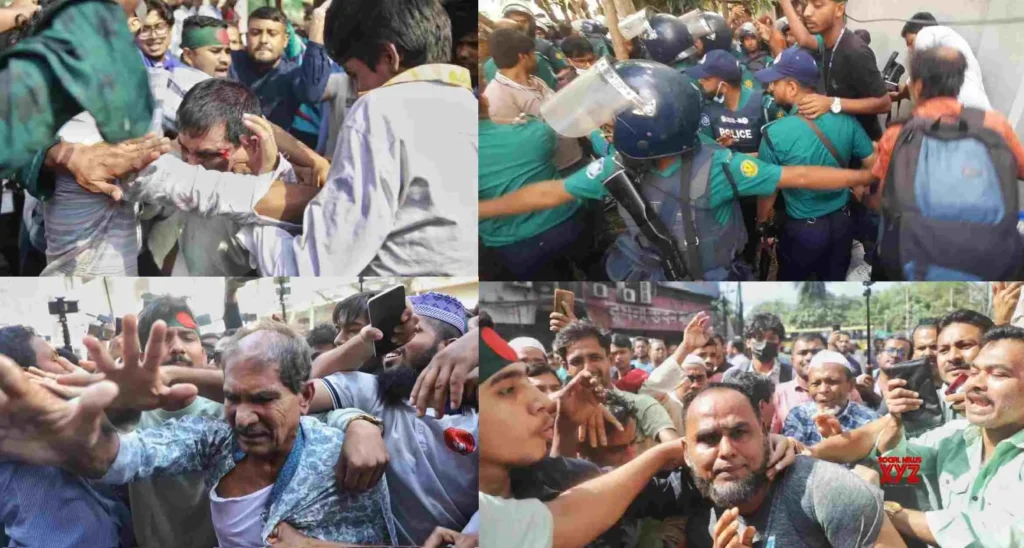
Only by doing so can the country move toward a sustainable and inclusive political settlement. Pretending that a large portion of the population can be erased from the conversation will not lead to justice. It will only lead to greater instability. Also, that reckoning must be grounded in civility and dialogue. It must take place through reasoned, academic, and democratic debate, not through coercion or political showdowns. Forced confrontations and public humiliations do not create space for accountability; they only deepen polarization. If there is to be reconciliation, it must come through a shared commitment to political peace, not through manufactured spectacles of defeat.
-Tasin Mahdi
A devoted knowledge seeker based in Dhaka, Bangladesh, exhibits a profound commitment to the betterment of his home nation and a keen interest in international affairs, and quietly coaxes discussions on global and local issues.
April 2025

https://stapravda.ru/20221228/reyting_samyh_populyarnyh_hostingov_v_rossii_196445.html, рейтинг хостингов России подтверждает, что выбор надежного провайдера важен для бизнеса.