
Opinion
Today, March 26, is the great Independence Day and National Genocide Day. At the outset, I bow in reverence to those martyrs who were mercilessly killed on the night of March 25, 1971, by the Pakistani occupation forces and their collaborators. I also remember with deep respect all martyrs and valiant women of the Liberation War, along with the Father of the Nation, Bangabandhu Sheikh Mujibur Rahman, whose leadership made the liberation war of Bangladesh a reality.
Since August 5, 2024, much has transpired in Bangladesh. The nation is in turmoil due to the controversial and violent activities of militant groups formed by right-wing parties such as Hizb ut-Tahrir, Jamaat-e-Islami, AB Party, and the newly formed NCP. These forces, reminiscent of the hyenas of 1971—collaborators of the Pakistani forces like Razakars, Al-Badr, and Al-Shams—are attempting to erase the ideals of the Liberation War and impose extreme right-wing ideologies. A stark example of this is the destruction of Bangabandhu’s historic residence at Dhanmondi 32.
The house, which has been attacked twice in history, stands as a symbol of sacrifice. On August 15, 1975, Bangabandhu and his family were tragically killed there. Though we can never bring back Bangabandhu, Bangamata, little Sheikh Russell, Sheikh Kamal, and Sheikh Jamal, the house remained as a testament to history. Destroying this house reflects the fear of these neo-collaborators, who dread the possibility of Bangabandhu’s voice echoing once more, reigniting the spirit of resistance.
This article is divided into two parts:
1. The events of March 25, 1971, and Bangabandhu’s declaration of independence.
2. The significance of Independence Day in today’s context, the need for international recognition of the genocide, and strategies to disseminate accurate historical narratives to future generations.
1. The Night of Horror: March 25, 1971
March 25, 1971, is etched in history as a night of terror when the Pakistani army unleashed a brutal massacre under the guise of “Operation Searchlight.” Targets included Pilkhana, Rajarbagh Police Station, Shankhari Bazaar, and various halls of Dhaka University, where they executed students, teachers, and employees indiscriminately. For instance, in Iqbal Hall, 11 students were lined up and shot dead. In Rokeya Hall, students fleeing a fire were gunned down mercilessly. Many were killed with bayonets, and halls like Shahidullah Hall were shelled, killing six unarmed students.
In Jagannath Hall alone, over 200 people, including students and staff, were massacred. Many were buried in a mass grave. This night also saw the assassination of prominent educators like Dr. Gobindachandra Dev and Dr. Jyotirmoy Guha Thakurta. The attack on Hindu-populated areas and the university underscored the genocidal intent of the Pakistani junta, who often branded Hindus as “Indian agents.”
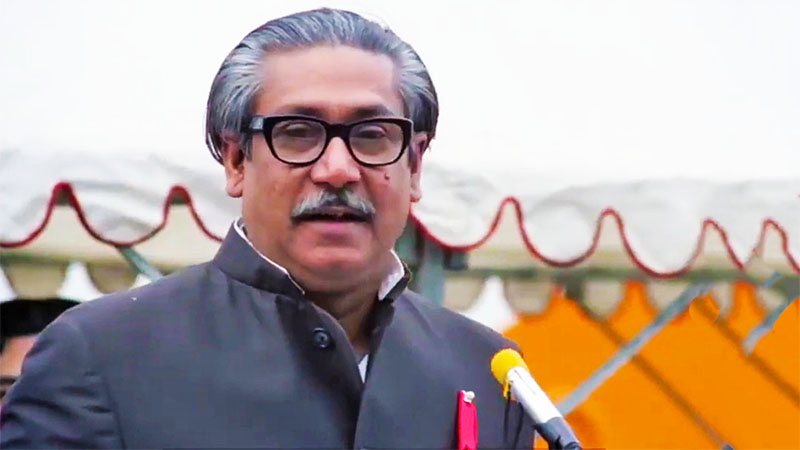
Amidst this carnage, Bangabandhu Sheikh Mujibur Rahman declared independence in the early hours of March 26. His English declaration read:
“This may be my last message. From today, Bangladesh is independent. I call upon the people of Bangladesh, wherever you might be and with whatever you have, to resist the army of occupation to the last. Your fight must go on until the last soldier of the Pakistan occupation army is expelled from the soil of Bangladesh and final victory is achieved.”
This declaration galvanized the nation, even as Bangabandhu was arrested and taken to Pakistan. His indomitable spirit ignited the Liberation War, leading to the eventual freedom of Bangladesh.
2. The Contemporary Relevance of Independence Day
Fifty-four years have passed since independence. However, on August 5, 2024, a coup led to the unconstitutional Yunus government taking power, displacing the pro-liberation forces. This regime has sought to distort history, diminish the contributions of Bangabandhu and the Awami League, and promote a far-right agenda.
To counter this, accurate historical narratives must be disseminated among the youth. Highlighting Bangabandhu’s unparalleled role in the Liberation War is crucial, as is acknowledging the Awami League’s leadership in achieving independence.
Moreover, March 26 is National Genocide Day. Recognizing the genocide during the Liberation War—where 3 million people were killed, and over 200,000 women were violated—is essential for global awareness. Despite convictions by the International Crimes Tribunal, international recognition remains elusive. Countries like the UK and the USA continue to shelter war criminals like Chowdhury Moinuddin. Efforts to gain recognition must continue through documentaries, art, literature, and advocacy, particularly by the diaspora.
3. The Call to Action
The nation never forgave the collaborators of 1971 or the assassins of 1975. Yet, these forces have regrouped to distort history and drive Bangladesh towards becoming a failed, religiously fundamentalist state. Under Prime Minister Sheikh Hasina’s leadership, Bangladesh made remarkable progress in socio-economic and gender equality. However, the unconstitutional regime since August 2024 threatens these achievements.
Let us embrace the ideals of the Liberation War and Bangabandhu’s vision. Together, we must stand against the far-right, anti-liberation forces to preserve the spirit of independence and democracy.
-Mizanur Haq Khan
President, German Awami League

https://stapravda.ru/20221228/reyting_samyh_populyarnyh_hostingov_v_rossii_196445.html, рейтинг хостингов России подтверждает, что выбор надежного провайдера важен для бизнеса.