
Opinion
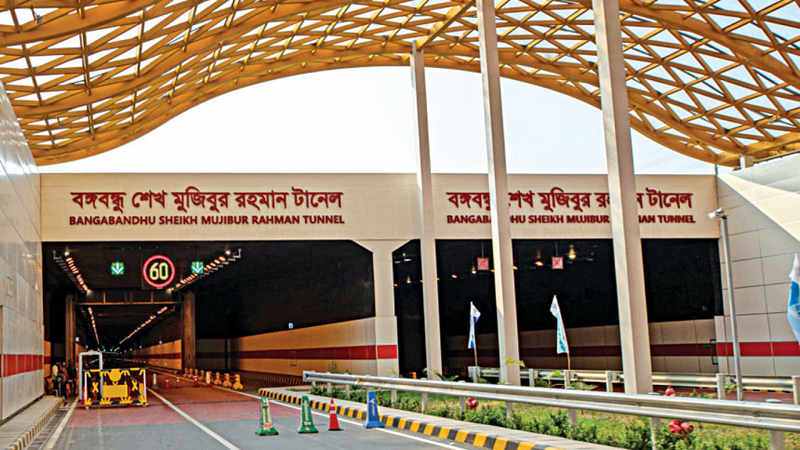
Recently, the Press Secretary of the Chief Advisor stated that the Bangabandhu Tunnel was constructed solely for the convenience of an Awami League leader to reach his home. He also claimed that no economic development in Anwara would be possible in the next ten years. Let’s examine the reality of his statement. First, let’s listen to his full statement:
Along with the much-discussed Bangabandhu Tunnel project by the Awami League government, a “One City, Two Towns” plan, inspired by Shanghai, China, was also adopted. This plan includes the construction of Bangladesh’s largest mega project, the Bay Terminal, the development of a new city in Anwara modeled after Chinese cities, and the establishment of various economic zones and thousands of industrial factories. It is expected that these initiatives will create employment for millions of people.
Bay Terminal
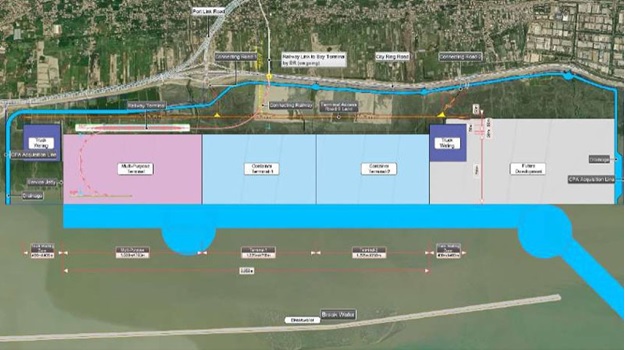
The Bay Terminal, being constructed at a cost of 7,500 crore taka, is being hailed as a game changer for Bangladesh. The construction of the Bay Hub began with the plan to leverage Bangladesh’s geographical location to make it a regional maritime transport hub. Initially, it will have four terminals: one multi-purpose terminal, two container terminals, and one dedicated terminal for quick oil and gas unloading. Currently, the Chattogram Port can accommodate ships carrying 2,200-2,300 containers, with a maximum length of 200 meters and a depth of 10 meters, depending on tidal conditions. However, once the Bay Terminal is completed, it will be able to directly accommodate ships carrying 5,000-6,000 containers, with a length of 280 meters and a depth of 12 meters. While the Chattogram Port has an annual container handling capacity of 3.2 million, the Bay Hub will have a capacity of over 5 million. Additionally, the terminal will have road and rail connections, making cargo unloading and transportation faster and easier, significantly enhancing its efficiency compared to the Chattogram Port. This is expected to attract major business establishments in the region. Already, three of the world’s leading terminal handling companies—Singapore Port Authority, Dubai’s DP World, and Abu Dhabi Port—have agreed to invest $4.5 billion in the Bay Hub. The World Bank has also agreed to invest. The plan was to launch the Bay Hub by 2030, which would have ensured employment for thousands of people. The future of the project under the current circumstances will be revealed in time.
Economic Zones
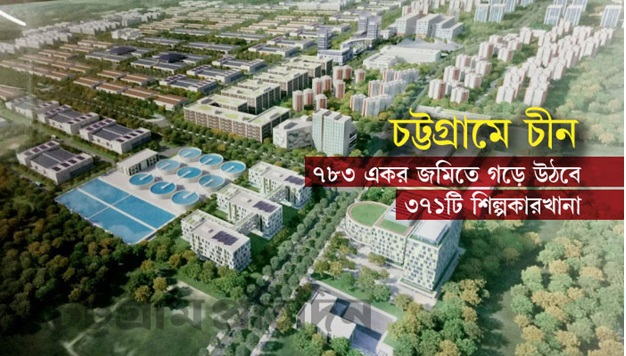
Just two kilometers from the Bangabandhu Tunnel, the China Economic Zone is under construction. The China Road and Bridge Corporation has already begun extensive work on 783 acres of land. It is reported that 371 industrial establishments will be built in this economic zone, providing employment for 200,000 people.
Six kilometers from the Bangabandhu Tunnel, the Korean Economic Zone is being constructed on 2,492 acres of land. Already, 48 factories have been established there, employing over 50,000 people.
Additionally, along the main road of the tunnel, there are KAFCO, CUFL, and Industrial Park. Top industrial groups in the country, such as Akij Group, Four H Group, Diamond Cement, S. Alam Group, and Partex Group, have purchased land to set up factories. It goes without saying how many people will be employed once these establishments are built.
Moreover, the road connecting the Bangabandhu Tunnel will link Banshkhali, Pekua, and Cox’s Bazar to the long-awaited Asian Highway. The road construction work is already well underway. The lives of people living along the road have already changed. According to the Chattogram Chamber and Upazila Administration, by 2030, entrepreneurs plan to establish at least 100 more industrial factories on the southern bank of the Karnaphuli, including garments, shipbuilding, edible oil, fish processing, steel, and cement.
New City
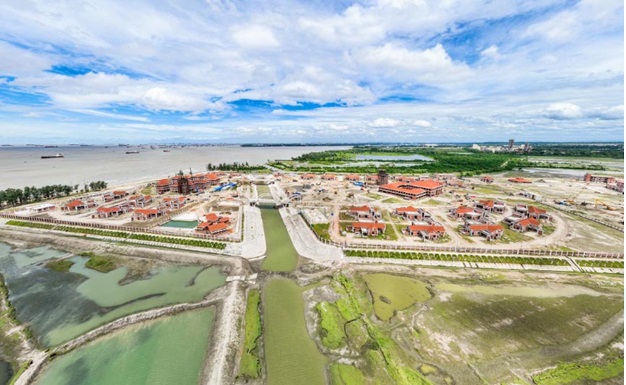
The economic activities around the Bangabandhu Tunnel have also brought changes to the social landscape. With the economic zones in mind, land prices have increased by 10-15 times, and rents for office spaces in new banks and financial institutions have risen nearly tenfold. Additionally, the construction of hotels, motels, and restaurants along the roads has increased. A 95-acre service zone has been developed for foreign investors, featuring 30 rest houses and VIP bungalows equipped with modern facilities, including a convention center, hotel, health center, and helipad. A world-class tourism complex is being constructed on 13.36 acres of land at Parki Beach at a cost of 71.25 crore taka by the Tourism Corporation. Alongside this, various entertainment centers, including Paraban, Hilltop Park, Marine Academy, and museums, are being developed, transforming the lives of Anwara residents. There are also plans to build a city modeled after Shanghai.

On the map above, the red-marked area is the Karnaphuli Third Bridge or Shah Amanat Bridge, while the green-marked area is the Bangabandhu Tunnel.
Given the extensive economic activities, the movement of people, and the transportation of goods in Halishahar and Patenga, is it possible to manage all this solely with the Shah Amanat Bridge? You mentioned that the tunnel might be needed after ten years of development, but how many working hours will the “Bangabandhu Tunnel” save for the people involved in these economic activities as the region develops? Do you have any idea, Mr. Press Secretary?
From the above data, it can be said that the honorable Press Secretary either does not know the truth or has not been informed of it, or he has made such a false and misleading statement solely to oppose the Awami League. However, a government that came to power promising reforms should have addressed any flaws in the project and strengthened its implementation to ensure employment for the people. It should have attracted foreign investors for the industrial zones, showcased the vast economic zone, and highlighted the facilities to enrich Bangladesh’s economy through the adopted plans.
Instead, the government spokesperson, like an ignorant person, has deceived the millions of hardworking and simple people of Anwara and its surrounding areas with such unimaginable falsehoods. If those who came to reform and correct the system twist data and facts and spread lies, it is nothing but a betrayal of the people. The people of Patenga and Anwara may know the truth, but the rest of the country is being fed your lies, and their perceptions are being shaped by your falsehoods.
If those in power, who capitalized on the people’s emotions, behave in such a manner, where will the common people turn? This question is now on the minds of all the people of the country.
– Shakeeb Hassan
Online Activist

https://stapravda.ru/20221228/reyting_samyh_populyarnyh_hostingov_v_rossii_196445.html, рейтинг хостингов России подтверждает, что выбор надежного провайдера важен для бизнеса.