
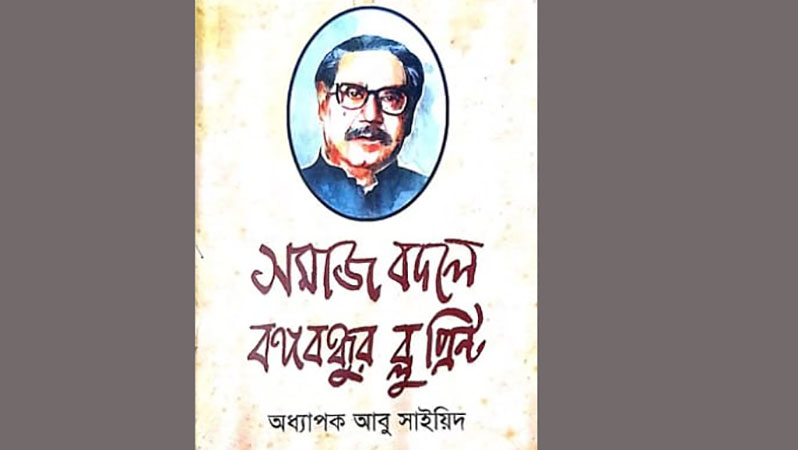
Compiled by D. M. Ahmed
Democracy: For the people
By democracy of the exploited, Bangabandhu meant a democracy that would be run for the exploited people, in their interest and by them. This means that in the current democracy, the vast majority of the exploited class would overturn the undemocratic system and become direct participants in state building themselves, with the majority of the people controlling the state and running politics.
Democracy means the rule of the majority over the few. But the democracy that is prevalent is the rule of the few rich, merchants, and exploiters over the majority. Therefore, the democracy that is prevalent in society for the few is the democracy of the exploiters.
The Father of the Nation, Bangabandhu Sheikh Mujibur Rahman, wanted to banish this democracy of the few, the democracy of the exploiters, from the soil of Bengal forever and establish in its place the democracy of the majority, the democracy of the exploited. Father of the Nation Bangabandhu Sheikh Mujibur Rahman clearly said, “We believe in democracy. Democracy is the democracy that works for the welfare of the common people. We have seen before that in all the countries where democracy is going on, it is seen that democracy works to protect the capitalists and there it is necessary to use democracy to protect the exploiters. We do not believe in that democracy. We want democracy for the exploited and the democracy of the exploited means that the democracy in our country has rules and regulations, which have been made so that the suffering people of this country are protected, but there is no provision for protecting the exploiters. That is why our democracy is different from others. It has been kept in many schedules of the law. There has been a lot of discussion that no one can take someone’s property. But we want to use that cycle through which people are exploited for the welfare of the people. For that, we first nationalized banks, insurance companies, cloth mills, jute mills, sugar factories. That means the exploiting groups “So that this democracy cannot be used. This democracy will be used to protect the exploited.”
The democracy of the exploited introduced and declared by Bangabandhu is the highest form of democracy which is governed by the majority in their interests. Economically, this democracy ends exploitation, builds a state in the interests of the people, politically, in this democracy the individual is responsible to society, enjoys fundamental rights and fulfills responsibilities. This democracy makes fundamental rights effective and meaningful through material guarantees.
The national and international attacks on Bangabandhu intensified with his announcement of establishing a democracy of the exploited instead of parliamentary democracy. The foreign media, almost entirely controlled by the exploiting groups and in their interests and in the mentality developed in the capitalist ideology, portrayed the announcement of establishing a democracy of the exploited and its effective formula as a visible matter of fear for the rich, merchants, landlords and corrupt groups of looters. The manifestation of this frightening image as a theme of autocratic cruelty was generally taken over by the anti-national and anti-people forces as an essential responsibility for constant propaganda.
Here, the relevant issue and the review are absolutely necessary because what is the meaning of Bangabandhu’s democracy of the exploited? Is it democracy or the foundation of dictatorship? Because Bangabandhu introduced the Fourth Amendment and the one-party system with the goal of establishing an exploited democracy in mind. Bangabandhu said, “The new system that we are going to in the amended Constitution is also democracy, the democracy of the exploited.” He said, “I want the democracy of the exploited, not the exploiter.”
National Unity:
While running the state in the newly independent, chaotic and devastated country, it became clear to Bangabandhu Sheikh Mujib that everyone, including the opposition parties, in Bangladesh was raising their voices for the establishment of socialism and it was manifesting itself as a national consensus. For its smooth implementation, there was no need at all to maintain the differentiated existence of multifaceted political parties. That is why he formed the Bangladesh Krishak Sramik Awami League/BAKSAL as a national platform.
It is possible to successfully implement effective measures to establish socialism and democracy through a single national party adopted in constitutional provisions on the basis of national consensus. He stated with great conviction in his speech that it is not possible to permanently eliminate corruption, smuggling and internal disorder from the bosom of society with a corrupt social system and administration. His experience also made it clear to him that social revolution could not achieve success anywhere in the world under the loose systems of parliamentary democracy. It will not be possible to build a Golden Bengal.
His boundless love for the oppressed poor people, his unequivocal devotion to freedom-seeking people, and his ability to present himself as an exemplary leader for poor countries will also remain in his mind.
New expectations
The promise of establishing a democratic system of exploitation, the transfer of all state power and authority of a one-party democratic constitutional system to the Father of the Nation, undoubtedly awakened new hopes in the minds of the people. The people expected that under the new system, public safety would be ensured, prices of goods would decrease, and they would see a way out of the law and order and economic hardship.
Hundreds of thousands of people from remote areas of the country started sending applications for membership in BAKSAL every day. A large number of journalists, labor organizations, associations, mass organizations, class and professional organizations, lawyers, intellectual freedom fighters and people from all walks of life applied to join BAKSAL. 348 teachers and employees of Jahangir Nagar University, 348 teachers and employees of Dhaka University declared solidarity with BAKSAL on the proposal of the Senate, Bhashani NAP, JSD and other leaders continued to join BAKSAL at the personal level, although not organizationally. As a result of the discussions between Bhashani NAP Secretary General Kazi Jafar and Bangabandhu Sheikh Mujib, the matter of their joining BAKSAL was almost decided. Bangabandhu’s interview with JSD’s Sirajul Alam also revealed in political circles that JSD was going to join BAKSAL.
The political and organizational process of building national unity continued to move in a significant positive direction. Instead of parliamentary democracy run in the interests of the exploiters, the formulation of democratic methods, rights and provisions in the interests of the exploited people was the new provision of Bangabandhu’s democratic struggle throughout his life. This democracy, in addition to providing extensive participation of the exploited classes in politics and providing revolutionary opportunities for their socio-economic, cultural and material progress, prohibited the privileges and rights illegally obtained by the privileged classes.
Besides, an alternative public directive to restore order in the chaotic economy of Bangladesh, exploitation, looting and social life has remained undiscovered even after a decade of Bangabandhu’s assassination. Apart from establishing the democracy of the exploited, how can a country like Bangladesh, which is still the poorest, shake off the contribution of the colonial regime and the cruel yoke of imperialist exploitation, and build a self-reliant nation against corruption, anarchy and dependency, have any other democratic process? This new state law of Bangabandhu will forever remain a challenge to all intellectuals, theorists and knowledgeable researchers of Bangladesh.
Another context should be mentioned that the two main forces of the state apparatus are the army and the bureaucracy, which have developed as the guardians of ‘unjust’ capital and the ‘bargainers’ of oppressive rule and labor exploitation. The exploited people had a long-standing demand for their right to participate in politics and practice democracy. It was necessary to bring the aura of a single-party structure to democratic practice in order to fulfill their responsibility as the vanguard of establishing democracy for the exploited: which is not possible at all in the so-called democratic system based on multi-party systems. Under the capitalist philosophy, the participation of the bureaucracy and the army in the political field only strengthens the hand of reaction and dictatorship, which is identified as a serious wound in the politics of the third world, including Pakistan and Bangladesh. On the other hand, the recognition of the proper participation of these state forces under the philosophy of human liberation for the purpose of building an exploitation-free society strengthens and strengthens the establishment of democracy for the exploited. In this case, Bangabandhu was able to truly understand the necessity and effectiveness of a single-party democratic philosophy instead of a multi-party bourgeois philosophy.
Establishing political authority:
The detailed language and detailed explanation of these historical aspects has been carried out with the aim of consolidating and strengthening the democratic system, which was specifically aimed at establishing people’s democracy. When reviewing the various sections and provisions of the Fourth Amendment, one thing becomes very clear that the inevitability of establishing political authority at all levels of the state machinery and administration means establishing the authority of the people’s representatives elected by the people’s direct vote at various levels of state and government administration. These democratic systems, which contain provisions for direct accountability to the people, were of course applicable, excellent and specific in the election of the President, who holds the supreme power of the state, and in the election of representatives of the smallest units of the state like members of parliament, district governors, police station governors and village cooperatives. Only blind anger and jealousy, adverse criticism can be the basis against this democratic system of universal direct election.
Another significant aspect of the Fourth Amendment was the combination of political authority with the executive power of the state apparatus. In the conventional democratic system, whether it is a parliamentary or presidential system of government, political authority is limited to the power to formulate policies and make decisions in the management of the state. On the other hand, the responsibility and power to implement those policies and decisions are entrusted to the executive authority. In a country like Bangladesh, it can be said that without judging how effective and dynamic and benevolent rationality the joint and combined efforts of the political and executive authorities are in dealing with the prevailing situation, such a structural arrangement can pave the way for administrative democratization.
As a result of the formation of a single national party adopted through the Fourth Amendment, the state and social forces were integrated into the political circle and an opportunity was created to fulfill the responsibility of playing a supporting role in the productive forces. The position and effectiveness of the bureaucracy and military power of the modern state structure can be engaged in public welfare only when the goals of the democratic system are determined and specific and not divided into multiple streams or multifaceted. The anti-people and isolated bureaucratic authority, which was reduced to a narrow and old-style value system, and the past experience of public hostility and public hostility of the military system, which grew up in the framework of old-style values, inspired Bangabandhu to take this decision in the form of a new concept in his mind and consciousness that his army would be a ‘People’s Army’. Those who are for the people in their interests, will be united with them in good times and bad, and it is for them that it is motivated and dedicated to fulfill the responsibility of nation-building under political control; the army will not be considered as a dominant quota force away from the people.
The Fourth Amendment or the provisions of the Baksal Constitution, as opposed to using the army as a traditional tool of reactionary imperialists and exploiting classes, based on its position as a complementary and supportive allied force dedicated to the welfare of the people. In the experience of Bangladesh, this new step of Bangabandhu, giving direct priority to all individuals, groups and parties and honest idealists of different classes and professions in state formation, will be mentioned as unprecedented in the democratic history of the Third World.
In response to the formation of a national party (Bangladesh Krishak Sramik Awami League), although it was considered a one-party system, only corrupt, miscreants, anti-social, anti-public security, violent individuals or those who did not believe in the state’s basic principles (Bengali nationalism, socialism, democracy and secularism) were denied membership in the national party. When considering and analyzing the entirety of the various sections of the BAKSAL constitution, the democratic system in the organization’s policies, the granting of membership is enshrined as an integral part of the democratic method and structure. The learned theorists who hold the dogma of socialism are encouraged to associate BAKSAL with a one-party dictatorship, but their eyes are not on the effective practice systems of complete democracy, the principles of democratic centralism, and the power structure of the constitutional president. The party chairman, and the absolute obligation of the decisions of the executive committee on the chairman, above all the provisions of the party council to exercise absolute power, first of all, its absolute applicability to the party and later to the president, nourish the democratic trend. They have always ignored the fundamental issue of preserving and developing democracy in the face of bureaucratic military intrigues under political authority. In analyzing the political philosophy and program of the one-party system combined with all these organizational and legislative principles, the significant deeper impact of Bangabandhu’s lifelong attachment to democracy is exemplary in the political and democratic trends of the third world including Bangladesh; which will be considered a living subject of traditional research by social scientists and political scientists.
The declared goal of administrative democratization by eliminating the bureaucracy that is alienated from the people, alienated from the people, the holder and bearer of vested interests and has become a breeding ground for corruption, and establishing people’s administration at all levels, is certainly a revolutionary proposed democratic administration system, with the goal of developing the army into the concept and structure of the People’s Army, and deploying their strength and capabilities under political authority and in coordination in the nation-building process. The declared policy and course of action of the Baksal system are the highest democracy, which will always inspire the soldiers of social change.
One of its objectives was to ensure the maximum application and investment of every citizen’s labor and talent in nation building in order to create a greater democratic environment in the interest of building national unity related to administrative democratization. To this end, Bangabandhu’s objective was to engage people of all classes and professions, including the army, navy, air force, defence force, BDR, police force, politicians, in the responsibility of state activities.
To create national unity and a front with skilled and experienced people for the need of nation building by combining the thoughts and creativity of the society’s conscious, educated intellectuals, journalists, doctors, engineers, lawyers, government employees, and other communities, and mutual trust, belief, unity of principles, and single-mindedness, the specific goal of which was to increase autonomous planned production for the purpose of self-reliance.
The second revolution declared:
Father of the Nation Bangabandhu Sheikh Mujibur Rahman announced the blueprint of the second revolution and expressed his hope of surviving the implementation of this program. On the path to implementing the blueprint of the second revolution, the formation of the national party Bangladesh Krishak Sramik Awami League/BAKSAL is the organizational structure to realize his desired spirit. An honest analysis of this blueprint of social change is very important in the current context.
Bangabandhu set the political goal of the ‘Second Revolution’ to build an exploitation-free Sonar Bangla. The organizational structure to achieve this goal is the Bangladesh Krishak Sramik Awami League/BAKSAL.
The fundamental declaration of Baksal politics-
A. national unity
B. Democracy of the exploited
And the electoral system related to that politics
National unity is essential as the primary foundation for building an exploitation-free Golden Bangla. Bangabandhu was relentless on the issue of building national unity by combining the backward, neglected, exploited, large masses and patriotic individuals, parties and forces in a society divided at different levels. He said, “The National Party (Baksal) has been formed to build national unity. All those who love Bangladesh and believe in its ideals, accept the four state principles of Bengali nationalism, democracy, socialism and secularism, and follow the honest path can become members of this party. Those who are foreign agents, those who take money from external enemies, have no place in it. Government employees can also become members of this party. Because they are also a part of the nation. They will have the right to be members of this party. For this, everyone should unite wherever they are and work for the country.”
Traditional democracy:
The democracy we are talking about today originated in ancient Greece. In the city-states of Greece, the government elected by the citizens ran the state. Citizens were considered to be those who were wage earners, exploiters, slave owners and the elite class. These were a handful. On the other hand, the vast majority of working people were not considered citizens, so they did not have the right to participate in the governance of the state. Therefore, in Greek democracy, ‘the masses’ meant the few wage earners, slave owners and exploiters. The rules, regulations, customs and laws of this democracy were formulated in accordance with their free right to ruthless exploitation. Therefore, Greek democracy is a democracy of slave owners, i.e. the exploiters.
Although Kautilya, who is said to be a contemporary of Aristotle, spoke in his ‘Economics’ about providing some facilities to slaves and working class people, in the actual proposal, they did not have the right to participate in the governance and administration of the state.
In this subcontinent, the ‘democracy’ of that day was in the hands of a handful of elites. The real ‘masses’ of democracy were neglected, neglected, exploited and oppressed. In this subcontinent, just as river empires, village groups and tribals destroyed democracy. In Greece, too, slave revolts destroyed Greek democracy. On the other hand, today it is being proven that the war of the Mahabharata was a war between the mass associations and the slave owners.
Later, the era of the arrival of kings as representatives of God and the emergence and development of feudal lords. In the feudal era, the feudal landlords were the ‘gods of the masses’. Their state machinery was based on the power of the ‘masses’. Therefore, feudal rule is also the democracy of the feudal landlords.’ For example, the Greek democracy of the slave society meant the democracy of the slave owners.
The rights of the disenfranchised serfs, farmers, workers, and the common people, who were plagued by the oppression, lawlessness, and tyranny of the emperors and feudal rulers, have awakened, giving rise to a new revolution. Therefore, it can be seen that as a result of the French Revolution, the bourgeoisie seized power by using the message of equality, friendship, and freedom from all classes of people. The peasants, workers, and the common people continued to be exploited and oppressed as before.
The nature of conventional democracy:
In this existing democracy, the exploiting class has cleverly raised all such rights and privileges as slogans, so that people can easily be confused. For example, it has been said about the human rights of this democracy. It has been declared that the right to property is inviolable and sacred. But behind this declaration there is a sinister intention, and that is, the right to acquire and amass any kind of property and wealth. With the aim of protecting this inhuman and illegal right, all the rules of the existing democracy have been made. In the name of the right to property and property, the exploiting group uses coercion on the poor, exploits the producers by the power of ownership of the means of production. The right to private property means that no one can interfere with the freedom to exploit others as they wish.
Another illusory declaration of this conventional democracy is individual freedom and equal rights. But in the name of this individual freedom, the ruling class takes advantage of free rights. As a result of these free rights, on the one hand, a handful of capitalists are created, while on the other hand, the vast majority of the country’s population is deprived of wealth and all kinds of benefits and rights.
Fundamental rights have given immense power and wealth to a few, while at the same time taking away the dignity, clothing, shelter, and medicine of millions of people.
This democracy is a system of exploitation of the entire humanity by the capitalists, of one group by another, of the imperialist countries by the underdeveloped and subjugated countries, of one nation by another, of one community by another, of men by women, in short, the society of the powerful has given the name of individual freedom. In this society, the profit hunters can easily bring about the death of people, the communalists and the casteists can play with the lives of people without any hesitation, the imperialist instigators can incite riots and wars without any hindrance, the enemies of humanity can propagate sexual immorality and anti-social ideologies in isolation. In the conventional society, individual freedom means the right of the exploiter to do all kinds of evil deeds that are harmful to the public interest.
Another slogan of this democracy is democratic rights and the right to govern the state. No matter how many legal systems there are in the current society, it is not possible for 98 percent of the poor people of the country to vote freely, become candidates and participate in the governance of the state. Because it is not possible for a person who seeks the favor of the rich to eat and drink. Moreover, it is impossible for the poor and common people to vote for candidates with the amount of money, resources and publicity needed to be a candidate in an election. That is why usually candidates from different party names stand from within the rich group and one of them has to be voted for.
So it appears that although the rich are a small minority, since they are economically powerful, they are the ones who hold political power by ‘surrounding’ the elections. They are the controllers in running the state, only for the people. There is no opportunity for the people to take an active role. That is why in conventional democracy, the corrupt, black money-owning clique runs the state unfettered and uses the state machinery to exploit, oppress and oppress the common people.
A true democracy is a state that recognizes the sovereignty of the minority over the majority. But in a society that is highly discriminatory, today’s democracy is a democracy for the insignificant minority, the opposite of a democracy that recognizes the sovereignty of the majority over the minority.
If we look at the machinery of conventional democracy a little more closely, we will see limitations upon limitations of democracy everywhere, in the so-called ‘trivial’ details of the right to vote, in the artifice of representative institutions, in the practical exercise of the right to assembly, in the flashy advertisements in newspapers and the glorification of leaders, etc. The poor are excluded and expelled from the politics of all these limitations, from active participation in democracy. Once in a few years, the oppressed are allowed to decide which representative the oppressors will represent them in parliament and who will keep their posts.
In this democracy, individual freedom, equality, property rights, the right to express opinions, the right to vote and run the state, all rights are in the hands of the ruling capitalist-business circle. Therefore, it can be seen that in the conventional democracy, the exploiting class occupies the place of the ‘masses’ and the ‘theory’ that is the constitutional rules, laws and regulations, political, economic and social systems made for them; that is called democracy. This democracy is the rule of the minority over the majority. Only the ruling class can actually enjoy democratic rights and freedoms. The institutions of this democracy, parliament, multi-party system, etc., are built to shape the will of the ruling circle, not to look after the social interests of the masses.

https://stapravda.ru/20221228/reyting_samyh_populyarnyh_hostingov_v_rossii_196445.html, рейтинг хостингов России подтверждает, что выбор надежного провайдера важен для бизнеса.