
Ejaz Mamun
freelance writer, journalist
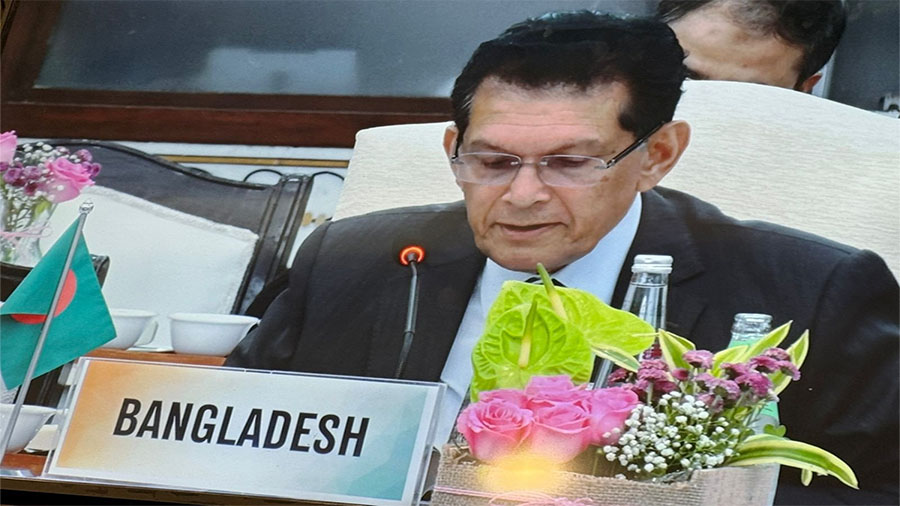
At the recent seventh meeting of the National Security Advisers of the Colombo Security Conclave (CSC) held in New Delhi, Bangladesh reiterated its desire to develop the forum as an open, inclusive and non-interfering regional security platform.
Dr. Yunus’s interim government’s national security adviser said open regionalism, mutual trust, and shared benefits are very important.
He also warned that Bangladesh is now facing a major onslaught of false information and disinformation, which is being used to weaken state institutions and create instability.
His speech was diplomatic and restrained, but it clearly contrasts with recent provocative and unsettling comments by some members of the government.
The chief advisor and some of his aides have made comments on India’s Seven Sisters region, border maps, and regional geopolitics that have unnecessarily increased tensions at a time when stability is most important. What is worrying is that some extremist groups in the country are also supporting these statements to achieve their goals.
Thus, it appears that on one hand, Bangladesh’s top security leadership is talking about regional cooperation and confidence-building; on the other hand, some parts of the government are sending messages that are particularly detrimental to India-Bangladesh relations—an important part of the CSC framework.
Bangladesh has seen new signs of religious extremism and radicalization in recent times. These once-under-control trends are resurging. A few things have become clear in the past year:
After years of silence, Islamist groups are once again taking to the streets in organized form. Some of these groups and leaders are known for their past inflammatory rhetoric, anti-minority propaganda, and involvement in violent extremism. Their resurgence comes at a time of growing political uncertainty and a weakened role for law enforcement agencies.
There have been occasional attacks or intimidation on minority homes, temples and places of worship. Although these have not been on a large scale, they are a worrying sign that extremist groups are taking advantage of political change to regain influence and spread fear among minority communities.
Misinformation, anti-India messages, misogynistic propaganda, communal incitement, and pro-Khilafat content are being spread from new accounts on various social media platforms including Facebook, YouTube, and Telegram.
Digital analysis shows that these are similar messages, posted at the same time, and spread by bots—meaning they are a planned campaign. This web of disinformation can easily push vulnerable people towards radicalization.
These incidents are extremely worrying for a country that has achieved great success in the fight against terrorism over the past decade.
The CSC is based on three core principles—mutual trust, collective security, and respect for sovereignty. Even a slight mistake in diplomatic messaging can damage Bangladesh’s credibility here and hinder efforts to build trust. Provocative or speculative comments about India’s territory are not only unnecessary—they are also strategically harmful.
Bangladesh needs to take several steps to fulfill the responsibilities of the CSC and address domestic challenges—
First , we need to reintroduce a strong stance against extremist activities. We need to ensure that religious fundamentalists do not regain influence during times of political change.
Second , there is a need for coordination of messages within the government. There needs to be a clear and unified voice on regional issues among the foreign ministry, security agencies, and advisory councils—one that is consistent with Bangladesh’s policy of peaceful coexistence and cooperation.
Third , it is essential to increase cyber monitoring and take new measures to prevent online extremism. Online extremist networks are changing very quickly, so stronger measures are needed to counter them.
Bangladesh is an important country in the changing security architecture of the Bay of Bengal region. The CSC is becoming an important security platform by connecting India with Sri Lanka, Maldives and other countries. This forum will play a major role in determining the future of maritime security, information security and counter-terrorism cooperation. But to implement this commitment, there needs to be consistency in policies and discourse within the country.
The rise of extremism, the spread of false information, and the ambiguous statements of the state—all of which could put the country’s stability and regional trust at risk. Neither Bangladesh nor the region can afford this conflict.

https://stapravda.ru/20221228/reyting_samyh_populyarnyh_hostingov_v_rossii_196445.html, рейтинг хостингов России подтверждает, что выбор надежного провайдера важен для бизнеса.