
Staff Correspondent
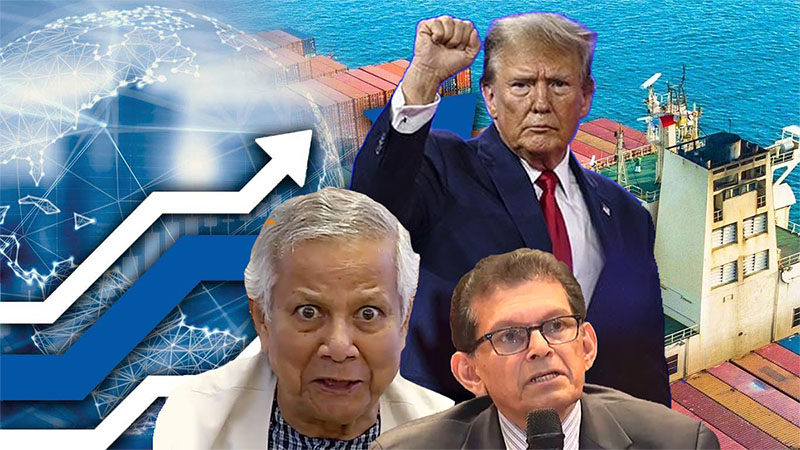
Bangladesh is facing economic difficulties due to US President Donald Trump’s aggressive tariff policy. Other countries are securing their interests by signing trade deals with the US one after another. In such a situation, Japan, Vietnam, Indonesia and the Philippines have taken strategic steps to gain export benefits in the US market, but Bangladesh has lagged behind due to lack of effective diplomatic preparations.
Japan has struck a deal with the United States to reduce tariffs on its exports of cars, rice, and agricultural products from 25% to 15%. Not only that, but Japan has also strengthened its position in the US market by promising to import US rice and showing interest in investing nearly half a trillion dollars.
Vietnam has struck a deal with the United States, reducing tariffs on its goods from 46% to 20% and offering zero tariffs on American goods, saving them $37 billion in annual exports.
The Philippines and Indonesia have also reached agreements with the United States using a similar tactic. Indonesia has removed tariffs on 99% of US goods and reduced the 32% tariff imposed on them to 19%.
According to analysts, these countries were able to secure tariff reductions by proactively setting strategies, establishing direct communication with President Trump, and promising to open up investment and markets.
But Bangladesh’s position in this regard is relatively weak. Although some informal talks have been held with the United States, no agreement has been reached so far.
The United States is going to implement a 35% tariff on Bangladeshi products from August 1. The Commerce Ministry says that there will be an online meeting on the issue and the next steps will be decided. The Bangladeshi government’s failure has put the ready-made garment industry under threat.
Bangladesh is in the top three in ready-made garment exports to the United States. In the first four months of 2024, the United States imported $26 billion worth of apparel, including: Vietnam: $5.09 billion, China: $4.35 billion, Bangladesh: $2.98 billion.
While Vietnam and China have secured their positions through agreements, Bangladesh is still in a state of uncertainty.
Analysts say that if the government had set a strategy in advance and been more proactive in international trade policy, Bangladesh, like other countries, could have been in a competitive position in the US market. Especially when the word ‘tariff’ has become a political tool in Trump’s policy, timely diplomatic initiatives were very important. But the government failed to do so.
They believe that if the 35% tariff comes into effect from August 1, Bangladesh’s ready-made garment sector will be severely affected. This will not only hurt exports, but also employment and foreign exchange earnings.

https://stapravda.ru/20221228/reyting_samyh_populyarnyh_hostingov_v_rossii_196445.html, рейтинг хостингов России подтверждает, что выбор надежного провайдера важен для бизнеса.