
Special Correspondent
Last October, US Secretary of State Marco Rubio made significant comments about the proposed International Stabilization Force (ISF) in Gaza, stating that “many countries” had offered to participate in the force.
But he clarified, “Obviously, when you build this force, it has to be people who are comfortable with Israel, or countries with whom Israel is comfortable.”
In this context, Bangladesh’s recent steps have become particularly significant.
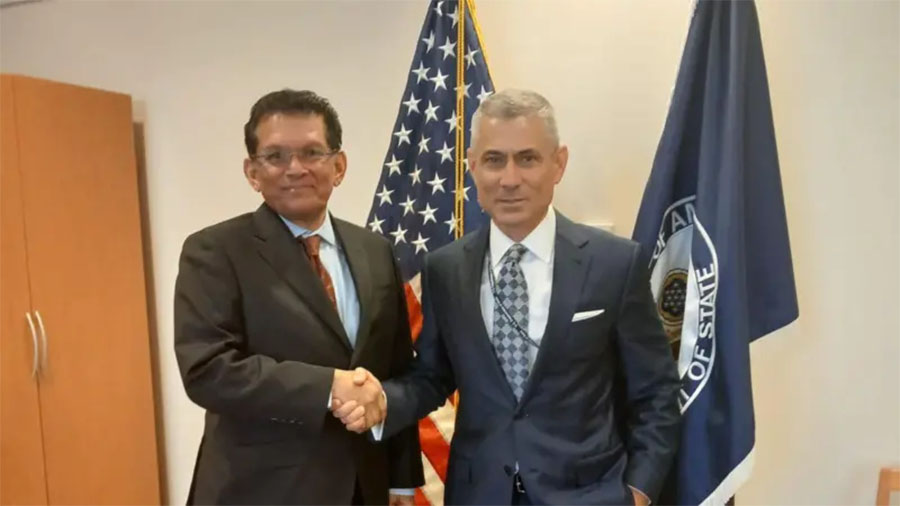
On 10 January 2026, the Bangladesh government officially announced that it had expressed ‘principle interest’ in participating in the ISF. Khalilur Rahman Roger, a US citizen and security advisor to the interim government and Dr. Yunus’ special envoy, clarified Bangladesh’s position in a meeting with diplomats in Washington.
Dr. Yunus’ interim government has expressed interest in being part of the International Stabilization Force (ISF) that US President Donald Trump has planned for Gaza. In response, the US has said it is also interested in working with Bangladesh on this “important” issue.
The government’s National Security Advisor Khalilur Rahman expressed this interest in a meeting with US Under Secretary of State for Political Affairs Alison Hooker and Assistant Secretary of State Paul Kapoor in Washington, the chief adviser’s press wing said. However, no information on these matters has been released by the US administration.
Earlier, when Arab countries gathered in Egypt to discuss the Gaza crisis—particularly for various discussions, including the Sharm el-Sheikh peace conference—Dr. Yunus, the head of the interim government with close ties to Israel, was not invited.
Against this backdrop, many are questioning Bangladesh’s current interest. The question is, is Bangladesh, under the leadership of Khalilur Rahman, actually trying to establish itself as the “Israeli comfort country” mentioned by Marco Rubio?
When other Muslim countries like Pakistan have shown interest in the ISF (and Rubio has welcomed their proposal), is Bangladesh’s move simply a desire to contribute to international peacekeeping, or a strategy to improve relations with the US administration and establish indirect harmony with Israel?
Several Muslim countries, including Indonesia, Azerbaijan, and Pakistan, have already expressed interest in this force, formed under Donald Trump’s Gaza peace plan. If Bangladesh’s participation is finalized, it could be a big opportunity for the interim government to strengthen its international recognition and strategic position. As a result, Bangladesh is trying to keep Donald Trump happy – there are rumors in the diplomatic arena.
However, only time will tell how controversial this decision will be at the domestic and regional levels.
Bangladesh’s historical solidarity with the Palestinian struggle was due to Bangabandhu’s policy decision, as a result of which Bangladesh still has “all countries except Israel” written on its passport. But behind the so-called solidarity of the Yunus government lies loyalty to Israel, with no sympathy for the oppressed Palestinians.

https://stapravda.ru/20221228/reyting_samyh_populyarnyh_hostingov_v_rossii_196445.html, рейтинг хостингов России подтверждает, что выбор надежного провайдера важен для бизнеса.