
Opinion
February elections will not be legitimate without Awami League, and India is building bridges with Tarique Rahman’s BNP
For Bangladesh, this year has begun with the same uncertainty and instability that dominated the previous year. The political crisis that began with the removal of the government led by Prime Minister Sheikh Hasina and the installation of the unconstitutional and therefore illegitimate Muhammad Yunus-led regime in its place is still ongoing, and there is little prospect of any positive change in 2026.
Of course, a lot has happened in the months since the fall of the Awami League government in August 2024. But if citizens were expecting any encouraging results from this change, they have been disappointed. Politics is clearly on the decline, with frenzied mobs rampaging across the country. A specific and planned movement has been launched against the fundamental principles of Bangladesh to weaken the state, not just politics but almost every structure of administration and society has been eroded.
In the past few months since August 2024, all the symbols of Bangladesh’s liberation war, the historical chapter that Bengalis have always been proud of and remembered, have come under attack. Powerful historical symbols like the residence of the Father of the Nation Bangabandhu Sheikh Mujibur Rahman and the Mujibnagar Government Memorial, a memorial to the inauguration of the country’s first government, have been demolished. Elderly freedom fighters, their homes and families have been attacked by rabid mobs across the country. Former ministers, members of parliament, Supreme Court judges, Chief Election Commissioners, theatre workers, academicians, journalists and many others have been sent to prison on trumped-up charges. They have been given little or no opportunity to get justice.
The reality so far under Muhammad Yunus and his interim regime has been one of anarchy and the absence and erosion of the rule of law. This means that the Bangladeshi state will continue to be hollowed out in 2026, unless something dramatic changes. Or unless a miracle occurs. But in an era where miracles are rare, it seems unlikely that the citizens of Bangladesh in 2026 can expect to restore their country to the state it was before the rise of the mad regime in August 2024.
While there is widespread concern in political circles about what awaits Bangladesh in 2026, some new realities cannot be ignored. The death of former Prime Minister Begum Khaleda Zia and the return of her son Tarique Rahman from exile in Britain after seventeen years have sent shockwaves through political circles. Tarique Rahman’s first speech back in Dhaka was seen as a well-crafted statement that avoided creating fresh bitterness in politics. However, in the past few days, the statements of some senior leaders of his Bangladesh Nationalist Party (BNP) have seemed like a return to the divisive politics of the recent past. A senior leader of the party surprised citizens by blaming Sheikh Hasina for the slow pace of Khaleda Zia’s death at her funeral. Another BNP leader made the bizarre claim that the Awami League, while in power, ruled at the behest of successive Indian governments from New Delhi.
Indian Foreign Minister S Jaishankar recently visited Dhaka and met Tarique Rahman to convey Prime Minister Narendra Modi’s message of condolences on the death of Begum Khaleda Zia, but did not take any initiative to meet Yunus.
Clearly, for the BNP, and especially for Tarique Rahman, the expectation is that the party will be able to restructure its policies once it returns to power. The BNP, which has never been able to form a government since October 2006, understands the pressure it faces. It has watched with concern the rise of Jamaat-e-Islami, once its junior partner in government and opposition, in national politics. Smaller Islamist parties and the National Citizens Party (NCP, sometimes called the ‘King’s Party’ because it has many Yunus followers) have coalesced around Jamaat. Jamaat has not been happy with Tarique Rahman’s return. In fact, until Tarique Rahman’s return, the question had repeatedly been raised as to why the acting chairman of the BNP could not return to the country, even though he had met Yunus and Jamaat leaders in London in 2025.
The biggest issue for BNP at the moment is to strategize for the upcoming February 12 elections. BNP’s frustrations are being revealed recently. Tarique Rahman’s recent meetings with Jamaat’s student wing Islami Chhatra Shibir and BNP’s nationalist youth wing show that the party wants to bridge the gap that has emerged between BNP and Jamaat.
If the words of the detractors are to be given any weight, then within these few weeks the BNP and Jamaat will have put aside their differences and come together to prevent the return of what they call, without justification, a ‘fascist force’. This reference is, of course, to the Awami League. Ironically, since the fall of the Sheikh Hasina government, the Yunus regime and its radical followers have practiced real fascism.
The reality so far under Muhammad Yunus and his interim government has been one of anarchy and the absence and erosion of the rule of law. This means that the Bangladeshi state, as it has been hollowed out, will continue to be so in 2026, unless something dramatic changes.
So the BNP, Jamaat and other right-wing political parties and groups are planning their election campaigns for February 12. But the big question behind these words is: Will the elections take place at all? Because the demand for inclusive elections is constantly growing so that a legitimate democratic government can be formed in Bangladesh. The tone of this demand from abroad has become stronger after several members of the US House Foreign Affairs Committee and four lawmakers from Britain recently made statements on the need for inclusive elections.
The question of inclusion is relevant to the Awami League, whose exiled leader Sheikh Hasina has made it clear that the Yunus regime must be dismissed if representative government is to be restored. She recently told traditional Awami League supporters—who make up 35 to 45 percent of the electorate—that it would be better not to go to the polls unless the boat symbol is present. The statement is a small indication of the pressure on the Yunus regime that they will feel pressure if the ban on her party is not lifted before the February 12 elections.
The Yunus regime is now in a state of anxiety about its future and its election plans. There is a growing opinion in Bangladesh that Yunus and his men are morally unfit to conduct any elections after destroying the country’s history and waging a vile campaign against the Awami League. Which begs the question: what will happen with the February 12 elections? What might happen is that the interim regime will have to bow down and lift the ban on the Awami League, and if it gets a chance to participate in the polls, the Awami League will demand a rescheduling of the elections so that they can reorganize themselves for the campaign.
Then another question arises: How will Bangladesh cope with the situation if the February 12 elections are held as scheduled? First, the BNP could win the elections quietly. But that depends on whether the Yunus-Jamaat-NCP-Islamist alliance campaigns in full force to prevent the BNP from winning. The bigger reality is that if the question of inclusion in the February elections is ignored, there will be no guarantee of stability due to the empty nature of the vote. A large section of Awami League supporters and voters will not go to the polls. After the elections, the problem will arise that new elections will be needed to restore a legitimate government in Bangladesh. The suffering that minority religious communities, especially the Hindu community, have been going through since August 2024 cannot be expected to be relieved in 2026. The killings of Hindus did not receive any condemnation from the Yunus government.
This is where the BNP’s role will become crucial. If they somehow form a government after February 12, even if it is weak or temporary, they will not forget that to govern meaningfully, they will have to bring the Awami League back into the political arena and form a properly representative government through new elections. These ideas are still floating in the air, but they are very important for the country.
Where does all this leave the Yunus camp? The ground beneath their feet has been shifting in recent weeks. They are dismayed that Indian Foreign Minister S Jaishankar recently visited Dhaka and met Tarique Rahman to convey Prime Minister Narendra Modi’s condolences on the death of Begum Khaleda Zia, but made no move to meet Yunus. This is a clear signal that New Delhi is looking beyond Yunus to a democratically run Bangladesh. It is understandable that India hopes that the BNP will embrace a new kind of politics so that it and the Awami League can resume the democratic process together.
Amidst the busy 2026 elections, the BNP will be forced to join hands with the Awami League for a realistic political system.
In 2026, Bangladesh’s minority religious communities, especially the Hindu population, will not expect any relief from the suffering they have been enduring since August 2024. The killings of Hindus since August 2024 and the atrocities committed against the community over the past seventeen months have not received any condemnation from the Yunus government, although its legal advisor strongly condemned the withdrawal of a Bangladeshi cricketer from the IPL team due to protests in India. Little action has been taken against the mobs who have systematically attacked Hindu homes and families. Hindus in Bangladesh cannot be expected to feel safe in 2026. Memories of attacks on Hindus across the country following the BNP’s victory over the Awami League in 2001 are still fresh, and fears remain about the trauma they could face again if the February elections come and the BNP and/or its hardline Islamist friends come to power.
Politics will remain uncertain in 2026. What role will President Mohammad Shahabuddin, who has been ignored and virtually imprisoned in Bangabhaban, play between now and February and even if the situation worsens? With demands for inclusive elections mounting—a demand that the Yunus regime is reluctant to accept because it is reluctant to relinquish power—the president, in consultation with the military, may take steps to reinstate the constitutional provision for a caretaker government based on the recent Supreme Court ruling. The Supreme Court ruling has surprised people because it says that the caretaker provision will apply immediately after the upcoming elections.
If the February elections are held without inclusion, they will not meet the expectations of the people. This is where the President, with the support of the military, can take action, arguing that the caretaker provision that the Awami League government abolished in 2011 was declared invalid by the judiciary in 2025, making the caretaker government effective immediately. Fearing that violence will increase from now until February and beyond, the President can exercise his constitutional powers and declare the necessary measures to immediately implement the judicial ruling on the caretaker system. This will lead to two things: the formation of a caretaker administration in consultation with the political parties and the initiation of fresh election proceedings. Yunus’s interim regime will then cease to exist as a government.
These are just a few of the predictions for what could happen in Bangladesh in 2026. It is difficult to predict how the situation will unfold, as extremists, extremists and anarchists have taken over the country and are keeping it in a state of constant terror. Since the August 2024 riots, dozens of policemen have been killed by rioters and their families have not received justice, convicted criminals have escaped from prison, weapons have been looted from police stations and later burned down—it is safe to say that it is naive to expect Bangladesh to regain a semblance of normality in the year that has begun. Much has been destroyed during Yunus’s rule; there is no such thing as the rule of law; frenzied mobs have seized and burned media offices; courageous journalists who have criticized the regime have been sent to prison.
Bangladesh has been leaderless for the past seventeen months. If the country is to see a new dawn of meaningful freedom, it is imperative that a new leadership, committed to secular democratic principles, emerge to rescue the country from the plunder it has become. There is no promise of such a leadership coming to power in 2026. Bangladesh’s suffering will not end soon.
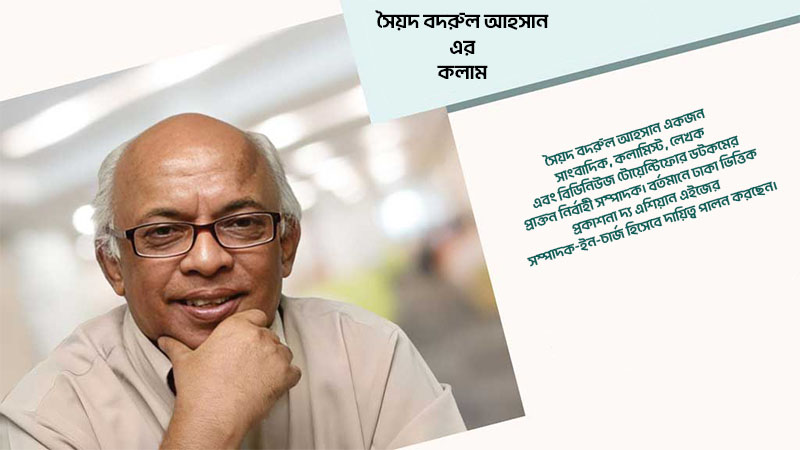
Syed Badrul Ahsan

https://stapravda.ru/20221228/reyting_samyh_populyarnyh_hostingov_v_rossii_196445.html, рейтинг хостингов России подтверждает, что выбор надежного провайдера важен для бизнеса.