
Special Correspondent
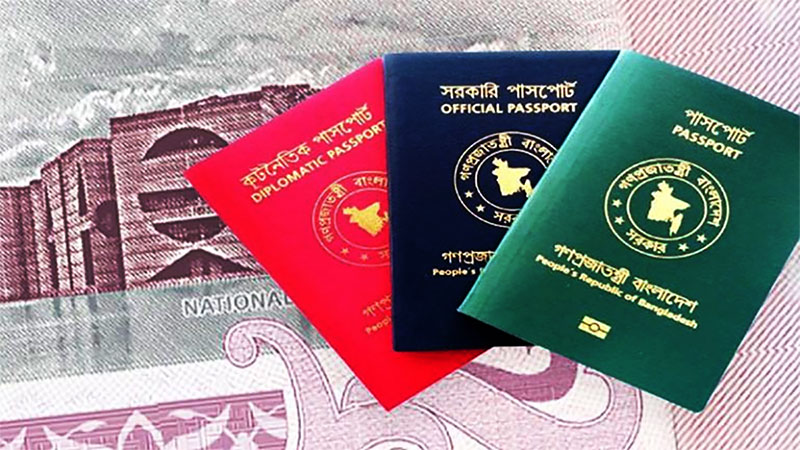
It was once believed that the more countries a passport has visas for, the more prestigious it is. Traveling to more countries means having a stronger passport. But that time is now a thing of the past. In the current reality, the green-clad Bangladeshi passport is like an ‘unexpected burden’ for many countries around the world. Not to mention developed countries, many developing countries are now also expressing reluctance to issue visas to Bangladeshis.
Even countries that previously had visa-on-arrival facilities are now turning away Bangladeshi passengers at the airport.
According to information, it has become quite difficult for Bangladeshi citizens to get visas in popular Southeast Asian destinations like Thailand, Malaysia and Singapore. The visa processing time in these countries has increased, and the rejection rate has also increased. Even after getting visas, many are being ‘offloaded’ and sent back to the country in the name of screening at the airport.
The decline in the value of Bangladeshi passports is even more evident in tourism-dependent countries like Nepal, Maldives, and Sri Lanka. Despite the fact that these countries have on-arrival visa regulations under certain conditions, many Bangladeshis are being deported upon arrival.
Indonesia used to give Bangladeshis visas on arrival for free. Now, they have to submit various documents and fees to get a visa, but they are not guaranteed to get one. On the other hand, India has stopped issuing new visas since August 5 last year. Currently, only medical visas are being issued on a limited basis, but passengers are being offloaded if they find any minor errors.
Recently, some countries in the Middle East—notably Dubai and Abu Dhabi—have again suspended visa issuance to Bangladeshis. All in all, the Bangladeshi passport has become one of the most risky and unreliable documents for international travel.
Why is this happening?
Immigration experts say that the major reasons for the increasing reluctance to enter abroad with Bangladeshi passports include visa misuse and illegal immigration. According to them, many enter Malaysia, Singapore or Dubai-Abu Dhabi in the Middle East on tourist visas and do not return home; when the visa expires, they work secretly or are later arrested and brought back to the country. There are also allegations that some Bangladeshis are trying to illegally go to third countries using the same route.
An analysis of the incidents of the last few months shows that on July 11 of this year, 96 Bangladeshis were stranded at the airport, 123 on July 13, 80 on July 26, and a maximum of 98 Bangladeshis were stranded in a single day in August and then sent back to the country on the next flight.
Citing information from the Malaysian Immigration Police, the country’s daily The Straits Times reported that having a valid hotel booking is a basic requirement for entering Malaysia on a tourist visa. In the case of the deported passengers, the hotel booking was questionable or they could not provide a satisfactory explanation; in addition, those who did not have sufficient funds for the trip were also deported.
According to documents and reports, many are sent to work on tourist visas after being misled by brokers. These brokers teach passengers various illegal tricks to get through immigration in Malaysia—such as skipping class and hiding in airport lounges when there is an on-boarding, and rejoining the line when the shift changes. This process and anarchic behavior have led Malaysia to now put a tighter watch on Bangladeshi passport holders.
Many people try to enter the country by claiming to be staying at relatives’ homes but fail to provide relevant invitations or proof of address; such discrepancies raise suspicions among immigration officials that they may be here to work illegally.
A senior officer of the Immigration Section of the Special Branch (SB) of the Bangladesh Police said that it is clear from the descriptions of many returnees from Malaysia that brokers mislead them into working on tourist visas and teach them various unethical tricks to pass immigration at the airport. That is why Malaysia is now extra cautious about Bangladeshi travelers.
In addition, some are using Malaysia as a transit route to travel through Libya to various European countries, including Italy—a route that also involves high risks and unethical tactics.
Even after granting visas, complications have increased and it takes a long time
Thailand is now taking an average of 45 days to issue visas to Bangladeshis, while the process is much faster for other countries.
The tourism-dependent country grants visas on arrival to its neighboring Indians, while Bangladeshis have to wait months after submitting a stack of documents. Applicants have to submit dozens of documents, including passport copies, six-month bank statements, solvency certificates, trade licenses, and no-objection letters from the office. While on paper, visas are supposed to be issued in 7-10 working days, in reality it now takes 45 days or more.
Tour operators complain that despite the introduction of the e-visa system in Thailand, there are unusual delays for Bangladeshis. The country is taking up to 45-50 days, sometimes even longer, to approve or cancel visas for new passport holders. This is forcing many to cancel their scheduled tours.
Meanwhile, many neighboring and tourism-friendly countries have now banned or restricted visas for Bangladeshis—such as India, Qatar, Bahrain, Egypt, Dubai, Abu Dhabi, and Vietnam. Turkey is taking extra time to get a visa, the Philippines has complicated the process, and Malaysia and Singapore are offloading many at the airport even though they have issued visas. As a result, domestic tour operators are facing major losses as the number of tourists going abroad has decreased.
A Bangladesh immigration official said that after entering Thailand, many Bangladeshis are working illegally in other countries. That is why other countries are warning Thailand about Bangladeshis. In comparison, visa decisions are made within seven days of submitting an application in Singapore, but this year the visa rejection rate in the country has also increased significantly compared to the previous year.
Harassment even when traveling to nearby countries
While some South Asian countries have restricted visas for Bangladeshis, Nepal and Sri Lanka have been exceptions so far. Nepal offers free tourist visas once a year, but in recent months Bangladeshis have been facing a number of issues at the country’s immigration.
Bangladesh immigration sources said that many passengers with new passports enter Nepal within a few days of getting their passports. Due to the lack of travel experience, immigration officials are suspicious, fearing that many may use Nepal as a transit point to enter other countries illegally. Some passengers are also turned back when they try to enter Nepal by showing fake hotel bookings or travel plans. This is tarnishing the image of Bangladeshi passports.
Although anyone can apply for Thailand’s e-visa system on their own, the lengthy process for Bangladeshis has raised concerns. The country is taking 45-50 days, and in many cases even longer, to decide whether to issue a visa on a new passport. This delay is causing many people’s trips to be ruined.
Even though Sri Lanka also has an on-arrival visa, Bangladeshi passport holders have to face various questions.
In September this year, an immigration officer at Colombo airport questioned the reporter for about 6-7 minutes. Despite having visas from 17 countries in his passport, the officer wanted to know why he was on a tourist visa, his six-day hotel booking, where he would be traveling and how he would be traveling. When asked for his identity, the journalist showed his ID card. After that, his passport was stamped.
The officer said, “Many Bangladeshi passport holders are moving to other countries. So we are giving entry permission after verifying the details.”
The minimum requirement for an on-arrival visa to the Maldives is to show advance hotel bookings. Many Bangladeshis have been sent back to their country after carrying fake booking copies or failing to provide their addresses.
Due to the country’s internal problems, law and order and chaotic attitude, many countries believe that Bangladeshis can commit crimes there. Therefore, they are cautious when they see Bangladeshi passports. According to tour operators, if Bangladeshis can change their behavior and create a positive image, then the visa process will be easier.
Tour Operators Association of Bangladesh (TOAB) President Rafiuzzaman Rafi said, “Tourist-friendly neighboring countries have closed or limited visas for Bangladeshis. India, Qatar, Bahrain, Egypt, Dubai, Abu Dhabi, Vietnam have closed them. Turkey is taking extra time, the Philippines has complicated the process. Malaysia and Singapore are offloading many at the airport despite issuing visas. Tourists are reducing their foreign travel, resulting in tour operators being affected. The government should quickly communicate with neighboring countries and resolve the issue.”
Bangladesh’s powerful passport is now powerless
Henley & Partners, a London-based organization in the United Kingdom, publishes an index of the world’s most powerful passports every year. In 2006, Bangladesh’s position was 68th. After two decades of gradual deterioration, it is currently at 94th. The same position is occupied by the war-torn country of Palestine in the Middle East and the African country of Eritrea. In 2023, this position was even more deplorable, at 101st.
The same situation is seen in Sri Lanka. Despite having an on-arrival visa, Bangladeshi passport holders are facing various questions. In September this year, an immigration officer at Colombo airport questioned a reporter for about six to seven minutes. Although the passport had visas for 17 countries, the officer wanted to know what the purpose of coming here was on a tourist visa.
Asked about the reason for the reluctance to issue visas, former Bangladeshi ambassador to China Munshi Faiz Ahmed said, “A country usually issues visas to citizens of other countries so that they can travel there and contribute economically. But many Bangladeshi tourists are illegally overstaying, working, or creating problems with tourist visas. This has created a negative perception of the country and its people, which is the main reason for visa denial and offloading.”
He further said, “Due to the country’s internal problems, law and order situation and chaotic attitude, many countries believe that Bangladeshis can commit crimes there. This threatens to damage the reputation of that country. Therefore, they take extra caution when they see Bangladeshi passports. If we can change our behavior and create a positive impression, then the visa process will be easier.”

https://stapravda.ru/20221228/reyting_samyh_populyarnyh_hostingov_v_rossii_196445.html, рейтинг хостингов России подтверждает, что выбор надежного провайдера важен для бизнеса.