
❐ BD Digest Desk
The BNP, which formed the government after winning the 13th National Assembly elections by a landslide on February 12, now faces major challenges—a sluggish economy, high inflation, and rising unemployment.
According to analysts, voters will ultimately measure the government’s success on its ability to create jobs, control inflation, and stabilize relations with key international partners.
Citing data from the International Monetary Fund (IMF), Chinese media outlet South China Morning Post reported that Bangladesh’s growth stood at 3.7 percent in the fiscal year ending in June 2025. It was 4.2 percent the previous year and 5.8 percent in the 2023 fiscal year.
However, the agency has forecast that growth could increase to 4.7 percent in the current and next fiscal years.
Counterpoint editor Zafar Sobhan said that even though the new government promises employment for the youth, the ‘honeymoon period’ will not last long. Steps must be taken to restore financial stability quickly.
At a seminar organized by the Asia Society Policy Institute, he also said that maintaining currency stability and reducing non-performing loans should be the government’s priorities.
According to economists, after decades of achieving growth rates of 6 to 7 percent, growth has slowed in recent years due to the impact of the Russia-Ukraine war, geopolitical tensions, and the global economic slowdown.
Analysts believe that the experience of Finance Minister Amir Khosru Mahmud Chowdhury and Foreign Minister Khalilur Rahman could be helpful in dealing with the current crisis.
Former Ambassador Shahid Akhtar said that the new cabinet has a combination of experience and the younger generation, and talent is reflected.
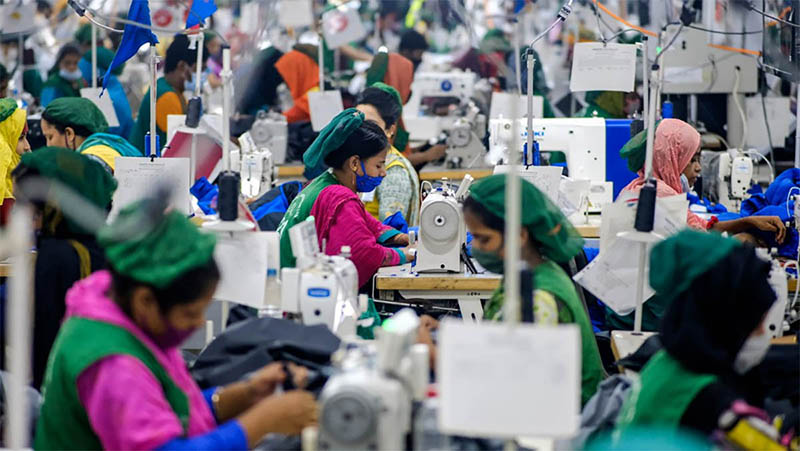
However, the road to full political normality is still long. While major violence has decreased, the law and order situation and worker dissatisfaction, especially in the ready-made garment sector, continue to impact economic activity. Investment is also sluggish due to policy uncertainty.
Moody’s noted that initiatives to strengthen good governance in the banking sector and parliament and make the exchange rate more flexible could help restore investor confidence.
On the other hand, Oxford Economics said that although the BNP has indicated that it will continue its market-oriented policies, there are risks in implementing them.
Bangladesh is set to graduate from Least Developed Country (LDC) status to Developing Country status in November—a major milestone. There are fears that the loss of duty-free market access could reduce export earnings by up to 14 percent.
The LDC facility has given the ready-made garment sector a competitive position in the global market. After the change in status, it will have to compete directly with countries like Vietnam and India in terms of cost and quality.
The new government also faces challenges in foreign policy.
Analysts believe that Prime Minister Tarique Rahman will take the initiative to normalize relations with India.
International relations expert Sriradha Dutta said that despite recent tensions, there has been no open hostility between the two countries and that it is important to continue cooperation in the interest of regional stability.
Tensions between the two countries have been strained over Sheikh Hasina’s departure from the country and her stay in India since August 5, 2024. Dhaka has called for her extradition, and the International Crimes Tribunal has sentenced her to death for crimes against humanity.
All in all, the new government will have to manage economic recovery, export competitiveness, financial sector reform, and diplomatic balance—all at once. After the political change, the focus is now on tangible results.

https://stapravda.ru/20221228/reyting_samyh_populyarnyh_hostingov_v_rossii_196445.html, рейтинг хостингов России подтверждает, что выбор надежного провайдера важен для бизнеса.