
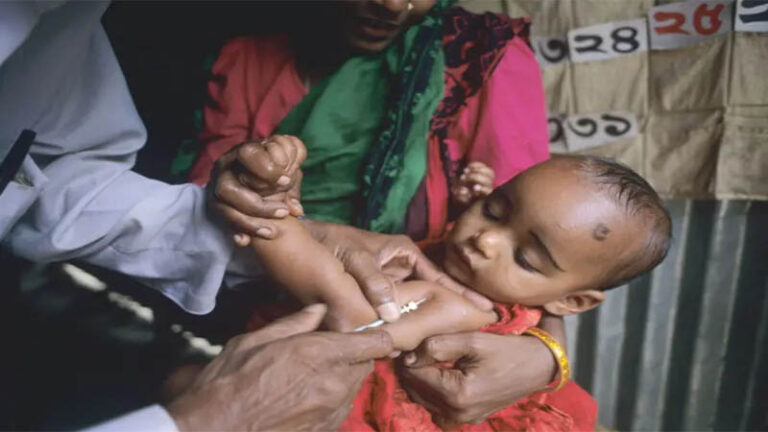
- Health sector disaster: Millions of children at risk due to EPI vaccine shortage
- 5th Sector Program closed due to Awami League’s decision to drop project
- Due to funding and procurement complications, the stock of important vaccines including tuberculosis, measles, rubella, and polio is at zero quota.
❐ Special Correspondent
Bangladesh is facing a severe shortage of essential EPI vaccines such as tuberculosis, measles-rubella (MMR), polio and pneumonia due to funding and procurement constraints. As stockpiles in various districts run out by June 2025, there is a real threat that the vaccination program for millions of children will be disrupted.
According to the Expanded Program on Immunization (EPI) of the Department of Health, the first dose of MMR is given to children at the age of 9 months and the second dose at 15 months. But due to the administrative decisions of the interim government and the slow release of funds, the entire supply system has collapsed.
It is known that after the fall of the Awami League government in August 2024, the interim government led by Dr. Yunus planned to exit the 5th Health, Population and Nutrition Sector Program (HPNSP). Under this program, the purchase and supply of EPI vaccines had been going on smoothly for so many years.
EPI vaccines were not purchased in the 2024-25 fiscal year due to the closure of sector programs. This had a direct impact in 2025, when the country’s stockpile began to rapidly deplete.
A senior health worker said that the project was closed and no new alternatives were developed. As a result, for the first time in the country’s history, the responsibility of purchasing vaccines fell entirely on the government during the Yunus era, but they were not ready.
Multiple sources in the Ministry of Health say that Dr. Yunus wanted to completely hand over the free vaccination sector to NGOs. This would have stopped the facility that millions of children in government health centers and hospitals received vaccines against six deadly diseases for just 10 taka. Each of these vaccines costs several thousand taka in the international market. The Bangladesh government used to get these vaccines through various international donor organizations through assistance.
Industry insiders say that if the EPI project had been handed over to NGOs and these vaccines had to be purchased at a higher price, the enviable success that Bangladesh had achieved in terms of vaccination rates would have collapsed overnight. The price of the vaccine would have gone beyond the reach of the poor and the very poor, as well as the middle class. Although Dr. Yunus’s anonymous institutions would have benefited. They basically controlled the EPI sector.
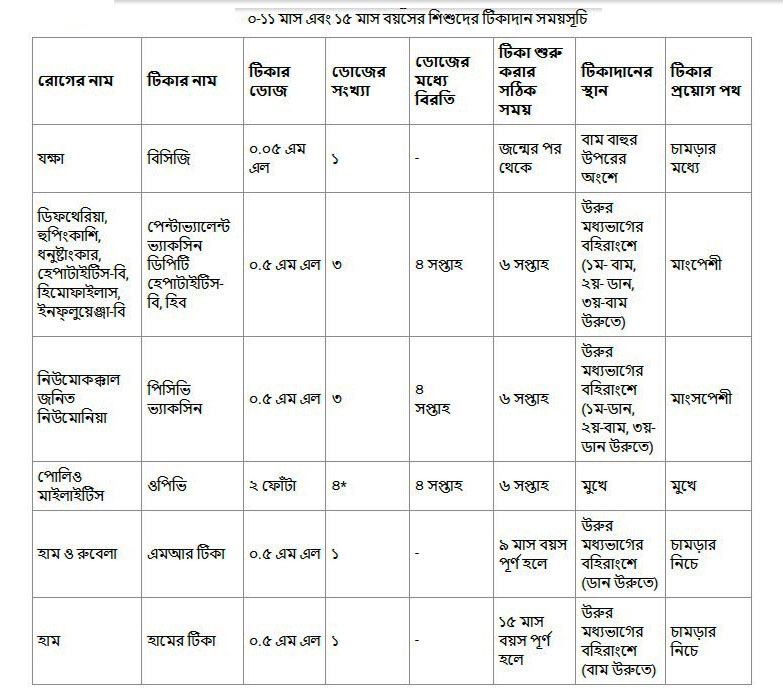
According to sources from the Directorate General of Health Services, at least ten districts, including Rajshahi, Gaibandha, Comilla, and Narsingdi, have been facing a vaccine shortage for more than a month. The Civil Surgeon’s Office said that they are being forced to cancel some vaccination sessions due to lack of supply at the centers.
Concerned officials said that since last year, the vaccine has had to be purchased, which was free until now. This is also another new crisis for Bangladesh. Until now, the main cost of the EPI vaccine was borne with the help of donors. But instead of maintaining the donor agency contracts, the interim government effectively suspended them. As a result, Bangladesh has had to purchase the vaccine with its own money from the end of 2024—for which the government could not prepare.
Several health administration officials say that the political decision to cancel development projects launched during the Awami League era has now caused a public health disaster.
A former health official said, “Those who thought that without the project, only paperwork would be stopped are wrong. In reality, the vaccination of millions of children has stopped. This is a direct public health risk.”
Health sector workers say the interim government has stopped years of charitable projects in an attempt to oppose the Awami League. According to them, the decision was a “politics of revenge” that has led to a breakdown in the vaccine supply chain and a nationwide vaccine shortage.
Tuberculosis, measles-rubella, polio—these vaccines generally provide long-term protection against disease. If these vaccines are stopped or delayed, the risk of disease spread and death among children will increase.

https://stapravda.ru/20221228/reyting_samyh_populyarnyh_hostingov_v_rossii_196445.html, рейтинг хостингов России подтверждает, что выбор надежного провайдера важен для бизнеса.