
BD Digest Report
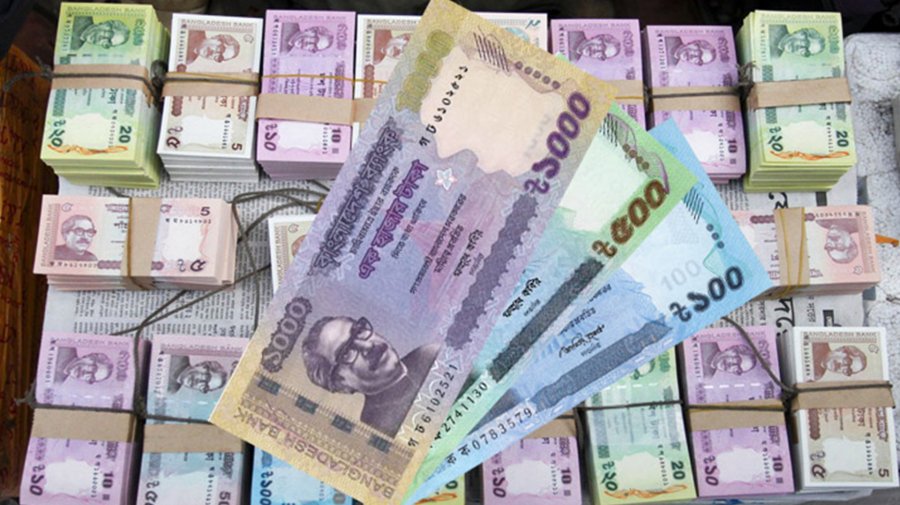
The process of releasing the currency notes with the image of Bangabandhu Sheikh Mujibur Rahman, which were kept sealed in the vault of Bangladesh Bank, has begun. The central bank has decided to bring the old printed notes into circulation in a phased manner due to the slow pace of printing new design notes and the increasing demand for cash in the market.
Bankers say that these notes are being redistributed as per the instructions of Bangladesh Bank. On the other hand, central bank officials say that since notes with Sheikh Mujib’s image have never been officially banned, there is no legal or policy obstacle to releasing them into the market.
The issue came into fresh focus after the political unrest of last year (2025). After the fall of the Awami League government in the face of the July uprising, statues of Bangabandhu were vandalized in various parts of the country. Soon after, the interim government formed under the leadership of Nobel Peace Prize-winning economist Dr. Muhammad Yunus decided to make some changes to the state emblem and symbolic representation.
In this context, the interim government decided not to release banknotes with Sheikh Mujibur Rahman’s image in the market. At the same time, initiatives were taken to introduce new design banknotes. At that time, the newly printed banknotes with Sheikh Mujibur Rahman’s image in the vaults of various banks were kept sealed.
Since then, a section of economists and bankers have questioned this decision. According to them, not releasing the already printed notes into the market would be a huge waste of government money.
The issue was reviewed anew after the BNP-led government took office in the recent elections. The government believes that keeping the already printed notes in the vault for a long time would be economically unreasonable.
In view of this, Bangladesh Bank has been allowed to re-issue old design notes in the market.
Central bank spokesman Arif Hossain Khan said, “The printing of nine new design notes is underway. However, the pace of supply is slightly slower than the demand. Since the old notes have not been banned and there is a demand for cash in the market, the previously printed notes are being released in a phased manner.”
Officials of commercial banks said that they have started exchanging and distributing old notes after receiving instructions from Bangladesh Bank.
Sonali Bank General Manager Shafiqul Islam said, “During Eid-ul-Azha 2025, the distribution of old printed notes was stopped. Later, instructions came from Bangladesh Bank to distribute them normally. Since then, we have been continuing the notes as per the rules.”
According to bankers, the demand for cash in the country is always high, especially during festivals. Since the process of printing new notes is relatively slow, the decision to release old notes is realistic to maintain the supply of cash in the market.
Meanwhile, the central bank has announced that the exchange of new notes will not be launched this time on the occasion of Eid. However, in reality, the demand for new notes in the open market has not decreased. New notes are being sold at higher prices in various places.
In particular, banknotes with Sheikh Mujib’s picture are being sold as ‘new notes’ in many cases. Those involved in the banking sector believe that this has created a kind of invisible transaction in the market.
A section of economists believe that the extremely slow process of printing new design notes has created uncertainty in the market. At the same time, the decision to keep the old notes sealed was also economically questionable.
According to them, a country’s currency is not only an economic medium but also a symbol of state continuity. Therefore, sudden policy changes in currency design can put pressure on financial management.
Many bankers see the decision to reissue old notes in the market as an acknowledgement of reality in the current situation.
Bangladesh Bank said that the work of printing new design notes is continuing. They will be gradually introduced into the market. However, until then, the previously printed notes will remain the main reliance to meet the market demand.
According to economists, it is important to take into account the realities of financial costs, the money supply system, and the banking sector when making major decisions such as changing currency designs or symbols in the future.
Because a decision has an impact not only on politics but also directly on the country’s economic management.

https://stapravda.ru/20221228/reyting_samyh_populyarnyh_hostingov_v_rossii_196445.html, рейтинг хостингов России подтверждает, что выбор надежного провайдера важен для бизнеса.