
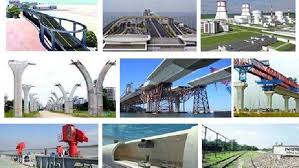
- In a move to cut unnecessary expenses, Rajshahi City Corporation (RCC) has cancelled a total of seven projects worth nearly 400 crore Taka. The funds allocated for these projects will be redirected to other sectors.
- The interim government has decided to cancel or suspend several planned projects from various ministries of the country. Among these is the construction of a railway factory in Rajbari, the electoral constituency of former Railway Minister Zillul Hakim, an overpass in the haor area of Kishoreganj, and several projects taken for political purposes. A total of 35 projects, with an estimated cost exceeding 100,000 crore Taka, are set to be cancelled or suspended.
- The interim government has also cancelled a proposal for the construction of 190 iron bridges in six districts of the Barisal division. The government justifies this cancellation by stating that these bridge projects were included during the tenure of the ousted Awami League government based on political considerations and that they are no longer necessary.
Let’s consider the scenario where your income today is 25,000 Taka. In such a case, you would prioritize and create a list of what’s most essential for your livelihood and spend accordingly. You would likely prioritize food, housing, education, and transportation. However, if your monthly income were 250,000 Taka, wouldn’t your list of priorities grow? In that case, you might buy a car for more convenient and comfortable travel, perhaps purchase a faster and more durable phone. Now, your time has more value, and you’d use it more productively. Through this, you would aim to secure your and your family’s future, making life easier and more comfortable. At this point, a 1 lakh Taka phone wouldn’t seem unnecessary, nor would it seem wasteful to avoid wasting time traveling long distances and instead opt for a better road. You would move from a 2-room house to a 4-bedroom house with a guest room, and this would not seem unnecessary. Sending your child to a better school with a 10,000 Taka monthly fee wouldn’t seem unnecessary. You might consider taking a loan to secure your own home, knowing that you have substantial savings from your income and can easily pay the loan installments, even if buying a 2-3 crore Taka flat at once isn’t feasible right now. All of this is possible because of your improved financial situation, something you may not have even dreamed of when earning 25,000 Taka!
Similarly, the government operates in the same way.
Projects that aim to improve the quality of life for the general public are never unnecessary. It depends on the timing and economic situation. What is unnecessary when your income is 25,000 Taka may become essential when your income reaches 250,000 Taka. While these projects are being labeled as unnecessary, the truth is that the government’s revenue collection has decreased by 42,000 crore Taka in the second quarter, making it unable to fund these projects. A government that once earned 7 lakh crore Taka has now become one that has earned half of that in just six months. The government’s capacity is rapidly decreasing…
There is no guarantee that all projects will be profitable. In 2023, 400 crore Taka was spent to deliver electricity via submarine cables to remote villages like Kutubdia, Sandwip, and Hatia. The government might find corruption in such projects and label them as unnecessary. However, if the state’s revenue is high, no citizen should be deprived of the benefits provided by the state. Even at a loss, the state should ensure its benefits reach the public. This is the core principle of socialism, which is the foundation of our constitution.
What is development?
Development, in simple terms, means the ability for the country’s labor and intellectual products to move easily from one place to another according to their utility. If a journey that used to take 10 hours and cost more can now be completed in 5 hours with reduced transportation costs, this becomes the government’s first and main benefit to the public. Time saved can be used for more productive activities, leading to an increase in people’s earnings, and through improving their quality of life, they can raise their social class. Projects that were cancelled were meant to simplify people’s lives and businesses, so these projects can never be considered unnecessary or unprofitable.
Additionally, each project provides employment for local people. For low-income individuals, a project means 1-2 years of employment, enabling locals to earn. Not just workers, but hundreds of people come to an area for each project, boosting the local economy. For example, the Ruppur nuclear project has changed the lives of people in the Ruppur area, creating numerous economic opportunities and new business avenues.
But cancelling these projects under the pretext of potential corruption or because they are deemed unnecessary is an example of a capitalist economy.
D. Yunus’s interim government is leading the country down this path. After evading taxes for his dozen companies and getting a 666 crore Taka fine waived, the government imposed unwanted taxes and VAT on the public halfway through the fiscal year. One by one, the projects meant for public development are being cancelled. Amid the obsession with reforms, foreign investment and funding have dropped to zero, and export earnings have decreased.
Perhaps one day, D. Yunus will face justice for his wrongdoings. But how can we justify stopping the development progress of Bangladesh just as the country was about to join the ranks of developing nations? How can we justify destroying the people’s quality of life at this moment, and set back a country with the 35th fastest-growing economy in the world by 20 years? How can this be judged? Which court should we go to for this justice?
Shariful Hassan Sumon
Businessman and Online Activist.

https://stapravda.ru/20221228/reyting_samyh_populyarnyh_hostingov_v_rossii_196445.html, рейтинг хостингов России подтверждает, что выбор надежного провайдера важен для бизнеса.