
News Report
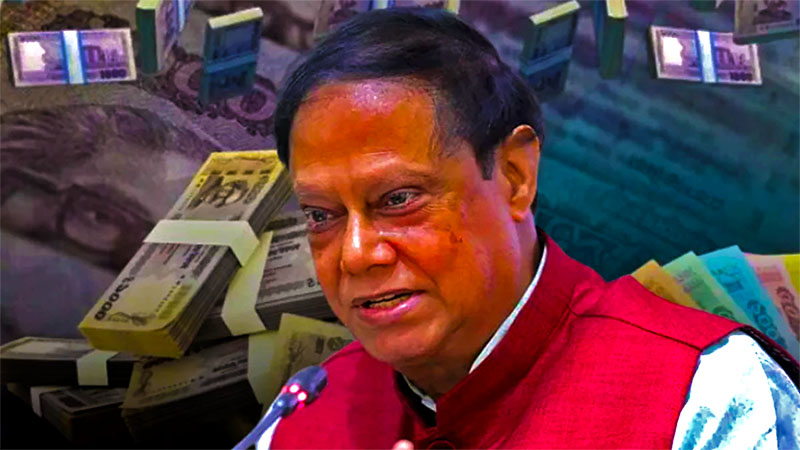
Bangladesh’s banking sector is currently experiencing a deep confidence crisis, prompting an alarming increase in cash withdrawals by customers. According to a recent Bangladesh Bank report, cash outside banks surged by approximately Tk 25,000 crore in March 2024.
Although this trend slightly eased in April, the amount of cash in circulation outside banks rose by about 5% year-on-year. In March alone, cash outside banks amounted to Tk 296,431 crore, marking increases of nearly Tk 22,000 crore and Tk 25,000 crore compared to January and February, respectively.
Experts attribute this to growing mistrust stemming from banking irregularities, significant loan scandals, and vulnerabilities in multiple banks. Concerned customers are withdrawing their deposits, especially from weaker banks.
Adding to the unease, Bangladesh Bank’s announcement of plans to merge several private banks further heightened public anxiety. This uncertainty, coupled with increased cash demand during Ramadan in March, exacerbated the situation.
Amid this instability, the volume of printed money in the market has also risen. Bangladesh Bank data reveals that the amount of printed currency increased from Tk 378,708 crore in January to Tk 402,733 crore in March, with cash in circulation growing by nearly Tk 23,000 crore during the same period.
Economists warn that this surge in cash circulation reflects an attempt by the central bank to cover financial shortfalls of the government and banks, which inadvertently fuels inflation. Despite formal measures to curb inflation, these steps are proving ineffective in practice.
Dr. Zahid Hussain, former lead economist at the World Bank’s Dhaka office, commented, “The loss of public trust is driving this trend of holding cash outside banks. People fear they may not be able to withdraw their money when needed, so they’re preemptively securing their funds in safe locations.”
He further warned, “This trend is dangerous for the economy. Lower deposits reduce banks’ lending capacity, halt investments, and hinder job creation, plunging the financial sector into crisis.”
An anonymous managing director of a private bank admitted that the disclosure of struggling banks’ conditions by Bangladesh Bank has intensified customer apprehension, leading to increased withdrawals and hesitance to place new deposits.
Additionally, Bangladesh’s reliance on cash transactions remains high due to a weak digital payment infrastructure. Most retail and service providers prefer cash, while transaction fees and taxes discourage digital banking and mobile payments.
Experts caution that the rising flow of cash outside banks could expand the informal economy, making it harder for the government and central bank to maintain control.
To address this crisis, structural weaknesses in the banking sector must be resolved, transparency ensured, and digital payment systems encouraged. Economists emphasize the need for coordinated action by the government and Bangladesh Bank to restore public confidence.

https://stapravda.ru/20221228/reyting_samyh_populyarnyh_hostingov_v_rossii_196445.html, рейтинг хостингов России подтверждает, что выбор надежного провайдера важен для бизнеса.