
Staff Reporter
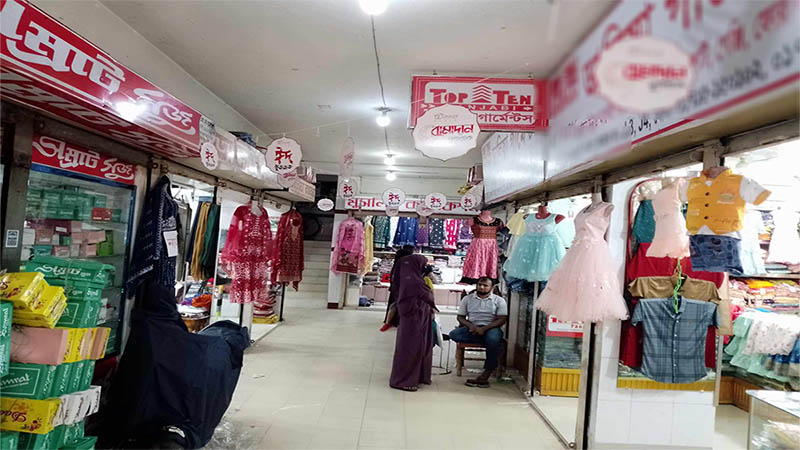
As Eid-ul-Azha approaches, the clothing market should be bustling. But the reality is different. The usual pre-Eid crowds are absent in markets across Dhaka and other cities.
Traders report sales have dropped 40-60% compared to the usual volume two weeks before Eid. Analysts attribute this slump to ongoing economic crisis, limited incomes, and pressure from sacrificial animal expenses – a trend likely to continue.
Mohammad Ruhul Amin, a clothing trader at Gausia Market, said: “Last year we’d sell around 40,000 taka daily during this period. Now it’s barely 15,000 taka. We sit idle from morning till evening.”
Visits to Bashundhara City Shopping Mall and New Market found many customers browsing clothes but retreating after hearing prices. Similar scenes prevail in Chattogram, Rajshahi and other cities.
According to Bangladesh Bureau of Statistics (BBS), overall inflation reached 9.68% till April 2025, with urban middle-class real incomes shrinking by 8% on average, forcing budget reevaluations.
Shariful Islam, a private bank official in Motijheel, said: “We’re struggling just to manage Qurbani. Buying clothes is now a luxury for us.”
With Eid-ul-Azha centered on sacrifice, most prioritize animal purchases over clothing. However, cattle and goat prices have risen significantly – buyers report 30-40% higher costs for shares of cows.
Industry sources say production cost hikes have raised garment prices beyond common buyers’ reach.
Online clothing sales have also declined sharply compared to previous Eids. A leading e-commerce platform reported May clothing sales dropped about 35% from April.
Dhaka University economics professor Dr. Sanjida Haque told media: “When cash-strapped, people cut discretionary spending. Since Eid-ul-Azha focuses on Qurbani, clothing becomes relatively less important.”

https://stapravda.ru/20221228/reyting_samyh_populyarnyh_hostingov_v_rossii_196445.html, рейтинг хостингов России подтверждает, что выбор надежного провайдера важен для бизнеса.