
 ❐ BD Digest Desk
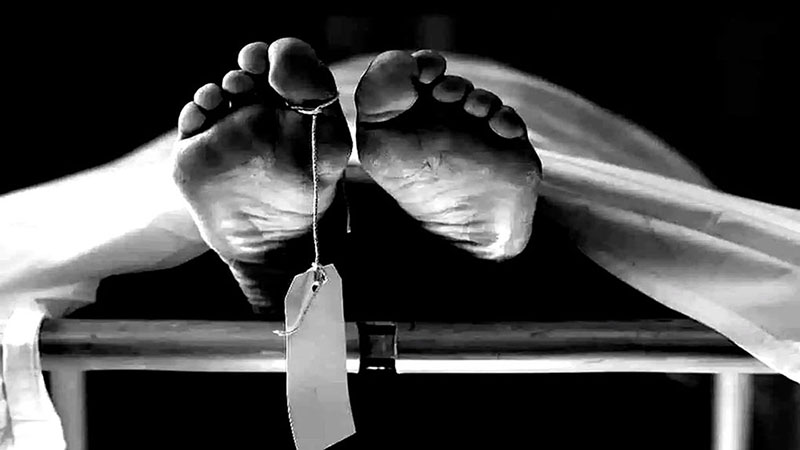
Thousands of people come and go in and out of the capital Dhaka every day. In that bustling city, many people are dying whose names and identities are unknown even after death. Sometimes unidentified bodies are recovered on the side of the road, sometimes on the sidewalk, sometimes at the hospital gate, canal or in a secluded place. The police recover them and send them to the morgue for autopsy.
Even after taking photos of the body for identification and searching for relatives in various ways, if no one is found, the body ultimately ends up as unclaimed.
According to public records of the DMP and information from various police stations, such bodies have been recovered from multiple areas of the capital at different times this year. However, as no complete and comprehensive figures for the past eight months have been published, there are fears that the actual number could be higher.
In May and August alone, the police have sought the help of the general public to identify the bodies of two unidentified women from the Dhaka Medical College Hospital area under Shahbagh police station.
The woman rescued in May is approximately 55 years old. The girl rescued on August 12 is approximately 15 years old.
Since Dhaka Medical College Hospital and its surrounding areas fall under the jurisdiction of Shahbagh Police Station, the number of unidentified bodies recovered there is relatively high. Whether it is a sick or homeless person dying in hospital, a body left behind by relatives, or an unidentified person dying in an accident – the police have to work to identify these bodies in various situations.
The incident of August 12 is a brutal example of such a situation. A 15-year-old girl was brought dead by her family members to the emergency department of Dhaka Medical College Hospital. The family members left the place while they were being taken to the doctor. They were not found after that. Later, the police issued a notice seeking help in identifying the girl.
The first task of the police after recovering an unidentified body is to prepare a post-mortem report and send the body to the morgue for autopsy. Various information, including photographs of the body, clothing worn, and physical characteristics, are stored for identification purposes. If necessary, DNA samples are also collected.
But if no relatives are found after waiting for days, the body remains in the morgue. Later, after completing the legal and administrative procedures, Anjuman Mufidul Islam takes over the responsibility of burying the unclaimed body.
The organization arranged for shrouds, funerals, and burials. Jurain Cemetery became an important final destination for the burial of unclaimed bodies in the capital.
In other words, the final journey of an unknown person begins with the recovery of his body by the police. That journey ends in a grave where his name may never be written.
However, the biggest complication arises after the burial. If a family later finds a missing relative, it becomes even more difficult to identify the body. In the past, there have been cases where bodies buried as unclaimed have been identified later.
Even in the case of bodies buried in Rayerbazar, complications have arisen over the subsequent identification of graves.
Police officials said that police stations regularly release photos and descriptions of bodies to help identify unidentified bodies. They also interview local people, review CCTV footage, and seek forensic and DNA testing assistance as needed.
Many times, it takes a long time to identify a deceased person because they are homeless, sick, or separated from their family. However, this is where an important question comes to the fore—to what extent is the information about the recovery of unidentified bodies integrated with whether a person’s family is looking for them after they go missing?
If the list of missing persons, hospital morgues, police station information, and DNA-related information can be brought under a central system, the process of identifying unidentified bodies could be faster.
Because an unidentified body is never just a body. The lives of waiting parents, spouses, children, or siblings may be intertwined with it. Even after reaching Jurain’s grave from the morgue, a relative may be waiting somewhere—’Will my man return?’

https://stapravda.ru/20221228/reyting_samyh_populyarnyh_hostingov_v_rossii_196445.html, рейтинг хостингов России подтверждает, что выбор надежного провайдера важен для бизнеса.