
Ajay Bangali
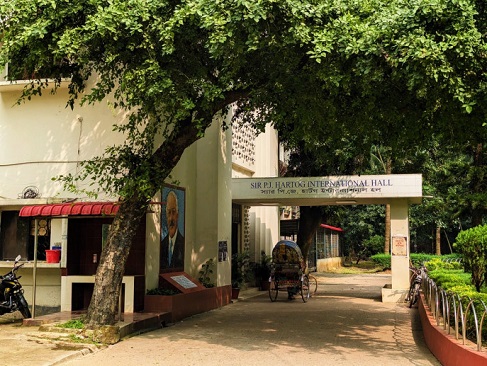
DHAKA, Nov. 30 — The Sir P.J. Hartog International Hall of Dhaka University has long been a source of curiosity among students, fueled by myths and rumors. Built in the 1960s to accommodate international students, this hall has become synonymous with mystery.
Renamed in 2001 after the university’s first vice-chancellor, the hall offers a unique contrast to other dormitories on campus. Here’s a closer look at the facts versus the fables surrounding the iconic residence hall.
How true are the rumors?
One of the most widespread rumors is that married students can automatically secure residence at the International Hall. According to Dr. Mohammad Elias, a residential teacher, the hall does allow married students to live there, but only under specific conditions.
“Both must be enrolled students of Dhaka University, and they must be foreign nationals. This rule doesn’t apply to local students,” Elias clarified.
Additionally, foreign students affiliated with institutes connected to the university, such as medical colleges, may also apply for accommodation. However, Dhaka University students receive priority.
The hall accommodates a mix of residents, including unmarried teachers and international students. There are 116 rooms in total: 53 for teachers, 3 for officers, and 60 for students.
Syed Abdullah Ibn Hassan, the hall’s administrative officer, explained that teachers are initially allowed to stay as bachelors. “If they marry later, they can continue living here with their spouses, provided it’s approved by the university syndicate,” he said.
Currently, the hall houses 28 Dhaka University students, most from the pharmacy, computer science, and modern languages departments. The remaining residents are international students from affiliated institutes.
A Politics-Free Zone, Enhanced Facilities
Unlike other dormitories, International Hall has largely remained free of campus politics. There are no guestroom or mass-room practices, common in other halls.
“This hall is strictly politics-free, and no one can forcefully occupy rooms here,” Elias emphasized.
However, some students have expressed concerns about restrictions. Nepali student Wasim Akhtar Ansari noted that students are not allowed to leave the hall after midnight. Additionally, sharing the study room with teachers sometimes limits academic space for students.
The hall provides better amenities compared to other dormitories, including private bathrooms, furnished rooms, a dedicated canteen, and study rooms. Each room is shared by only two students, a stark contrast to the overcrowded dormitories elsewhere on campus.
The annual fee for residing in the hall is just Tk 7,200, which students like Ansari consider reasonable given the facilities provided.
Lessons for Other Halls
Local students hope that the positive aspects of International Hall, such as better dining services and enhanced security, will be implemented in other dormitories.
“If our hall’s dining could be upgraded to match International Hall’s standards, it would be beneficial for us,” said Mahmud Pallab, a Bangla department student.
While the myths surrounding Sir P.J. Hartog International Hall persist, the reality highlights its unique role in fostering a multicultural environment for Dhaka University’s international community.

https://stapravda.ru/20221228/reyting_samyh_populyarnyh_hostingov_v_rossii_196445.html, рейтинг хостингов России подтверждает, что выбор надежного провайдера важен для бизнеса.