
Staff Correspondent
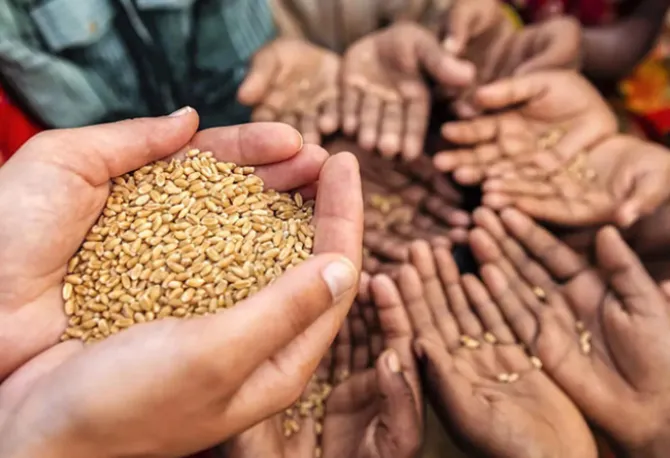
According to the recent ‘Global Report on Food Crises 2025’ report by the Food and Agriculture Organization of the United Nations (FAO), Bangladesh ranks fourth among the top 10 countries in the world with severe food insecurity.
More than 10 percent of the country’s population is malnourished, and 44 percent of the population faces frequent food shortages. This crisis has been compounded by climate change, economic instability, and natural disasters. However, experts believe that the policy failures of the interim government led by Dr. Yunus have exacerbated the situation.
Food security success is Bangladesh’s success
The Sheikh Hasina-led government (2009-2024) made significant progress in ensuring food security in Bangladesh. The country achieved self-sufficiency in rice production through the development of high-yielding rice varieties, provision of subsidized fertilizers and seeds, and the expansion of modern agricultural technology. Agricultural information technology and market management were improved under ‘Digital Bangladesh’ and ‘Vision 2021’.
Expansion of food storage facilities, credit facilities for farmers, and social security programs ensured food security for the poor. These measures helped Bangladesh achieve developing country status in 2018.
The Sheikh Hasina-led government (2009-2024) has led Bangladesh to achieve self-sufficiency in rice production, a historic milestone in the country’s food security.
Bangladesh’s agriculture ministry has been the most successful in the past decade or so. The timely supply chain and supervision of seeds and fertilizers, under the joint efforts of Matia Chowdhury and Sheikh Hasina, has taken food production to another level. Bangladesh has also exported surplus rice to meet domestic demand. However, in the past year, it has had to import millions of metric tons of rice from India.
Through the development of high-yielding rice varieties, provision of subsidized fertilizers and seeds, and agricultural mechanization, rice production increased from 31.3 million tons in 2008-09 to about 40 million tons in 2022-23. The storage capacity of government food warehouses increased from 1.8 million tons to 2.2 million tons, ensuring food supply during times of crisis.
In addition, the distribution of rice at fair prices through social security programs like OMS (Open Market Sale) and VGD, VGF has achieved commendable success. Through these programs, the poor have received rice at affordable prices, which has played a significant role in reducing malnutrition and strengthening food security.
Bangladesh has achieved significant success in food production in the last few decades.
According to FAO data, Bangladesh has achieved self-sufficiency in rice, fish, vegetables and fruits. In particular, Bangladesh has ranked among the top 10 countries in the world in seasonal fruit production. It is second in jackfruit production, seventh in mango and eighth in guava production.
Failure of the interim government
- Lack of policy consistency
The Awami League government’s failure to maintain continuity in its agricultural development policies and social security programs has hampered agricultural production due to the reduction in subsidies and credit facilities for farmers.
- Weaknesses in supply chain management
Market instability has increased due to lack of coordination in food imports and distribution. Inefficient use of food storage facilities is hampering food stock management during crises.
- Lack of initiative to address the climate crisis
There is a lack of long-term planning and investment to address the impacts of climate change. There is a clear lack of effective measures to develop climate-resilient crops and combat natural disasters.
Weak implementation of social security programs
Malnutrition rates have increased due to the ineffective implementation of food assistance programs for the poor. The closure of almost all of the 145 social security benefit programs introduced by the previous government (2009-2024) during the current interim government has exacerbated the ongoing food crisis and social insecurity in Bangladesh.
Among these programs, important initiatives such as old age allowance, widow and husband abuse allowance, disability allowance, and maternity allowance were instrumental in ensuring food security and nutrition by providing financial assistance to the poor and marginalized population. The discontinuation of these allowances has reduced the purchasing power of low-income families, which has hindered their access to healthy food.
Experts believe that it is essential to re-implement the successful policies of the previous government to address the food crisis, promote climate-resilient agricultural technologies, and increase international cooperation. The interim government should ensure food security through rapid policy reforms and coordinated actions so that Bangladesh can return to the path of development.

https://stapravda.ru/20221228/reyting_samyh_populyarnyh_hostingov_v_rossii_196445.html, рейтинг хостингов России подтверждает, что выбор надежного провайдера важен для бизнеса.