
❐ BD Digest Desk
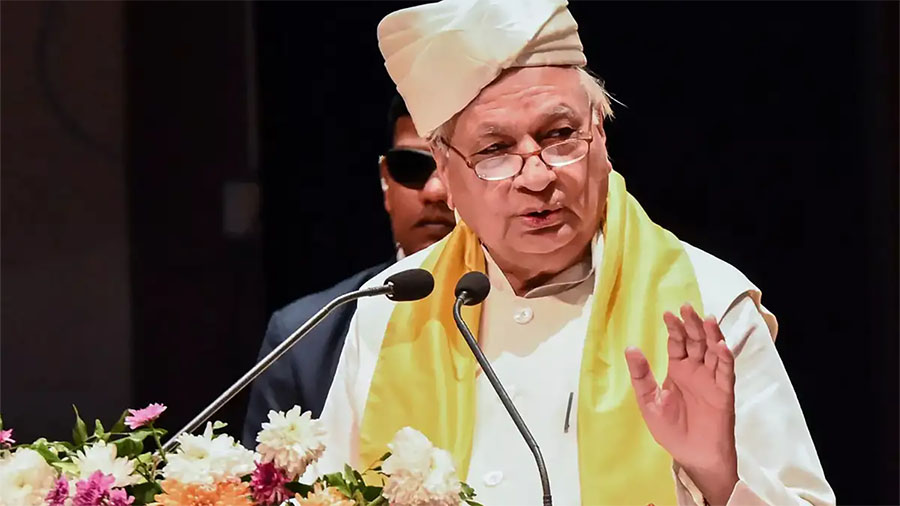
The Indian government is in serious discussions to appoint Arif Mohammad Khan as its ambassador to Bangladesh. If the appointment is finalized, it will be India’s first Muslim ambassador to Bangladesh.
His name is being discussed as a replacement for current Ambassador Prannoy Kumar Verma.
Arif Mohammad Khan (born 18 November 1951, Bulandshahr, Uttar Pradesh) is an experienced politician and administrator. He graduated from Aligarh Muslim University and Lucknow University and has been a leader since his student days. He was first elected as an MLA in 1977, later a member of the Lok Sabha and served as a Union Minister several times. He has also served as the Governor of Kerala and Bihar.
The most talked about chapter of his political career was the Shah Bano case. Standing in the Lok Sabha, he gave a progressive speech in support of the Supreme Court verdict, which created a stir for reforms in the Muslim community. But when the Congress government overturned the verdict under political pressure, he resigned from the ministry.
This decision made him known as a politician who valued “position over position.”
His political journey has been varied: from Bharatiya Kranti Dal to Congress, Janata Dal, BSP and finally BJP. If he comes to Dhaka this time, it will be the first time in a long time that a politician (instead of a career diplomat) has been appointed as an ambassador. It is being said that he may be sent with the status of a full minister.
The question arises: why this appointment?
Many see the sending of Arif Mohammad Khan to Bangladesh as not just a diplomatic appointment, but a clear political message.
The question has already arisen whether India is sending such a high-profile Muslim politician to Dhaka to counter the alleged rise of extreme Islamist extremists in Bangladesh since August 2024—attacks on minorities, arson attacks on temples and homes, violence against women, and the rise of religious extremism.
Is India using Arif Khan, known as a progressive Muslim, to send a soft power message against religious extremism and minority oppression in Bangladesh? Or is this a strategic move to reshape Bangladesh-India relations?
The Indian Ministry of External Affairs has not yet officially confirmed the appointment, but if it goes ahead, it could mark the beginning of a new chapter in South Asian politics.
Considering Arif Khan’s traditionally progressive stance, discussions have already begun about how effective his presence in Bangladesh will be and what approach he will take to the realities there.
If this appointment is finalized, the question remains: Is India using religious identity as a diplomatic tool to counter the challenge of radical Islamists in Bangladesh post-August 2024? Or is this simply an attempt to strengthen bilateral relations? Time will tell.

https://stapravda.ru/20221228/reyting_samyh_populyarnyh_hostingov_v_rossii_196445.html, рейтинг хостингов России подтверждает, что выбор надежного провайдера важен для бизнеса.