
Staff Correspondent
The dengue outbreak in the country is increasing rapidly. In addition to the increasing patient pressure in hospitals, 44 people have died of dengue in the first 11 days of September. In the entire month of August, 43 people died. In such a situation, a three-month dengue prevention and cleanliness campaign is starting nationwide from today, Saturday.
Prime Minister Tarique Rahman will inaugurate the program at the South Plaza of the National Parliament Building. The campaign will run from September 12 to December 12.
According to the data of the Directorate General of Health Services as of September 11, 49,220 people have been hospitalized due to dengue so far this year. 141 people have died. Currently, 3,434 people are undergoing treatment in various hospitals in the country. In the last 24 hours, 790 new patients have been hospitalized and two have died.
Infections are increasing in September
The major cause of concern in the current dengue situation is the upward trend in infections and deaths. The number of patients admitted to hospitals has been increasing since the last week of August. On August 29, 996 people were admitted to hospitals in a single day, 1,163 on August 31, and 1,324 on September 1.
On September 6, 1,558 people were admitted to the hospital in one day. This was the highest daily admission this year until that day. Four people died that day.
The number of patients admitted increased in the following days. On September 8, 1,571 dengue patients were admitted to the hospital in one day, and nine died. On September 10, 1,492 new patients were admitted to the hospital, and six died.
As a result, dengue deaths reached 44 in the first 11 days of September. The number of deaths in the first 11 days of September is higher than the 43 deaths in the entire month of August.
In a report by Reuters on September 7, Professor Kabirul Bashar, a medical entomologist at Jahangirnagar University, said that if the current trend continues, the number of patients hospitalized with dengue could exceed 30,000 in September. According to his prediction, the peak of the dengue outbreak has not yet arrived.
With more than 11,000 patients hospitalized in the first 11 days of September, there is a risk of further increases in infections this month.
Dengue has spread beyond Dhaka
Another feature of the dengue situation this time is its wide geographical spread. The infection is no longer confined to the capital. According to the daily statistics of the Directorate General of Health Services, in addition to Dhaka division, new patients are regularly being admitted to hospitals in Chittagong, Khulna, Barisal, Mymensingh, Rajshahi and Rangpur divisions.
As of September 11, out of 790 new patients in the last 24 hours, 372 were admitted to various hospitals in Dhaka division. In addition, 196 were admitted in Chittagong, 73 in Mymensingh, 60 in Khulna, 38 in Rangpur, 33 in Rajshahi and 18 in Barisal.
The government has also expressed concern about the spread of dengue outside Dhaka. The State Minister for Local Government told parliament on September 9 that the dengue situation in Khulna, Barisal, Dhaka, Chittagong and Mymensingh is worrying. He also warned that the incidence of dengue could double in the next three months if preventive measures are not taken.
Three-month campaign begins today
The government is saying that September to November is a high risk period for dengue. Keeping this in mind, a three-month special cleanliness and public awareness program has been launched from September 12.
Under the program, special cleaning activities will be conducted nationwide every Saturday. In addition, regular cleaning activities will be carried out in city corporations and municipalities. Emphasis is also being placed on identifying and destroying potential breeding sites of Aedes mosquitoes.
According to the government’s plan, 64 districts and 503 upazilas of the country will be covered by this program. City corporations, municipalities, local administrations, voluntary organizations, students and various social organizations will be involved in field-level activities.
However, government statistics show that dengue infections had already started to increase rapidly even before the special campaign began. Daily hospital admissions rose rapidly from around 1,000 in late August to over 1,000. By early September, the number had risen further to around 1,500 and on some days even exceeded that figure.
As a result, the need to destroy mosquito breeding sites, strengthen waste management and sanitation activities before the infection increases has come to the fore. At the same time, experts are emphasizing the need to transform the current campaign into a regular and long-term program.
Control is not possible with fogging alone.
Professor Kabirul Bashar has called for the destruction of Aedes mosquito breeding sites rather than relying solely on fogging to control dengue. He told Reuters that measures should be taken to target the areas where Aedes mosquitoes are breeding. He cited the lack of evidence-based measures in dengue control as a major weakness.
Therefore, in addition to regular fogging, it is necessary to remove stagnant water, remove abandoned containers and garbage, destroy water sources on the roofs of buildings under construction and houses, and strengthen mosquito control activities based on the affected areas.
Mosquito control activities can be more effective if measures are taken based on information such as which areas have a high density of Aedes mosquitoes, where there are more breeding grounds, and in which areas the number of patients is increasing rapidly.
Pressure is also increasing in hospitals.
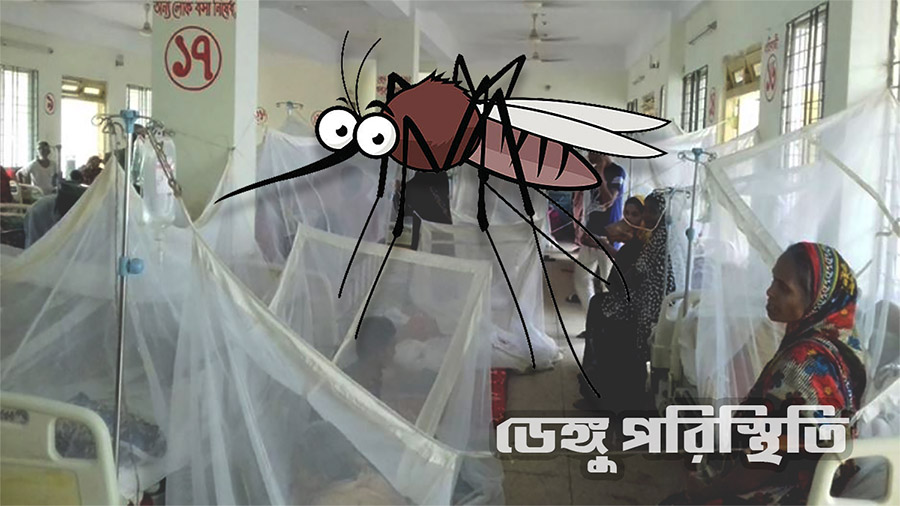
The increasing dengue outbreak is also affecting hospitals. A Reuters report on September 7 highlighted the increasing pressure on hospital beds in various areas, including Dhaka. As the number of patients increases, the pressure on the health system is also increasing.
As of September 11, 3,434 dengue patients were undergoing treatment in various hospitals across the country. So far this year, 49,220 people have been admitted to hospitals.
At the same time, the measles outbreak in the country has also created additional pressure on hospitals. As a result, if the number of dengue patients increases further, the pressure on the patient management capacity of hospitals may increase further.
Lack of preparedness in mosquito control also looms ahead
Amid the worsening dengue situation, some problems have also come to the fore regarding the preparation of mosquito control activities at the field level. Recently, Dhaka South City Corporation borrowed 16,000 liters of malathion from Dhaka North City Corporation due to the shortage of insecticides for mosquito control.
Officials of the South City Corporation said that there was a delay in the supply of pesticides from the contractor and a situation that took time in the testing process.
As the dengue situation rapidly deteriorates, it has also become important to maintain uninterrupted supply of mosquito control medicines and equipment and ensure the ability to take rapid action at the field level.
The deterioration of the situation was evident in August.
The deterioration of the dengue situation this year became clear by the end of August. As of August 31, a total of 35,846 dengue patients had been hospitalized in the country. These 35,846 are not a single patient in August; they are the total number of hospitalizations this year from January 1 to August 31.
Then, in the first 11 days of September, more than 11,000 new patients were admitted to the hospital. During the same period, 44 people died.
According to the Department of Health, there were five deaths from dengue in the first five months of this year. 13 people died in June, 36 in July, and 43 in August. Another 44 people died in the first 11 days of September.
In other words, the trend of dengue infections and deaths has been rapidly increasing towards the end of the monsoon season. In this situation, to make the current three-month campaign effective, it is necessary to strengthen data-based surveillance along with regular mosquito control and sanitation activities at the field level.
Effectiveness will depend on implementation at the field level.
The government is talking about involving local administration, city corporations, municipalities, voluntary organizations and students in the three-month program. The effectiveness of the program will depend on how regularly and integratedly these activities can be implemented.
A few days of cleanliness drive is not enough to control dengue. Regular identification and destruction of mosquito breeding sites, improvement of waste management, removal of stagnant water and mosquito control activities based on affected areas need to be continued. In addition, the results of these activities need to be measured regularly.
The three-month campaign begins today from the South Plaza of the National Parliament. Its success will ultimately be measured not in the inaugural event or publicity, but in the reduction of new cases and deaths, the control of Aedes mosquito breeding sites, and the tangible results of mosquito control activities in different parts of the country.
With dengue infections increasing rapidly in the country and the number of deaths in the first 11 days of September surpassing the entire month of August, the campaign is seen as a crucial step in addressing the crisis. At the same time, the situation this time has also highlighted the need for more coordinated and long-term preparations before the dengue season begins.

https://stapravda.ru/20221228/reyting_samyh_populyarnyh_hostingov_v_rossii_196445.html, рейтинг хостингов России подтверждает, что выбор надежного провайдера важен для бизнеса.