
Staff Correspondent
Dhaka, February 18, 2026: A writ petition has been filed in the High Court seeking suspension of the effectiveness of the ‘July National Charter 2025’, claiming that the current or former interim government is illegitimate, even after the non-partisan caretaker government system was revived in the Constitution of Bangladesh.
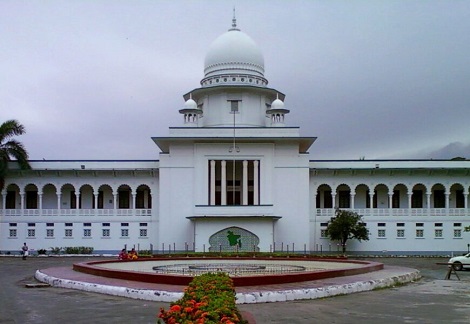
Supreme Court lawyer Advocate Yunus Ali Akand filed the writ petition in public interest on Wednesday. The writ petition seeks a direction to declare the July National Charter illegal, unconstitutional and inconsistent with the constitution. At the same time, a request has been made to suspend (stay) its operation.
The writ petition names the Cabinet Secretary, Law Secretary, National Consensus Commission, Chief Election Commissioner and other relevant parties as respondents. The writ petitioner’s lawyer said that the High Court bench headed by Justice Razik Al Jalil may hear the writ petition next week.
The main argument of the writ
The writ petition claims that there is no clear provision in the constitution for the formation or operation of an interim government. Although the caretaker government system was revived in the recent Supreme Court judgment (November 2025), it will be effective from the 14th National Parliament election. Since there is currently no parliament and there is no existence of an interim government in the constitution, such a government is illegal. It has been claimed that the referendum held through the July National Charter 2025 (February 12, 2026) and its results are also unconstitutional. Various issues in the charter, including the formation of the upper house (Senate), passing reform proposals through a referendum, are inconsistent with the constitution. It has been argued that there is no provision in the constitution for referendums or the formulation of such charters/charters.
After the July 2024 mass uprising, the interim government (chief advisor: Professor Dr. Muhammad Yunus) formulated this ‘July National Charter’ with the aim of preventing dictatorship and reforming it. More than 20 political parties signed it in October 2025. The charter contains about 84 reform proposals in various areas, including the electoral system, judiciary, administration, police, and the Anti-Corruption Commission.
A referendum on the charter’s proposals was held on February 12, with a landslide victory for the ‘yes’ vote. The results were announced on February 13. Legal challenges to its validity have since begun. Earlier, another writ petition was filed seeking to nullify the referendum results.
In November 2025, the Appellate Division’s verdict revived the Thirteenth Amendment of 1996 (Caretaker Government). But it is applicable for future elections (14th Parliament). The Thirteenth Parliament elections were held under the interim government. Now the interim government has been dissolved (17 February Gazette).
The writ petitioners claim that despite the provision of a caretaker government in the constitution, the implementation of a referendum or charter under an interim government is illegal. It is against the sovereignty of the constitution and the rule of law. This writ has triggered a new legal and political debate over the implementation process of the July Charter. All eyes are on the court’s decision.

https://stapravda.ru/20221228/reyting_samyh_populyarnyh_hostingov_v_rossii_196445.html, рейтинг хостингов России подтверждает, что выбор надежного провайдера важен для бизнеса.