
❐ Chittagong Bureau
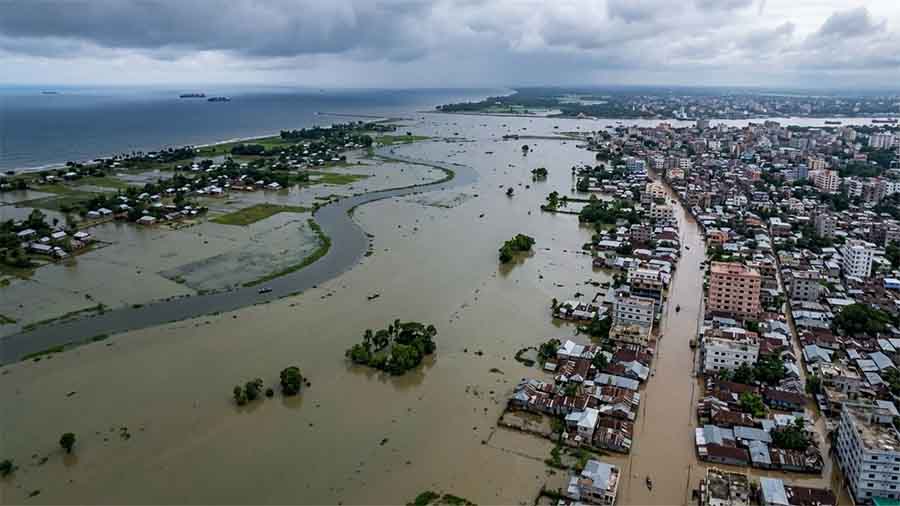
Record-breaking heavy rainfall, landslides and landslides over several consecutive days have caused a devastating flood situation in seven districts in the southeastern and northeastern regions of the country.
According to the latest update from the Ministry of Disaster Management and Relief, 51 people have died and at least 39 have been injured in this natural disaster in seven districts – Khagrachhari, Rangamati, Bandarban, Cox’s Bazar, Chittagong, Moulvibazar and Habiganj.
About 1 million 23 thousand people have been affected, and about 268 thousand families are stranded.
The highest number of deaths by district was recorded in Cox’s Bazar, where 28 people died in landslides and floods – both locals and Rohingya refugees. Thirteen people died in Chittagong district, six in Bandarban, three in Rangamati and one in Moulvibazar.
According to the district administration, about 200,000 families in 16 upazilas of the district, including Chittagong metropolis, have been directly affected, and about 600,000 people have suffered in one way or another. Several low-lying areas in the port city, including Muradpur, Bahaddarhat, Chawkbazar, Baklia and Agrabad, are still submerged.
Many bodies swept away by the floodwaters are being found in various places as the water recedes in the ongoing rescue operation by the local administration and the navy. Families have been searching the rivers and flooded areas for several days in search of missing relatives.
Rescue workers are continuing the process of identifying each body and handing it over to the families. About 44,500 people are currently sheltering in 1,131 shelters in the affected areas, and the government is continuing to distribute cash and dry-cooked food.
The waters of the Sangu and Matamuhuri rivers in Bandarban are still flowing above the danger level, and traffic on the Bandarban-Rangamati road is closed due to the collapse of the bridge.
Due to the continuous heavy rains, the HSC examination under the Chittagong Education Board has also been postponed until July 16. The Meteorological Department has predicted moderate to heavy rainfall in different parts of the country for the next few days, as a result of which there is a fear of further deterioration of the situation.
Questionable preparations in the context of a decade of progress
Bangladesh’s progress in dealing with natural disasters over the past decade has been internationally acclaimed. While the 1970 Bhola cyclone claimed hundreds of thousands of lives, recent cyclones—such as Amphan in 2020 or Sitrang in 2022—have reduced the death toll to a few dozen thanks to improved forecasting systems, a network of coastal cyclone shelters, and a volunteer-based CPP (Cyclone Preparedness Program) structure.
Initiatives such as the installation of lightning detection sensors, 7-10-day advance weather forecasts using the WRF model, and a national disaster management information portal are part of this progress.
However, the recent floods in seven districts, including Chittagong, have also exposed a limitation of that achievement. Compared to the accuracy achieved in cyclone forecasting, preparedness and forecasting have not yet proven to be as effective as in urban and hilly floods caused by sudden landslides and heavy rainfall.
Experts believe that the institutional capacity to deal with landslides, poor drainage systems, and sudden floods from across the border, especially in the hilly regions, has not yet reached the level of maturity needed to deal with cyclones. The increasing trend of irregular and extreme rainfall due to the impact of climate change has further compounded this risk.
While this flood demonstrated the speed of Bangladesh’s post-disaster relief and rehabilitation efforts—the opening of thousands of shelters, relief distribution, and coordinated efforts in rescue operations—it also sent a message that the goal of “zero deaths” has not yet been achieved equally in all types of disasters.
Experts say that just as the early warning and safe evacuation model has been successful in cyclones, it is now the need of the hour to develop similar forecast-based preparedness for flash floods and landslides.

https://stapravda.ru/20221228/reyting_samyh_populyarnyh_hostingov_v_rossii_196445.html, рейтинг хостингов России подтверждает, что выбор надежного провайдера важен для бизнеса.