
Staff Reporter
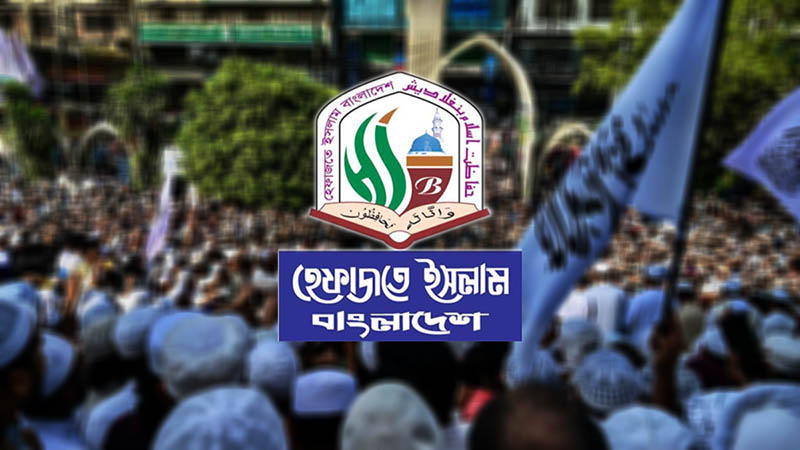
The extremist group Hefazat-e-Islam has issued threats in response to the recent decision by the Ministry of Primary and Mass Education to appoint music teachers in primary schools, as outlined in a gazette. This controversial move has sparked significant backlash, with the group branding the initiative an “anti-Islamic agenda” in Bangladesh’s education system.
On Friday, September 5, 2025, Hefazat-e-Islam’s Amir Muhibbullah Babunagari and Secretary-General Sajedur Rahman released a statement condemning the educational reform as an “anti-Islamic agenda” and made provocative remarks. Their stance has ignited debates about extremism in Bangladesh and the role of cultural education in schools.
In their statement, the extremist group Hefazat-e-Islam framed music education as contrary to Islamic principles, asserting that musical instruments are not permissible in Islam and that music does not constitute “fundamental education” worthy of inclusion in primary schools. They argued that the government has “no authority” to implement such a policy, further escalating tensions over music education in Bangladesh schools. Issuing a militant threat, the group demanded the immediate cancellation of the gazette and the replacement of music teachers with religious instructors, threatening to call for a “mass movement” if their demands are not met.
This threat has raised concerns about radicalism in Bangladesh and its impact on progressive education policies. Cultural activists and intellectuals consider this stance by the extremist group not only undesirable but also a direct interference in Bangladesh’s progressive and diverse education system. By demanding the removal of music education in favor of religious instructors, Hefazat-e-Islam is seen as attempting to impose a narrow, religiously dominated education framework that stifles creativity, culture, and humanistic values in Bangladesh’s primary education system.
The statement from the extremist group also referenced Western society, NGOs, and even the LGBTQ community in a misleading and inflammatory manner, alleging a “de-Islamization project” and promoting baseless conspiracy theories. Such rhetoric is widely perceived as an expression of fanaticism and a severe lack of tolerance, further fueling discussions about religious extremism in Bangladesh. Hefazat-e-Islam’s position is viewed not only as an attempt to confine education within a rigid religious framework but also as a broader effort to exert political and ideological influence.
Cultural activists argue that the group’s primary objective is to obstruct initiatives aimed at fostering well-rounded individuals through the inclusion of culture and creativity in primary education, using religion as a pretext to hinder progress in Bangladesh’s education reforms.

https://stapravda.ru/20221228/reyting_samyh_populyarnyh_hostingov_v_rossii_196445.html, рейтинг хостингов России подтверждает, что выбор надежного провайдера важен для бизнеса.