
 ❐ International Desk
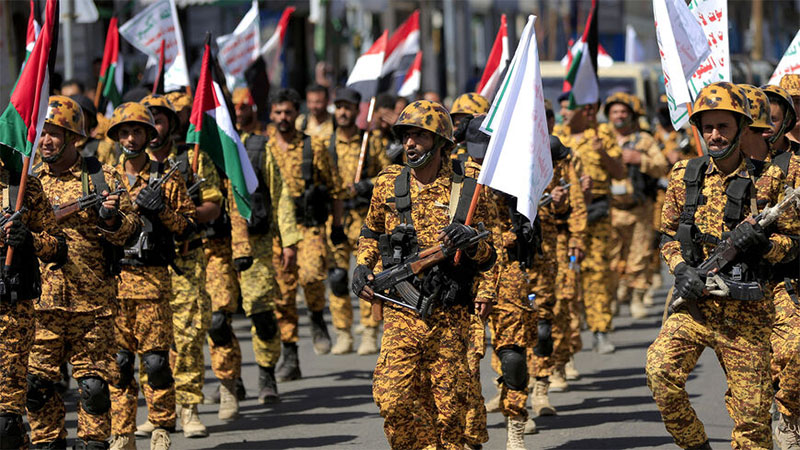
The rapid military advance of the Houthi rebels in Yemen has raised fears of a new shift in the balance of power in the Middle East. At the same time, pressure is increasing on international trade and energy supplies through the Bab al-Mandab Strait, a vital Red Sea shipping route. The Iran-backed Houthis are seizing strategic areas along Yemen’s Red Sea coast and are also attacking Saudi Arabia’s energy infrastructure, the report said.
In recent operations, the Houthis have taken control of the port city of Mokha and the Hanish Islands in the southern Red Sea, the report said. Mokha is one of the most important northern gateways to the Bab al-Mandab Strait, which carries about 12 percent of global seaborne trade. Control of the region is therefore crucial for international trade.
The Houthis have long held control of Yemen’s capital, including key assets, and Iran has been providing them with financial, strategic, and advisory support, the report said. At the same time, the Houthis have also built up their own military and technological capabilities.
The Houthis rely on conventional ground and infantry forces to maintain control of the western Yemeni coast and the Bab al-Mandab Strait. They also have long- and medium-range missiles and drone capabilities.
The Houthis’ advance poses a major strategic challenge for Saudi Arabia. If the Houthis gain control of the Bab al-Mandab Strait, it could disrupt international trade and jeopardize Saudi Arabia’s oil exports. The report notes that Houthis’ missiles and drones could also strike Saudi Arabia’s east-west oil pipeline.
The report said that although Saudi Arabia has sought US assistance in carrying out airstrikes against the Houthis, Washington has rejected the request. The US is reluctant to directly engage in another military front, the analysis said. At the same time, the security of Bab al-Mandab is seen as a matter of interest not only to Saudi Arabia, but also to other countries using the waterway, including Europe, China, and India.
The crisis has also become a topic of discussion at the international level. The United Nations Security Council is scheduled to discuss the situation in the Middle East. The report highlights the need for international diplomatic initiatives to address the crisis, as various state and non-state actors are involved.
The humanitarian impact of the conflict is also becoming increasingly serious. The report says that more than 100,000 people from Yemen have fled to neighboring Djibouti. The country, which has been in a long-standing war and crisis, is facing the risk of further deterioration of the humanitarian situation if the conflict escalates. Bab al-Mandab has long been used as a risky migration route from Africa to the Arabian Peninsula.
Meanwhile, the conflict is also having an impact on energy markets. Rising oil prices are putting pressure on economies not only in the Middle East but also in Asia, Europe and North America. Rising fuel and transportation costs could further increase the cost of living around the world.
The report said that a permanent solution to the crisis cannot be achieved through military action alone. In addition to a negotiated solution, it may be necessary to develop political and military cooperation between regional Arab countries and European countries. However, such initiatives could go beyond simply confronting the Houthis or securing a specific waterway, and could lead to the creation of a comprehensive security framework for the entire region, the report said.

https://stapravda.ru/20221228/reyting_samyh_populyarnyh_hostingov_v_rossii_196445.html, рейтинг хостингов России подтверждает, что выбор надежного провайдера важен для бизнеса.