
❐ Staff Reporter
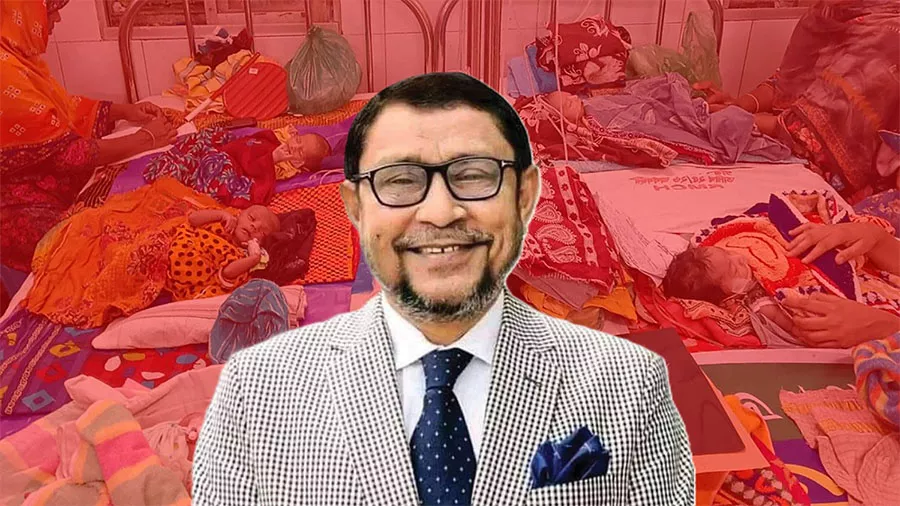
Health and Family Welfare Minister Sardar Md. Sakhawat Hossain has expressed concern that the dengue situation in the country may deteriorate further.
Speaking as the chief guest at a workshop titled ‘Clinical Management of Dengue’ at Bangladesh Medical University (BMU) on Sunday morning, June 7, he said, “I swear, I have become very nervous. I have become very weak. How will I fight this fight? I am preparing, but I have no hand in the matter of death in treatment.”
The workshop was organized by the Disease Control Branch of the Directorate General of Health Services in collaboration with UNICEF and the Bangladesh Society of Medicine.
The Health Minister said, “Dengue is no longer a common disease; it has become a major challenge for the entire nation. Tackling this crisis is not just the responsibility of the Health Ministry or hospitals, but every citizen of the country must be involved in it.”
He said, “I can put pressure on the city corporation and district administrators, ask them to conduct cleanliness drives. But I cannot ensure whether it is possible to destroy 100% of mosquitoes or larvae. Mosquitoes can fly up to 200 meters, enter homes through any gap. So it is a very difficult fight.”
Terming the dengue situation as a ‘total fight’, the minister said that it is not possible to win this war unless every drain, pond, waterlogged area in the country is cleaned. No single institution or individual can tackle this crisis; a coordinated national initiative is needed.
He said, “Just as we united to achieve independence in 1971, national unity is also needed to fight dengue. Everyone must fulfill their responsibilities from their respective positions.”
Regarding the cause of the spread of dengue, he said that rainwater is accumulating in numerous small places in cities and villages, creating breeding grounds for Aedes mosquitoes. Larvae are found everywhere in water accumulated after washing cars in garages, abandoned tires, unused cans, small potholes on the road, or dirty water accumulated in large drains and canals.
Regarding the vaccine, the minister said that although a vaccination program is being considered to prevent dengue, it is very expensive and difficult to implement. If vaccination is required every four months, there will be a huge pressure on the country’s health budget. Therefore, he urged to give more importance to prevention than treatment.
At the same time, he called on doctors at all levels of every hospital and clinic in the country to be vigilant, citing timely detection of plasma leakage as the most important issue in dengue treatment.
He also said that initiatives have already been taken to collect about 2.5 lakh saline to ensure the necessary materials for the treatment of dengue patients.
At the workshop, BMU Vice-Chancellor Professor Dr. FM Siddiqui said that mosquito control activities need to be further strengthened to deal with the dengue situation, because so far it has not reached a visible level.
He said, “It is important to be vigilant at all times in the case of dengue patients. The patient’s condition must be assessed through regular CBC tests and plasma leakage monitoring. If plasma leakage increases, the patient can quickly go into shock, which poses a risk of loss of life.”
Bangladesh Society of Medicine convener Professor Dr. Mohammad Moniruzzaman said that this time, a ‘pro-active’ strategy has been adopted in dengue management, not a ‘reactive’ one – that is, initiatives are being taken to strengthen preventive measures before the problem becomes a big one.
He said, “We believe that prevention is better than cure. Therefore, the relevant institutions, including the City Corporation, have been advised to strengthen preventive activities. Fluid management is much more important than the patient’s platelet count. The main complication of dengue is fluid leakage in the body and successfully overcoming the critical phase of the disease.”
He added that the symptoms of dengue are also changing. Many patients are coming to the hospital with diarrhea and vomiting, which can quickly lead to dehydration and shock. However, most dengue patients do not need to be hospitalized; many can recover with proper home treatment and adequate fluid intake.
However, he said that those who show warning signs should be hospitalized immediately.
Professor Moniruzzaman also warned against medical misconceptions. He said that steroids or painkillers have no role in dengue. Papaya leaf capsules or other such advertised medicines to increase platelets also have no scientific basis. Those who are already taking blood-thinning medications must decide whether to continue taking the medication or temporarily stop it as per the doctor’s advice.

https://stapravda.ru/20221228/reyting_samyh_populyarnyh_hostingov_v_rossii_196445.html, рейтинг хостингов России подтверждает, что выбор надежного провайдера важен для бизнеса.