
International Desk
The International Criminal Court (ICC) has issued arrest warrants against two top Taliban leaders for crimes involving the persecution of women and girls in Afghanistan.
The Hague-based court stated that there is “sufficient credible evidence” that Taliban supreme leader Haibatullah Akhundzada and Chief Justice Abdul Hakim Haqqani committed crimes against humanity.
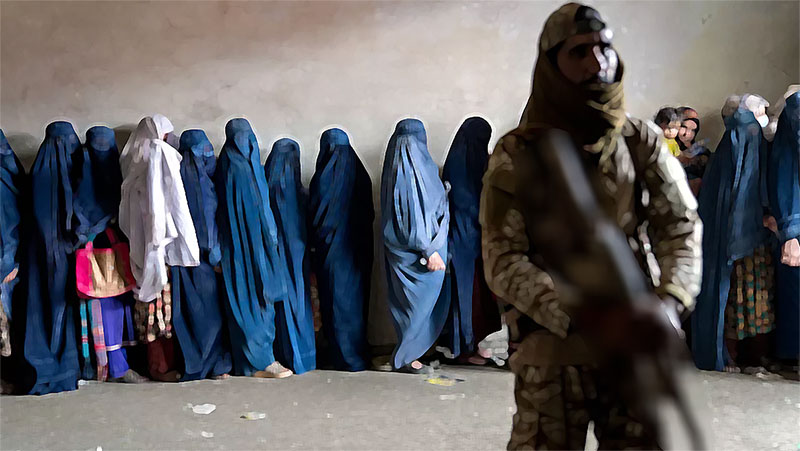
Since taking control of Afghanistan in 2021, the Taliban government has imposed a series of harsh restrictions on women. These include banning girls over the age of 12 from attending school, prohibiting women from working, and placing limitations on their ability to travel alone.
In a statement, the ICC said, “While the Taliban has imposed various restrictions on the general population, women have been denied fundamental rights and freedoms solely because of their gender.”
The Taliban administration has denounced the arrest warrants as “an open hostility” and “an insult to the faith of Muslims around the world.”
The United Nations had earlier described the Taliban’s policies against women as “akin to gender apartheid.”
The Taliban claims to honor women’s rights according to Afghan culture and Islamic Sharia law. However, in reality, most opportunities for women’s education, employment, and freedom of movement have been stripped away.
Haibatullah Akhundzada has been the Taliban’s supreme leader since 2016. After the U.S. and allied forces withdrew from Afghanistan in 2021, he assumed the top position of the so-called Islamic Emirate.
Meanwhile, Abdul Hakim Haqqani was close to Taliban founder Mullah Omar and played a key role in negotiations with the United States in 2020.
Human rights organization Human Rights Watch welcomed the warrants and called on the ICC to expand justice efforts to crimes committed by the Taliban, the Islamic State (Khorasan branch), former Afghan security forces, and U.S. forces.
In January, ICC Chief Prosecutor Karim Khan first hinted at charges against the two Taliban leaders, stating they targeted women who did not conform to the Taliban’s interpretation of gender identity or expression.
However, the ICC does not have its own police force and relies on member states to enforce its warrants.
The world now watches to see how these warrants are implemented — and how effectively they support Afghan women’s struggle for rightful justice.

https://stapravda.ru/20221228/reyting_samyh_populyarnyh_hostingov_v_rossii_196445.html, рейтинг хостингов России подтверждает, что выбор надежного провайдера важен для бизнеса.